Is There A Reef Off The Gold Coast To Snorkel?
The Gold Coast's snorkel sites are mostly man-made: Wave Break Island, Cook Island's aquatic reserve and the Tangalooma wrecks. Here is what each one really is.
Yes, but almost none of it is natural coral reef. The main sites are Wave Break Island, a man-made island from 1985 inside the Broadwater; Cook Island, a genuine reefed aquatic reserve about 4 kilometres south-east of Tweed Heads in New South Wales; and the Tangalooma wrecks on Moreton Island, fifteen scuttled vessels according to the resort. Palm Beach Reef and Narrowneck Reef exist but are surf breaks, not snorkel sites.
That answer surprises people who arrive expecting something like Cairns. The Gold Coast sits on a sand barrier system, and sand does not grow coral gardens. What the city has instead is a set of structures, some deliberate, some accidental, that marine life has colonised anyway, plus one true island reef a short drive south across the border. The distinction matters because it changes what you book and what you should expect to see.
A rock wall built in 1985 and a seabird island declared an aquatic reserve in 1998 are very different days out. The first is shallow, sheltered water behind the Seaway, reached by kayak or a 10-minute boat ride, good for beginners and families. The second is open-ocean snorkelling over a reef where tropical, subtropical and temperate species mix, with turtles as the headline attraction. The third is a full-day crossing to swim along deliberately sunk ships.
The practical version of the answer is that three of the sites below are bookable through operators, and two are not. This site covers seven tours across exactly those three bookable sites: two kayak-and-snorkel trips and one boat trip at Wave Break Island, three turtle snorkels at Cook Island, and one wreck cruise to Moreton Island. If a listing promises you Palm Beach Reef snorkelling, it is not selling what the council built.
It also helps to know why the man-made sites work as well as they do. Hard structure in warm, clear water gets colonised fast, and the Gold Coast's engineering history handed snorkellers a rock wall, a set of ship hulls and a sheltered island in exactly the places tour boats can reach easily. Nature filled in the rest. The result is a coast where the "reef" label is doing a lot of quiet work, and where knowing which structure you are swimming over is half the planning.
What Kind Of Reef Is Wave Break Island?
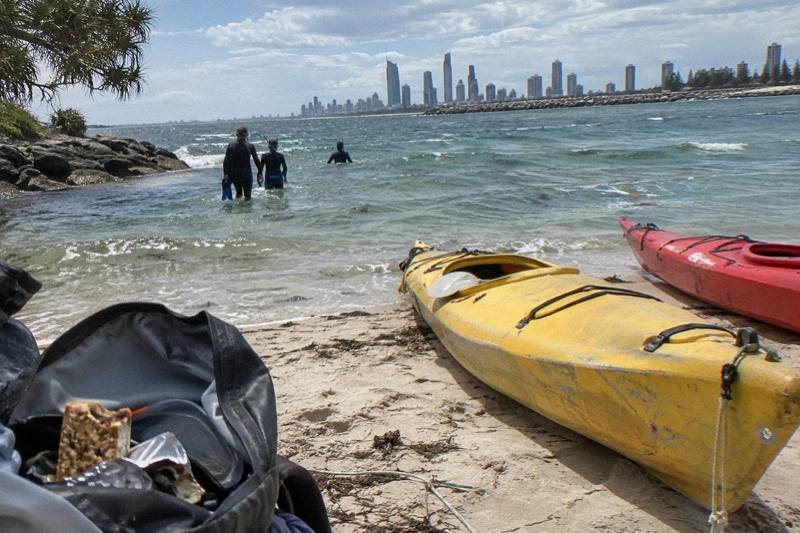
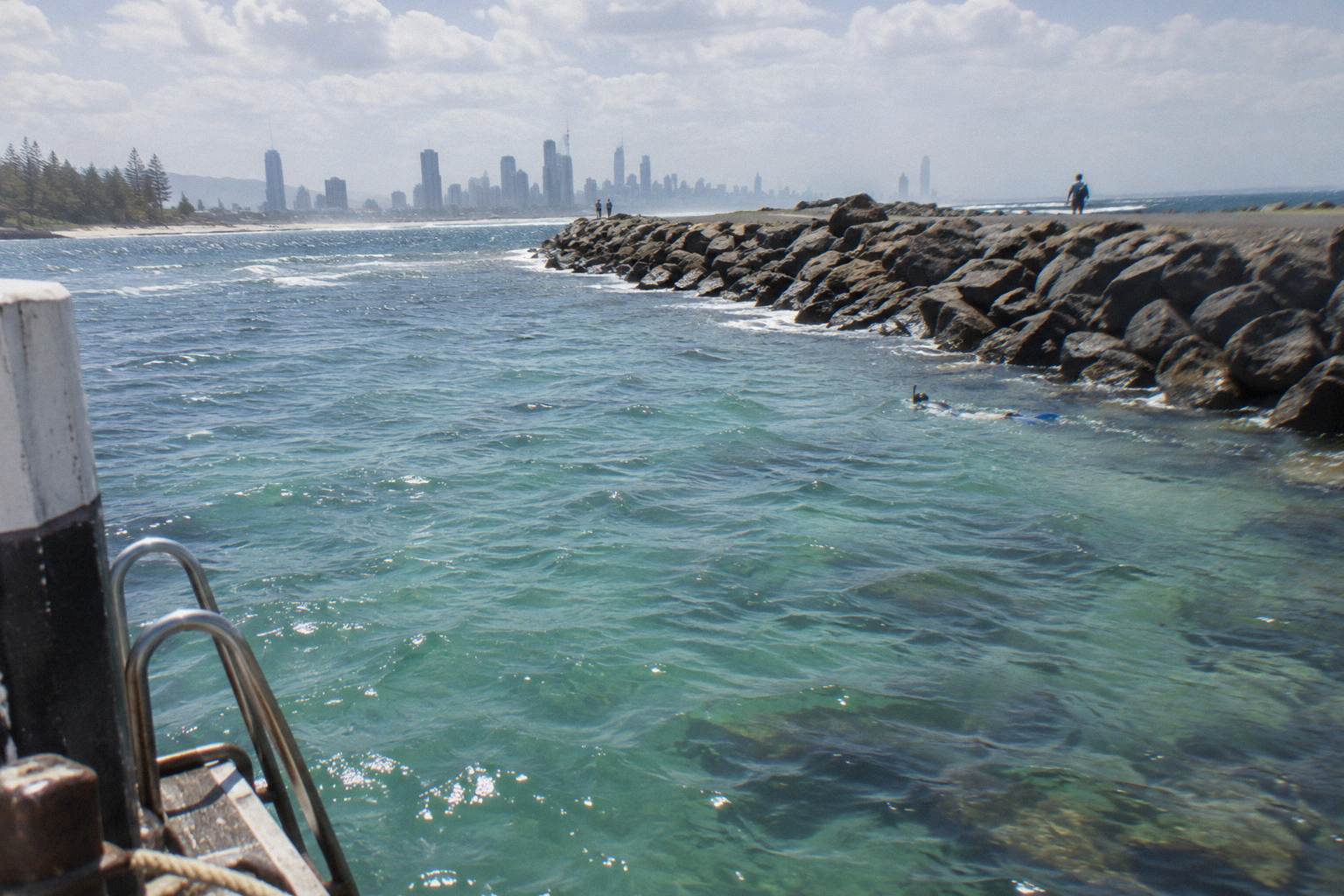
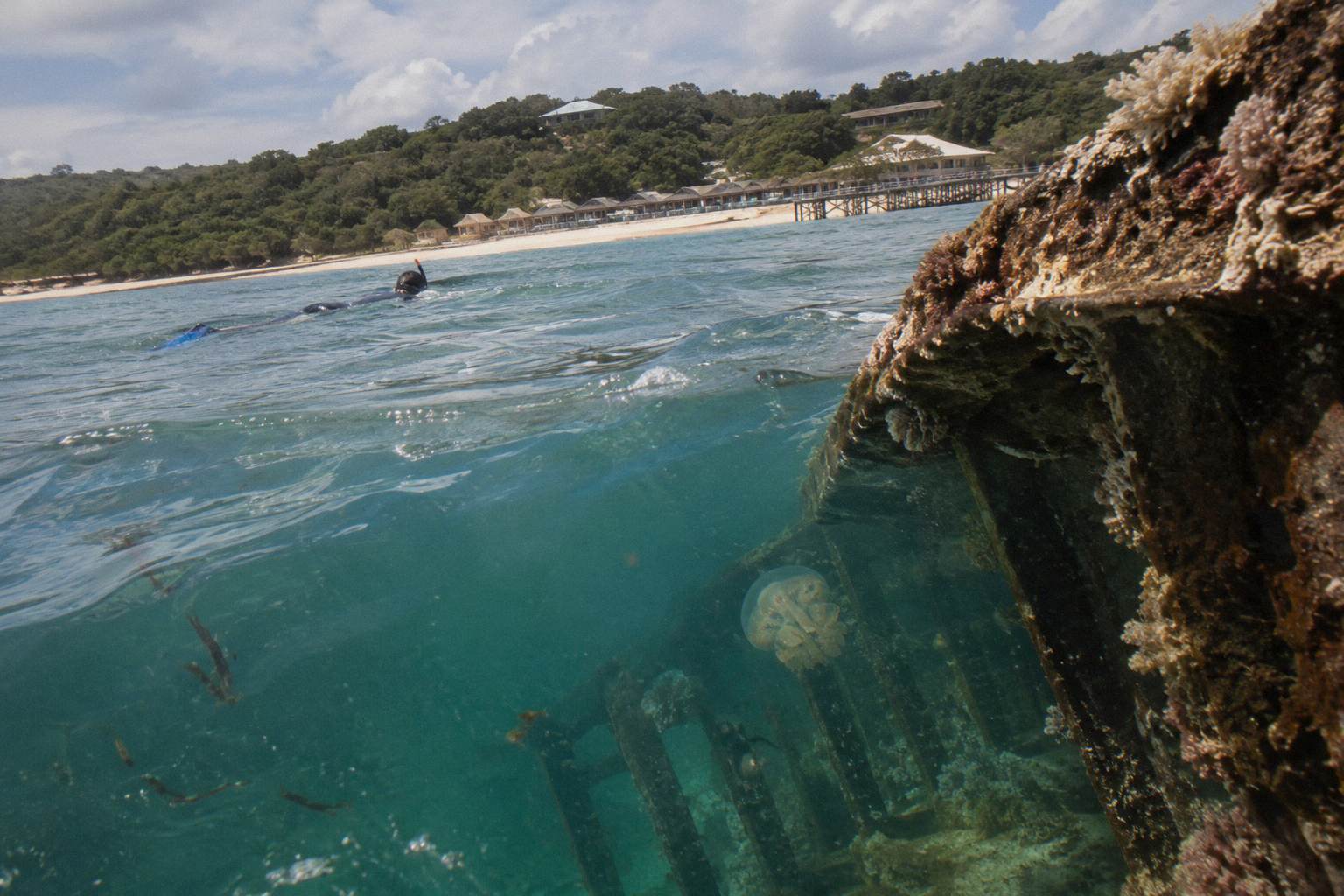
Wave Break Island is not a coral reef at all: it is a man-made island created in 1985 as part of the Gold Coast Seaway construction, and its snorkelling happens around a rock wall that operators describe as having become a reef. The Gold Coast Waterways Authority calls the island "particularly popular amongst snorkelers and scuba divers" with "clear, clean and mostly shallow waters".
The island exists for engineering, not tourism. The Seaway, cut through to give the Broadwater a permanent ocean entrance, needed something to stop waves rolling into the western foreshore, and Wave Break Island was the answer. Four decades later the rock it was built from has been colonised by fish life. The Queensland Scuba Diving Company's boat trip lists a 10-minute cruise to the island and "50 or more fish species" in its booking-page wording, which is an operator claim rather than a scientific count, but it tells you what the trip is sold on.
Access is over water only. The Gold Coast Waterways Authority notes you reach it by private vessel, kayak or stand-up paddleboard from the Labrador foreshore, and it links commercial operators from its own Wave Break Island page. The island is day use only: no accommodation and no camping. There is no tide, visibility or current figure for the site in any of the sources this site publishes, so if someone quotes you a visibility number, treat it as their guess rather than data.
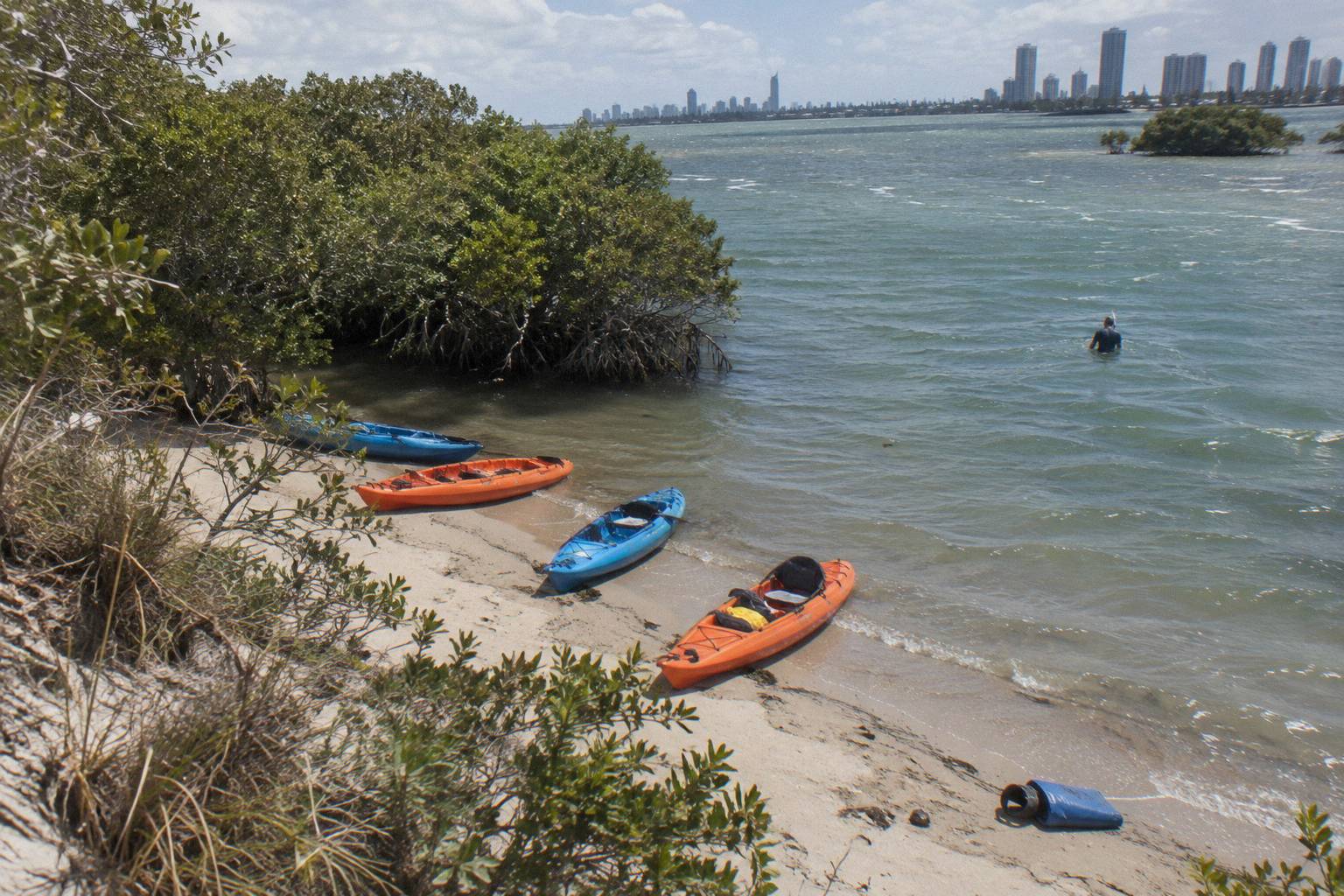
The covered trips here split by how you arrive. Seaway Kayaking Tours paddles about 30 minutes from Biggera Waters, then a short bushwalk to the sheltered snorkel site; the trip takes about 2.5 hours, runs from age 4, needs no swimming, kayaking or snorkelling experience, and books from US$66.69 per person. AKA Adventures runs a similar 3-hour kayak-and-snorkel format from Marine Parade, from US$82.05, with snacks included. Queensland Scuba Diving Company takes a boat from Marina Mirage with hotel pickup from selected Surfers Paradise hotels, about 4 hours pickup to drop-off, from US$53.22 per person. Our Wave Break Island snorkelling guide covers the site in more depth.
One thing Wave Break Island is not: a turtle site. Turtles are a Cook Island product on this coast, and no source this site publishes claims them at Wave Break Island. If turtles are the reason you are snorkelling, read the next section.
Is Cook Island A Real Coral Reef?
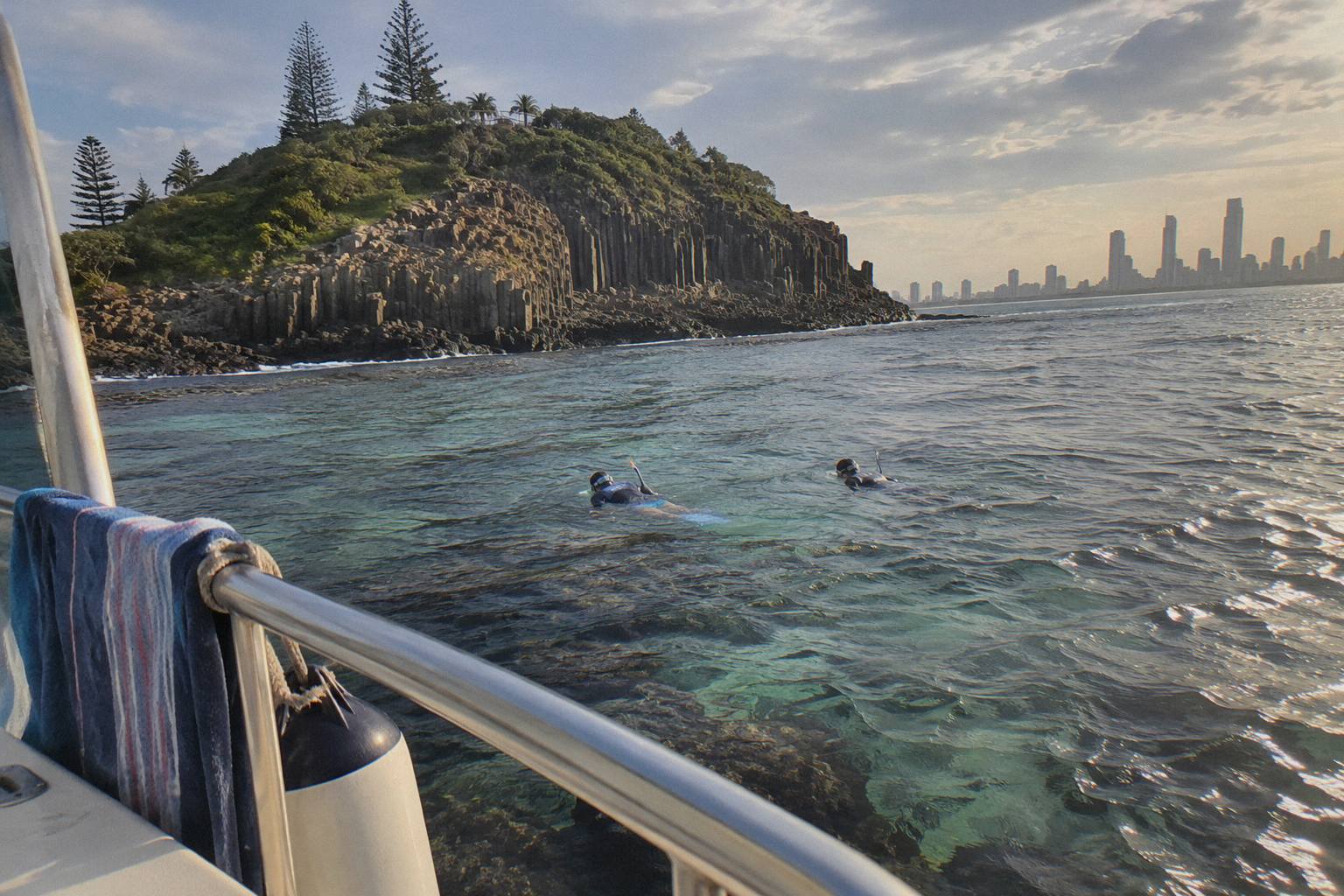
Yes, Cook Island is the closest thing to a true reef the Gold Coast snorkeller can reach: a natural island reef inside an 80-hectare aquatic reserve declared in 1998, sitting about 600 metres off Fingal Head and 4 kilometres south-east of Tweed Heads. NSW's Department of Primary Industries says tropical, subtropical and temperate life blend there, and calls it a hotspot for threatened green, hawksbill and loggerhead turtles.
The reserve has rules that shape every tour. The inner zone around the island is a no-take sanctuary; the outer zone allows some fishing. Snorkelling, diving and photography are all permitted, but landing on the island is not, because it is a protected seabird nesting site. Vessels keep under 4 knots and use moorings rather than anchoring on reef or seagrass. There is no collecting, touching, chasing, disturbing or feeding of marine life, and no turning rocks. Snorkel and dive operators signed a Code of Conduct in 2023 and 2024 that includes a pre-dive briefing, so the trip you join starts with a talk about these rules.
- Marine Biologist Guide, Cook IslandUS$93.64
- Cook Island Turtles From ChinderahUS$116.52
- Small Boat, Fingal Head TurtlesUS$120.59
Blue Seafaris, one of the covered operators, names the island Cook Island / Joong-urra-narrian and lists green and hawksbill turtles, eagle rays, seasonal manta rays and leopard sharks as the marine life its tours encounter. Those are operator sightings claims, not a census. No turtle count exists in any source, no sighting is guaranteed, and no month-by-month turtle calendar exists either. What is documented is the species list and the reserve's protection of them, and that alone makes Cook Island the most wildlife-rich of the three bookable sites.
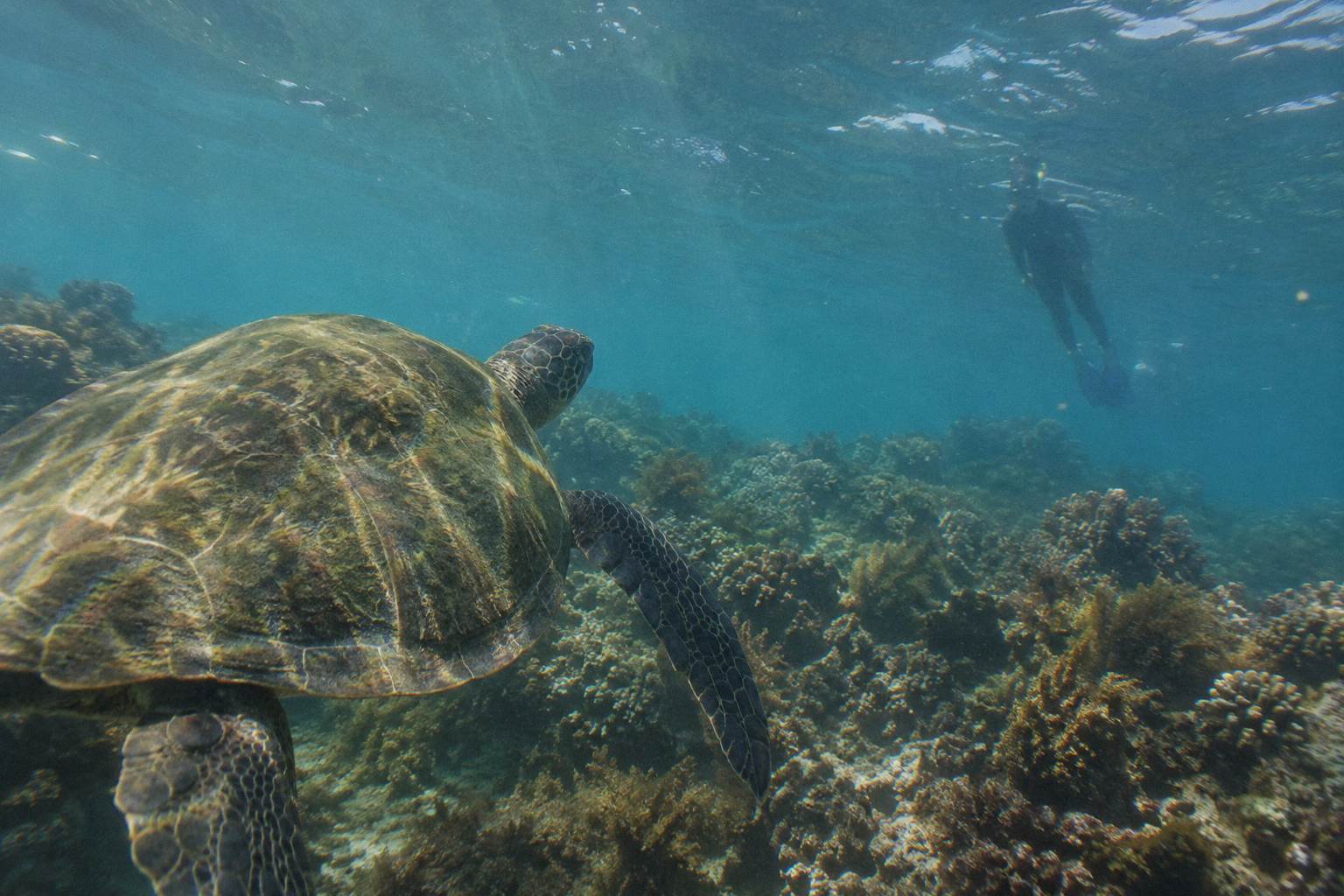
Getting there means crossing from Queensland into New South Wales, because every Cook Island operator departs from the NSW side: Tweed Heads, Fingal Head or Chinderah. During daylight saving, NSW runs one hour ahead of Queensland, and the operators list their times in different clocks, so check which time your booking page uses before you set an alarm. The NSW Department of Primary Industries publishes the full reserve details and rules, and it is worth reading before you pick a tour. Our Cook Island snorkelling from the Gold Coast guide walks through the three covered operators, their meeting points and their very different swim requirements.
| Operator | Duration | From (booking page) | Group max | Swim requirement |
|---|---|---|---|---|
| Cooly Eco Adventures | About 2.5 hours | US$116.52 | 12 | Swim 50 m unassisted |
| Blue Seafaris | 120 minutes | US$93.64 | Not stated | Swim 200 m unassisted, age 7+ |
| Watersports Guru | About 2.5 hours | US$120.59 | 9 | Swim a 100 m pool length, age 6+ |
The swim standards differ sharply between those three, and they are the single biggest factor in choosing between them. None of them suits non-swimmers; the Wave Break Island kayak trips are the family-friendly alternative for that, and our can non-swimmers snorkel on the Gold Coast piece explains the split in full.
Practical planning follows from the reserve's position on a state border. Every departure point, Tweed Heads, Fingal Head and Chinderah, sits on the NSW side, so the drive from Gold Coast accommodation includes a border crossing, and the clock can change along the way. The hour gap applies only during daylight saving, and since operators list their times in different clocks, it pays to confirm the time zone twice: once when you book, and again the night before you travel.
Choosing among the three operators comes down to more than price. All three trips run to roughly the same shape, between two and two and a half hours, so the real decision hinges on group size and swim standard. Watersports Guru runs the smallest groups, capped at nine, and takes children from age six, which suits families with younger kids who can already manage a 100 m pool length. Cooly Eco Adventures caps at twelve and asks for a 50 m unassisted swim, the lowest bar of the three. Blue Seafaris sets the strictest standard, 200 m unassisted with a minimum age of seven, and does not state a group maximum. Booking page prices sit in a narrow band between US$93.64 and US$120.59, so the swim standard and group size, not cost, usually settle the choice.
The reserve rules also shape the trip once you are on the boat. The 4-knot limit means a slow final approach, and because vessels tie up at moorings rather than anchoring, nothing is dropped onto the reef or seagrass below. Landing is banned to protect the seabird nesting site, so the island stays a backdrop and every minute of the tour happens in or on the water. The blend of tropical, subtropical and temperate species is what puts leopard sharks, eagle rays and seasonal manta rays on the same encounter list as the turtles, and the Code of Conduct briefing is where the no-touch, no-chase and no-feed rules get spelled out before anyone gets wet.
Palm Beach Reef Snorkelling: What Is Really Down There
Nothing you can book, and no snorkelling claim from anyone official. Palm Beach Reef is an artificial surfing reef built in 2019 from 60,000 tonnes of rock, 270 metres off Nineteenth Avenue, and the City of Gold Coast describes it as a much-loved surf break while making no snorkelling or diving claim at all. No operator in the tours covered here sells a Palm Beach Reef snorkel.
This is the question that trips people up, because the words "reef" and "Gold Coast" sit together in the council's own artificial reefs page. The reef was built as coastal protection, full stop. The council page talks about surf, not about fish, and this site will not describe what is or is not underwater there, because no source it publishes says. If a blog post elsewhere tells you Palm Beach Reef is a "hidden snorkelling spot", ask what it is basing that on; the honest answer here is that the structure exists, the surf break exists, and the snorkelling does not exist as a product.
The council's other artificial reef, Narrowneck Reef, has the same profile: sandbags first laid in 1999 and renewed in 2018, again built for coastal protection, again with no snorkelling claim attached. Neither site has a tour, a trip or an operator connected to it in anything this site has verified.
Two neighbouring names deserve the same caution. No source of fact exists for Kirra Reef conditions, so this site states nothing about it. And no Great Barrier Reef travel fact from the Gold Coast exists in the sources either, so any specific claim about reaching it from here would be invented. The bookable reef snorkelling on this coast is the Cook Island reserve described above.
What Are The Tangalooma Wrecks?
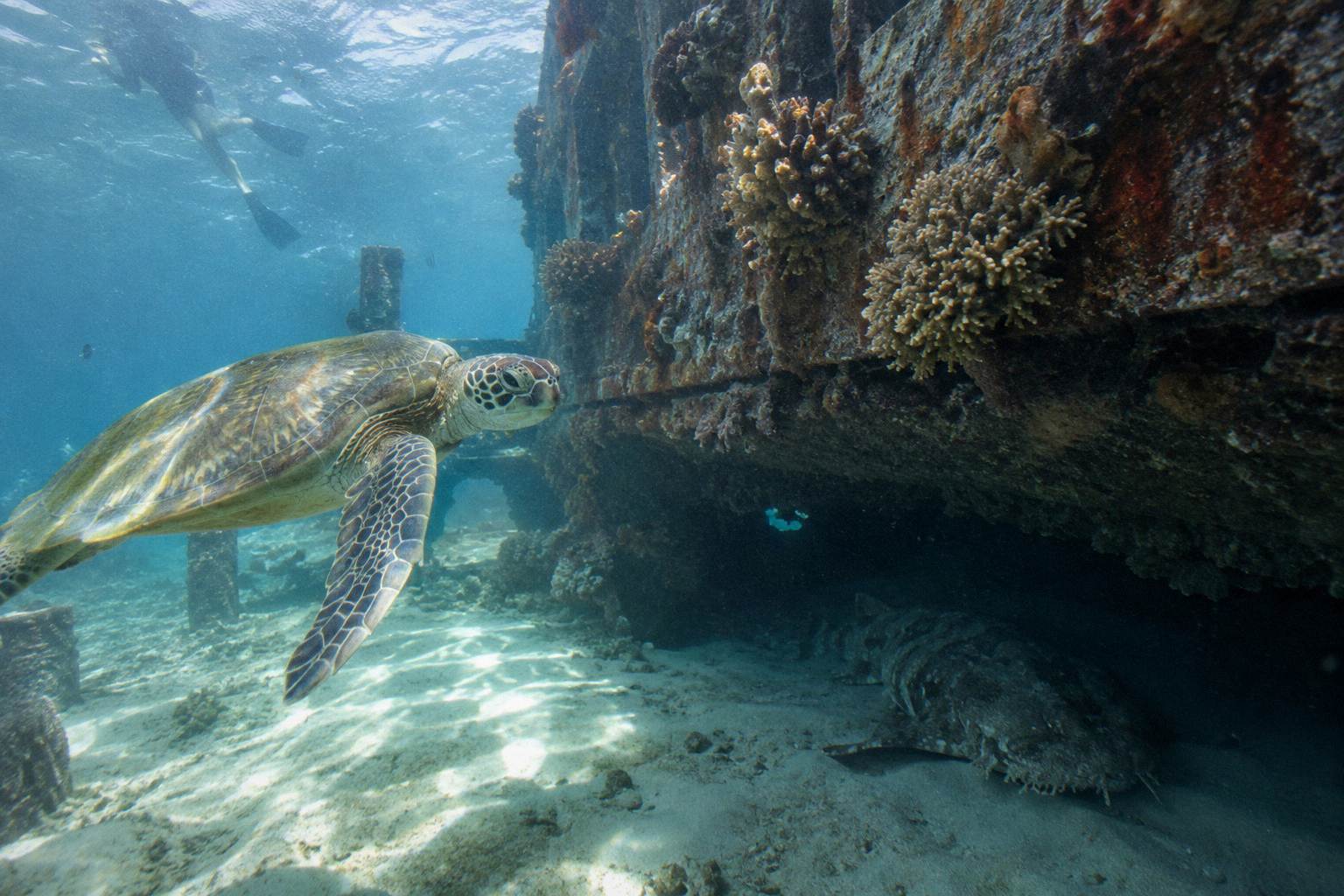
The Tangalooma wrecks are a cluster of fifteen vessels scuttled by the Queensland Government between 1963 and 1984, according to Tangalooma Island Resort's own page, sitting a 15 to 20 minute walk up the beach from the resort on Moreton Island. The resort recommends the guided tour rather than swimming out, citing strong currents when the tide runs, an unpatrolled beach and boat traffic.
That fifteen-vessel count matters because it is the resort's figure, not a government one: five ships went down in 1963, five in the 1970s and five in the 1980s. The wrecks were placed to create a sheltered harbour, and they have since grown into the most distinctive snorkel structure in the region, a wall of rusting hulls that marine life has moved into. Resort wording, which is soft and attributed rather than counted, claims over 200 fish species, 130 coral species, 3 turtle species and wobbegong sharks around the site.
Moreton Bay itself is protected at a scale that dwarfs the wrecks. Queensland Parks describes Moreton Bay Marine Park as first declared in 1993, covering 3,400 square kilometres and stretching 125 kilometres from Caloundra to the Gold Coast Seaway, with "go slow" areas protecting turtles and dugong. Six of the world's seven marine turtle species are found in the bay, three of them resident, and green and loggerhead turtles nest on Bribie, Moreton and the Stradbroke islands. Those species are listed as vulnerable or endangered under the Nature Conservation Act 1992 and the EPBC Act 1999.
The covered way to snorkel the wrecks from the Gold Coast is the See Moreton cruise: about 11 hours door to door, a 7:30am start, transfers from selected Gold Coast hotels, roughly 4 hours at the wrecks stop and about 1 hour on Moreton Island, with a tropical buffet lunch included, coffee, tea and cake on boarding, and a licensed bar with alcohol extra. It books from US$206.16 per person. It is a commitment of a day, and it is the only one of the three reef-style sites that comes with a full meal rather than a snack. Its booking page names a Brisbane departure as well, so check the pickup point against where you are staying.
Which Gold Coast Reef Site Suits You?
Choose Wave Break Island for a short, cheap, beginner-friendly trip in sheltered water; Cook Island if turtles and a true protected reef are the goal and you can meet the swim standard; the Tangalooma wrecks for a full-day adventure over deliberately sunk ships. Prices run from US$53.22 to US$206.16 per person across the covered tours, and there is no single Gold Coast snorkel price.
The comparison that matters is not rank but fit. A family with a four-year-old and a nervous swimmer belongs at Wave Break Island, where Seaway Kayaking Tours takes non-swimmers from age 4 in life jackets. A confident snorkeller chasing turtles wants Cook Island and should compare the three operators on group size and swim rule rather than on price alone: Watersports Guru caps at 9 guests, Cooly Eco Adventures at 12, and Blue Seafaris requires a 200-metre unassisted swim. Someone with a full day and a taste for wrecks takes the Moreton crossing.
| Site | What it is | Travel time character | Best for | Turtles? |
|---|---|---|---|---|
| Wave Break Island | Man-made island, 1985, rock wall reef | Short paddle or boat ride in the Broadwater | Beginners, families, non-swimmers | Not claimed |
| Cook Island | Natural reef, aquatic reserve since 1998 | Boat from the NSW side, 15-minute ride from Fingal Head | Confident swimmers, wildlife | The headline species |
| Tangalooma wrecks | 15 scuttled vessels, 1963 to 1984 | Full-day cruise with transfers | Adventurers, wreck fans | Possible, not promised |
| Palm Beach Reef | Surf break, coastal protection | Not a snorkel product | Nobody bookable | Not applicable |
Season shapes the choice less than you might think. Typical sea temperature on the Gold Coast runs about 26 to 27 degrees in summer and about 22 in winter, so a wetsuit, which Blue Seafaris and Watersports Guru include, covers the coldest months. Whale and bird watching at Cook Island runs May to November per NSW DPI. Beyond that, the sources this site publishes are deliberately quiet: no visibility figures, no turtle calendars, no "best time of day". Operators run daily subject to weather, tides and sea conditions, and the booking pages list free cancellation up to 24 hours in advance for a full refund on every covered product.
For everything on planning around the sites, from what to wear snorkelling on the Gold Coast to our wider coverage at Gold Coast Snorkelling Tours, the site's guides sit alongside each tour page.
Common Questions About Reefs Off The Gold Coast
Is There A Reef Off The Gold Coast To Snorkel?
Yes, but mostly not natural coral reef. Wave Break Island is a man-made island from 1985 whose rock wall operators describe as a reef, Cook Island is a genuine protected reef just over the NSW border, and the Tangalooma wrecks are fifteen scuttled ships. All three are bookable; Palm Beach Reef is not.
Palm Beach Reef Snorkelling: What Is Really Down There?
Palm Beach Reef is an artificial surf break built in 2019 from 60,000 tonnes of rock as coastal protection. The council makes no snorkelling or diving claim for it, and no operator sells a snorkel trip there, so this site describes nothing about what is underwater.
Can You Snorkel The Great Barrier Reef From The Gold Coast?
No verified travel fact for reaching the Great Barrier Reef from the Gold Coast exists in the sources this site publishes, so it makes no claim either way. The bookable reef snorkelling covered here is Cook Island, Wave Break Island and the Tangalooma wrecks.
Are There Turtles At Wave Break Island?
No source this site publishes claims turtles at Wave Break Island. Turtles are the headline species at Cook Island Aquatic Reserve, where NSW DPI identifies green, hawksbill and loggerhead turtles, and every covered turtle snorkel departs from the New South Wales side.
Which Is The Closest Reef Site To Surfers Paradise?
Wave Break Island, inside the Broadwater behind the Gold Coast Seaway. The Queensland Scuba Diving Company boat trip even offers hotel pickup from selected Surfers Paradise hotels, with a listed 10-minute cruise to the island.