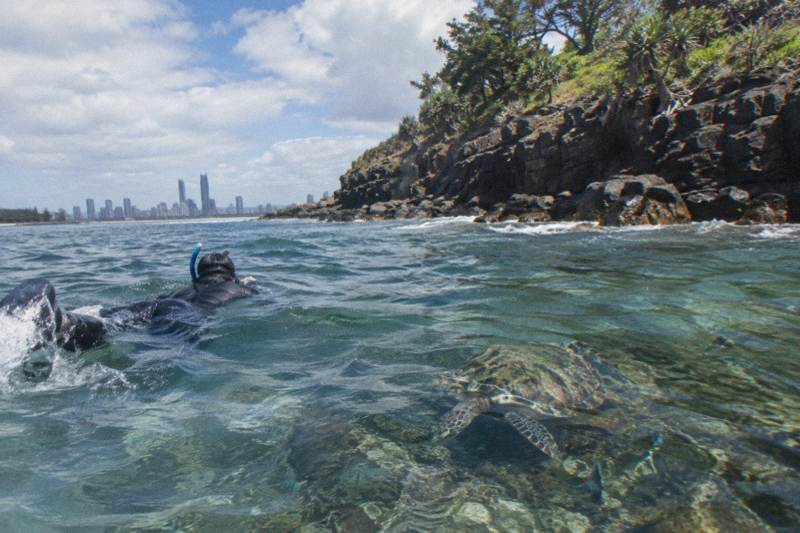
Cook Island Aquatic Reserve: What Snorkellers See
Cook Island is the Gold Coast's turtle snorkel, and it works because the reef is a protected aquatic reserve with real rules attached. Here is what NSW's own regulator says about the island, what lives there, and what the rules mean for you in the water.
Short answer
The Cook Island Aquatic Reserve was declared in 1998 and covers 80 hectares about 600 metres off Fingal Head. Snorkelling is allowed in the no-take sanctuary zone, landing on the island is not, and touching or chasing marine life is banned. Green, hawksbill and loggerhead turtles are the drawcard.
Marine life is the reason people book the Cook Island snorkel. The island sits just across the New South Wales border, roughly 600 metres off Fingal Head and 4 kilometres south-east of Tweed Heads, and the reef around it is protected as an aquatic reserve. That protection is not a marketing line from a tour brochure: it is a set of enforceable rules published by the NSW Department of Primary Industries, and every operator that takes snorkellers there works inside them. This guide sets out what the reserve is, what the sources say lives in it, and the rules that shape your day in the water. If you are still choosing a trip, start with our broader guide to Cook Island snorkelling from the Gold Coast.
What Is The Cook Island Aquatic Reserve?
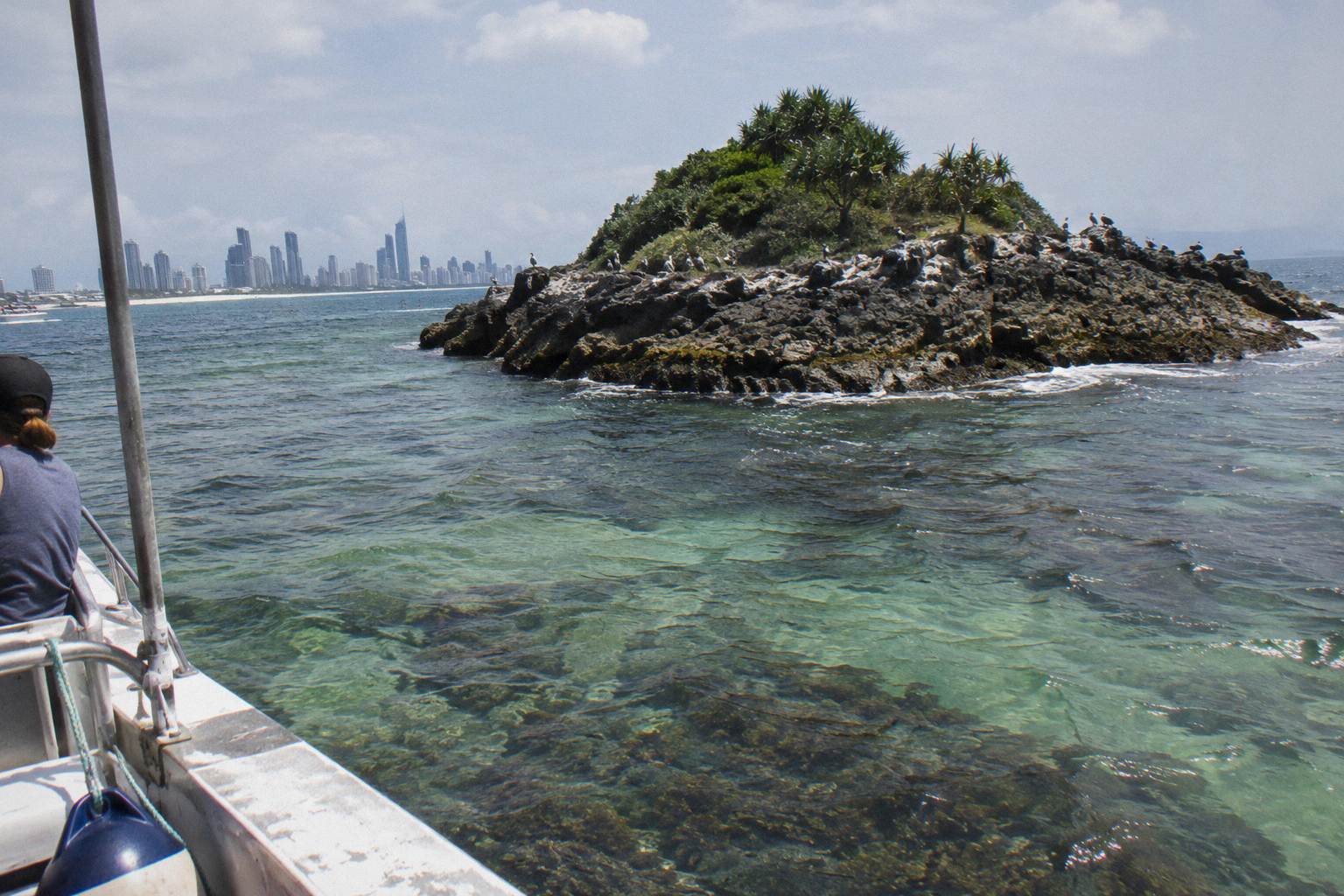
The Cook Island Aquatic Reserve was declared in 1998 by the NSW government and covers 80 hectares of reef and water around the island, stretching from the mean high-water mark out to a 500 metre radius from a survey marker. The island sits about 600 metres offshore from Fingal Head and 4 kilometres south-east of Tweed Heads, on the New South Wales side of the border. Snorkelling, swimming, scuba diving and photography are all allowed inside it.
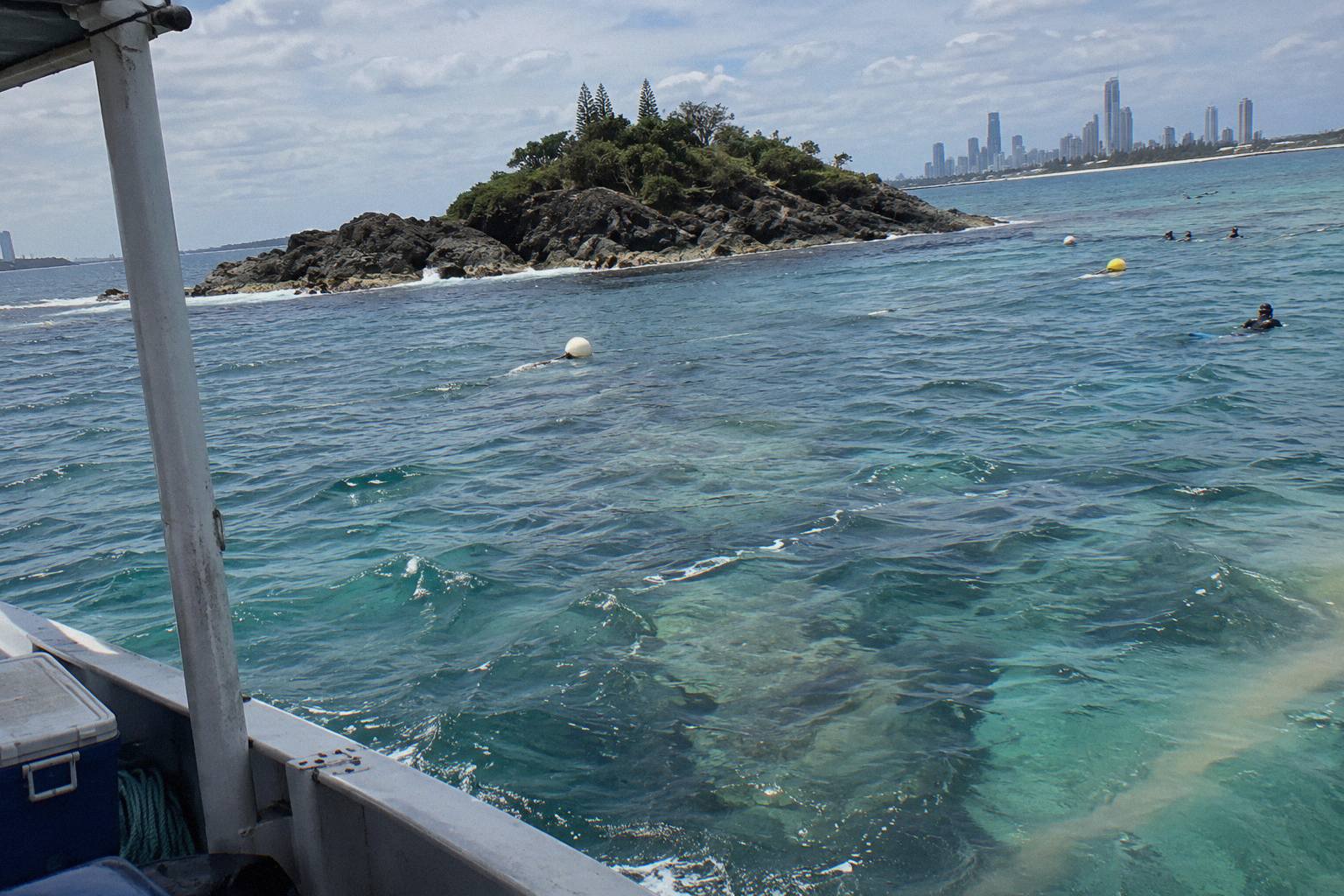
The reserve is split into two zones, and the split matters to anyone in the water. The inner zone, the ring of water directly around the island, is a no-take sanctuary zone: nothing may be taken from it, and that is where the tour boats use the moorings and the tours spend their time. The outer zone allows some forms of fishing, though set-lines are excluded.
The NSW DPI page on the reserve notes the island was previously called Turtle Island, and calls it a hotspot for threatened green, hawksbill and loggerhead turtles. The same page says tropical, subtropical and temperate marine life blend at Cook Island, which is unusual. Threatened species named by DPI include the giant Queensland groper and the grey nurse shark. You can read the official description on the NSW DPI aquatic reserve page.
| Reserve fact | As stated by NSW DPI |
|---|---|
| Declared | 1998 |
| Size | 80 hectares |
| Boundary | Mean high-water mark out to a 500 m radius from the survey marker |
| Location | About 600 m off Fingal Head, 4 km south-east of Tweed Heads |
| Inner zone | No-take sanctuary zone around the island |
| Outer zone | Some fishing allowed, not set-lines |
| Allowed | Swimming, snorkelling, scuba diving, photography |
| Seasonal note | Whale and bird watching May to November |
One version of the island's history you may see elsewhere, the claim that it has been "protected since 1974", comes from an operator page and conflicts with the regulator's own date. The NSW DPI record says 1998, and that is the figure worth relying on.
What Marine Life Will You Actually See At Cook Island?
DPI names threatened green, hawksbill and loggerhead turtles as the island's signature marine life, alongside the giant Queensland groper and the grey nurse shark. Blue Seafaris, one of the operators running tours there, additionally lists green and hawksbill turtles, eagle rays, seasonal manta rays and leopard sharks. No source gives a turtle count, a guaranteed sighting, or month-by-month turtle presence, and none of those claims should be believed.
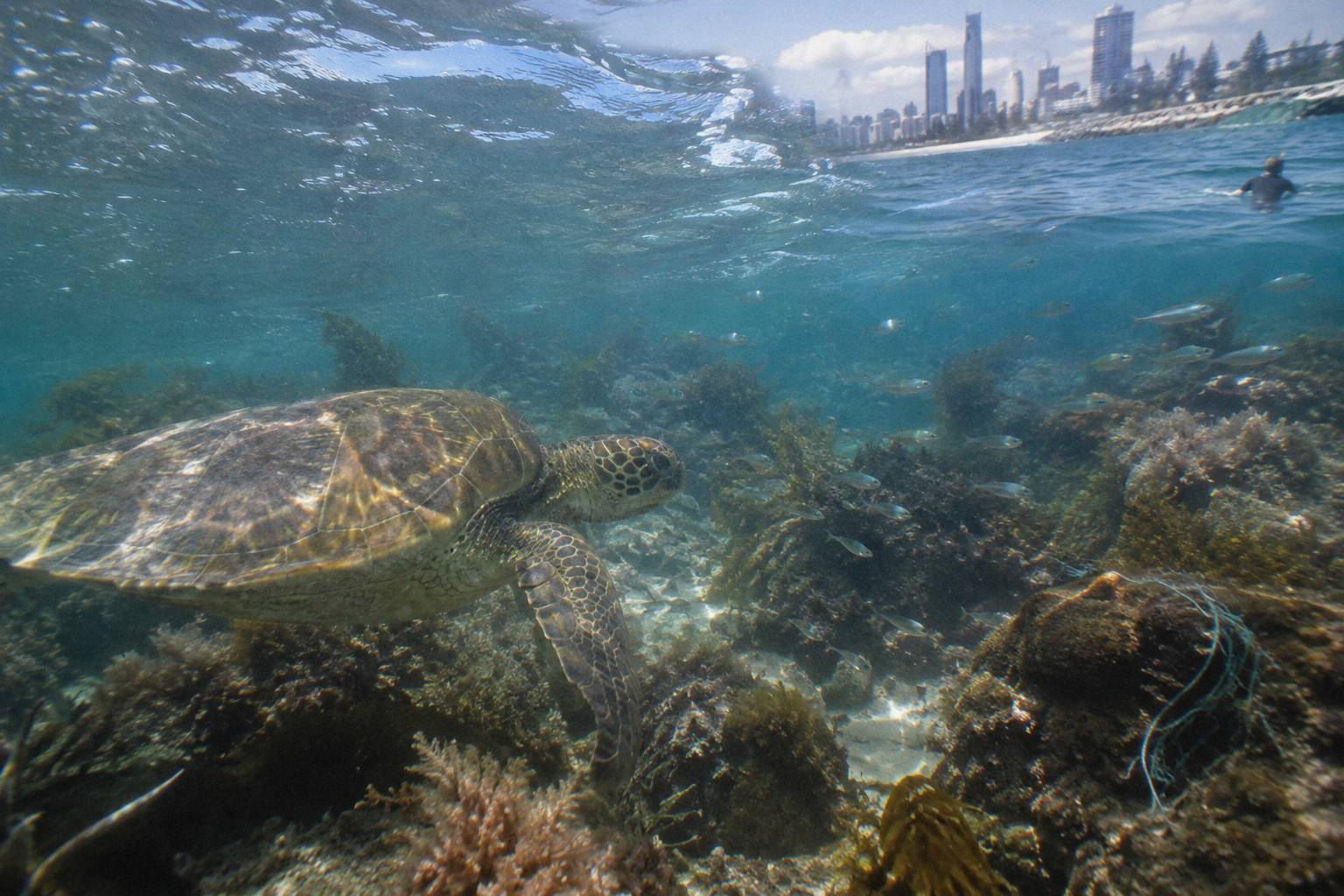
The turtles are the reason most people book. All three species DPI names at Cook Island are listed as threatened, and the reserve's no-take inner zone is part of why they stay around the island: the reef is undisturbed, the moorings stop anchors damaging it, and the rules stop visitors hassling the animals. What no operator or authority will tell you is how many turtles are there or when they are most likely to appear. That information does not exist in any of the sources, and a tour that promises a sighting is promising something nobody can promise.
The blend of tropical and temperate life is the less famous story. DPI says tropical, subtropical and temperate marine life blend at Cook Island. Blue Seafaris lists eagle rays, seasonal manta rays and leopard sharks; DPI lists the grey nurse shark among threatened species in the reserve.
Three operators covered on this site run snorkel trips to Cook Island, and their differences are real: group sizes, swim requirements and departure points all vary. The trio below is the shortlist.
The featured trip on this page is the Cooly Eco Adventures turtle snorkel, a roughly 2.5 hour trip in groups of up to 12 from Chinderah, rated 4.9 across 172 reviews, from US$116.52 per person on the booking page. It requires swimmers able to cover 50 metres unassisted, and life jackets are not worn in the water. You can read the details on the Cook Island turtle snorkel tour page or Check availability.
Blue Seafaris runs its turtle tour with a marine biologist guide, which adds a layer of interpretation some visitors value on a reef this protected. The trip is 120 minutes per the operator's own page, departing from the public jetty opposite 1A Minjungbal Drive in Tweed Heads South, and the operator names the island Cook Island / Joong-urra-narrian. Its booking-page price starts at US$93.64 per person, and its own page lists the operator's price at A$139 per adult and A$119 per child under 12.
Can You Touch Turtles When Snorkelling In Australia?
No. At Cook Island the NSW DPI rules for the aquatic reserve ban touching, chasing, disturbing or feeding marine life outright, along with collecting and turning rocks. These are reserve rules with legal force, not etiquette suggestions, and your tour guide will brief you on them before you enter the water. Keeping a respectful distance is both the law and the best way to watch a turtle behave naturally.
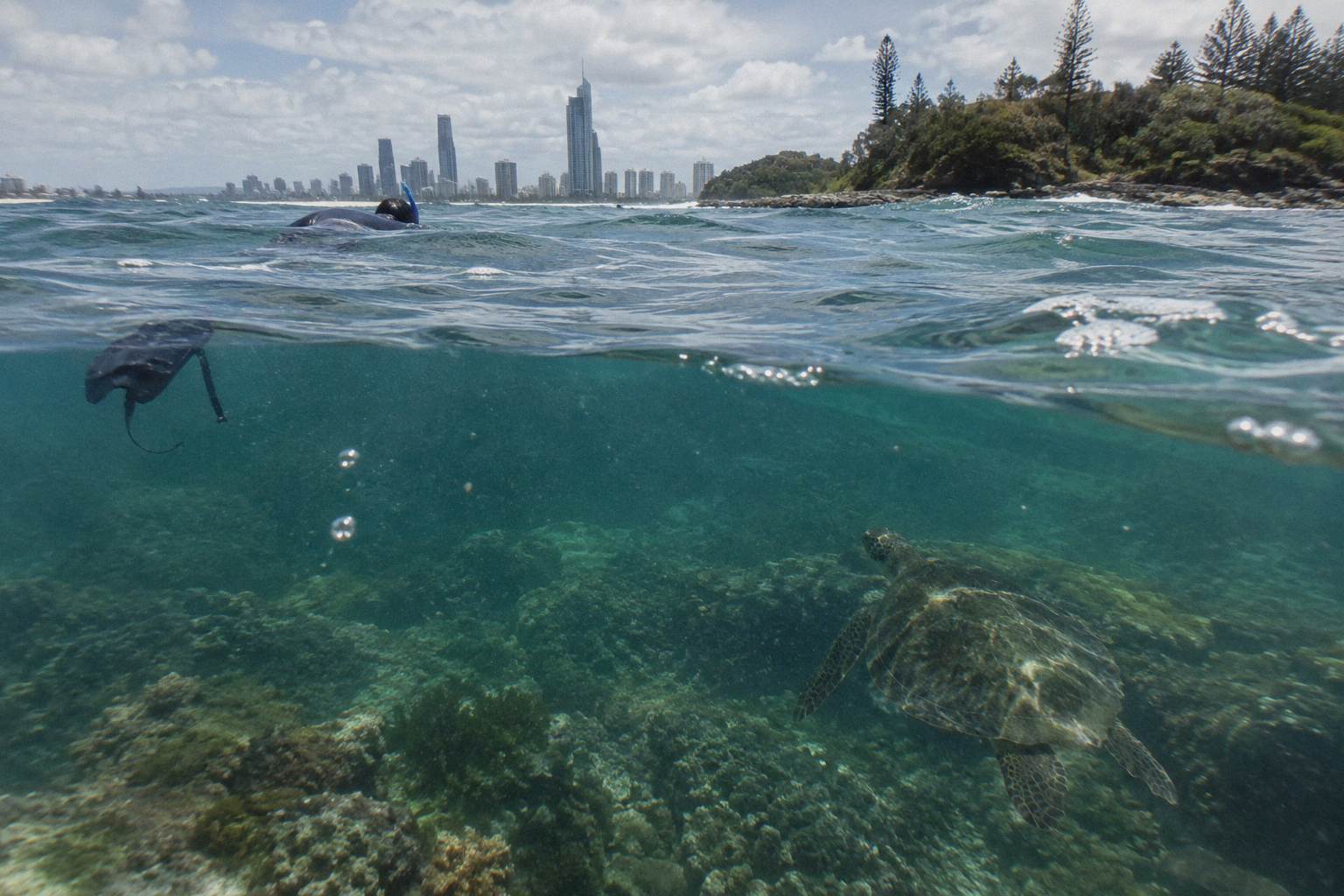
The operators who work the reserve signed a Code of Conduct in 2023 and 2024 that includes a pre-dive briefing covering exactly this, so expect a short talk on the boat about distances, no touching and no chasing before anyone gets in the water. The full rule set is on the DPI page about respecting the Cook Island Aquatic Reserve.
In practice the no-touch rule is easy to follow. The reliable technique is to float still and keep your distance, as the reserve rules require: watch where a turtle is heading, and let it pass beneath you. Photography is explicitly allowed in the reserve, and a wide shot of an undisturbed turtle on the reef is worth more than a close-up of one swimming away from you. Feeding, whether fish or turtles, is banned for the same reason: it changes animal behaviour and diet in a protected area.
If your group includes weaker swimmers, the rules are worth pairing with each operator's swim requirements before you book. Our piece on whether non-swimmers can snorkel on the Gold Coast covers which trips suit them and which do not.
Can You Snorkel Cook Island Without A Tour?
Snorkelling at Cook Island is allowed without a tour, but the island is about 600 metres offshore and the sources describe access only by boat, with landing on the island itself not permitted because it is a protected seabird nesting site. No source describes a shore or swim access route, so the practical way in is one of the licensed boat operators. Vessels must stay under 4 knots and use the moorings.
The reserve is not gated, and DPI explicitly permits swimming, snorkelling and diving in it. What the sources do not describe is any safe way to reach the reef without a boat: the island is 600 metres of open water from Fingal Head, the nearest land, and none of the official or operator pages describe swimming, paddling or shore access to the snorkel site. Kayaking 600 metres of open ocean to a mooring area with boat traffic is a different proposition from a sheltered bay paddle, and nothing in the sources recommends it. If you want the full picture of getting there, our guide on how to get to Cook Island from the Gold Coast covers the routes and departure points.
The moorings and speed limit are the practical constraint for private vessels too. Anchoring on reef or seagrass is banned; boats anchor in sand only, and inside the reserve the expectation is that vessels use the moorings and stay under 4 knots. For most visitors the tour is the sensible option: the operators hold the local knowledge of conditions, carry the gear, and run the Code of Conduct briefing that keeps the reserve working as a reserve.
Watersports Guru runs one of the smallest-group versions of the trip, from Fingal Head, with a maximum of nine guests and a 15-minute boat ride to the island. Its page lists about 2.5 hours total with 60 to 90 minutes in the water over reef in 3 to 6 metres of depth, and the operator's price is A$119 per person. Its booking-page price starts at US$120.59.
The Reserve Rules Every Snorkeller Should Know
The DPI rules ban collecting, touching, chasing, disturbing or feeding marine life, turning rocks, and anchoring on reef or seagrass; landing on the island is not permitted, vessel speed is under 4 knots, and moorings must be used. Snorkelling, diving, swimming and photography are all allowed. Operators brief every group on these rules before the water, per the 2023 and 2024 Code of Conduct.
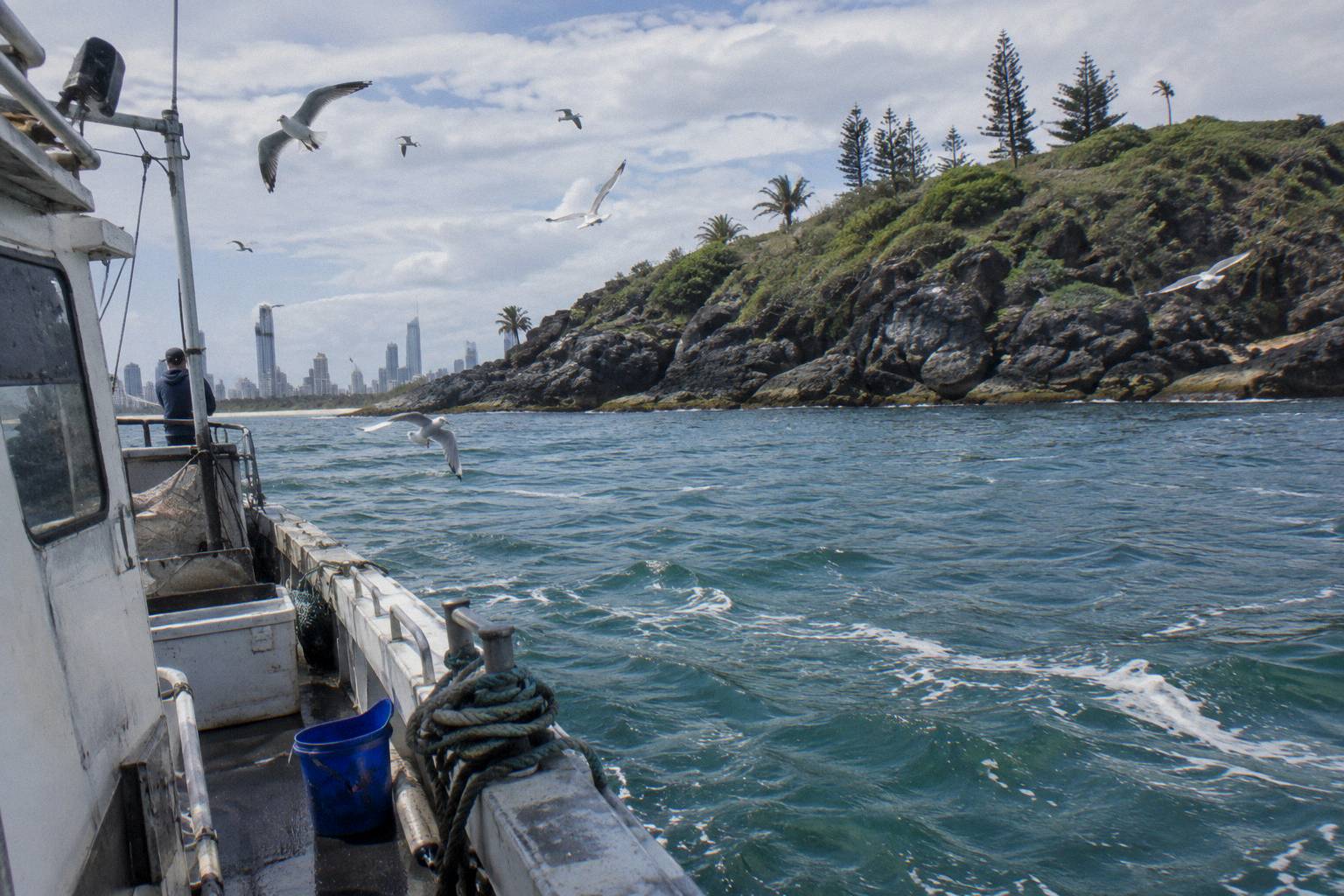
Most of the rules need no interpretation once you see them as a set. The no-take inner zone means nothing leaves the water, living or otherwise. The no-landing rule protects a seabird nesting site, so the island itself is off limits even at low tide. The mooring and anchoring rules protect the reef that makes the snorkel worth doing. The behaviour rules, no touching, chasing, disturbing or feeding, protect the animals you came to see. Together they are the reason the Cook Island reef supports resident turtles at all, and they cost a snorkeller nothing except restraint. The rest of the planning pages sit on Gold Coast Snorkelling Tours.
| Rule | What it means on the day |
|---|---|
| No collecting | Nothing leaves the water, alive or dead, including shells |
| No touching, chasing, disturbing or feeding | Applies to turtles, rays, sharks and fish alike |
| No turning rocks | Animals sheltering under them are protected |
| No anchoring on reef or seagrass | Boats anchor in sand only; moorings are used |
| Landing on the island not permitted | The island is a protected seabird nesting site |
| Vessel speed under 4 knots | Applies inside the reserve |
| Pre-dive briefing | Operator Code of Conduct requirement, 2023 and 2024 |
The Code of Conduct itself is worth knowing about as a visitor, because it is why your tour starts with a briefing rather than straight into the water. Snorkel and dive operators working the reserve signed it in 2023 and 2024, and it commits them to preparing every guest for the rules above. If your skipper spends time on turtle distances and mooring etiquette, that is the Code working, not time wasted.
How The Cook Island Tours Compare
Three covered operators snorkel Cook Island: Cooly Eco Adventures from Chinderah in groups up to 12, Blue Seafaris from Tweed Heads South with a marine biologist guide and a 200 metre swim requirement, and Watersports Guru from Fingal Head with a maximum of nine guests. Booking-page prices start at US$93.64, US$116.52 and US$120.59 per person respectively, and each has a different swim and age standard.
The differences that matter most are swim ability and group size. Cooly Eco requires 50 metres unassisted and takes up to 12 guests. Blue Seafaris requires 200 metres unassisted, confidence in open water, a minimum age of 7, and does not suit non-swimmers. Watersports Guru requires the length of a 100 metre pool, takes children from 6 with an adult, and caps the boat at nine. None of these is the "right" answer; they are three different products for three different swimmers.
| Operator | Departs from | Duration | Group max | Swim requirement | Min age |
|---|---|---|---|---|---|
| Cooly Eco Adventures | Chinderah Bay Dr, Chinderah | About 2.5 hours | 12 | 50 m unassisted | Not stated |
| Blue Seafaris | Public jetty, Tweed Heads South | About 2.5 hours (120 minutes per the operator) | Small group | 200 m unassisted, confident in open water | 7 |
| Watersports Guru | Fingal Head, NSW | About 2.5 hours | 9 | Length of a 100 m pool | 6 |
There is one clock trap worth flagging. All Cook Island operators depart from New South Wales, and NSW runs one hour ahead of Queensland during daylight saving. Blue Seafaris lists its times in NSW time and Cooly Eco Adventures lists its times in Queensland time, so a 9am departure means different things depending on whose listing you are reading. Check which clock your booking page uses before you drive south, and read the finer detail in our guide to where Gold Coast snorkel tours depart.
Gear and inclusions differ too. Blue Seafaris includes premium mask, snorkel, fins, wetsuit and its marine biologist guide, and requires a signed waiver from every participant. Watersports Guru includes snorkel equipment, wetsuit, mask, fins, lifejacket, flotation device, instructor and in-water guide. Its page asks guests to bring sunscreen, a hat, swimmers, a water bottle and snacks, with one curious specific: no bananas on the boat.
Whales, Seasons And When To Visit
NSW DPI records whale and bird watching at Cook Island from May to November, which is when humpbacks pass the northern NSW coast. The sources state no best month for turtles, no turtle counts and no visibility figures for the reserve. Sea temperature on the Gold Coast runs about 22 degrees in winter and about 26 to 27 in summer, and the operators supply wetsuits.
- Marine Biologist Guide, Cook IslandUS$93.64
- Cook Island Turtles From ChinderahUS$116.52
- Small Boat, Fingal Head TurtlesUS$120.59
The whale season is a bonus, not the product. If you snorkel Cook Island between May and November you may see whales from the boat on the ride out, since the DPI reserve page lists whale watching in that window. Swim-with-whales and whale-watching trips are separate products from snorkel tours and are not covered here. For the snorkel itself, no source claims turtles are more likely in any particular month, so book the month that suits your travel, not one a marketing page told you was "turtle season".
Water temperature is the practical seasonal variable. Typical averages run from about 21.7 degrees in July and August to about 27.2 in February, which is why wetsuits are standard inclusions rather than optional extras in winter. The monthly breakdown is in our guide to Gold Coast water temperature by month, alongside what operators recommend wearing.
For something structurally different from the Cook Island reef, the Moreton Island and Tangalooma Wrecks cruise is the long-day alternative: about 11 hours with transfers from selected Gold Coast hotels, roughly four hours at the wrecks stop, a tropical buffet lunch and about an hour on the island, from US$206.16 per person on the booking page. It is a full-day commitment rather than a half-day snorkel, and it snorkels a cluster of scuttled wrecks rather than a natural reef, so it suits a different kind of day out.
Planning Your Day: Eligibility, Timing And Cancellations
Weather governs everything at Cook Island. Blue Seafaris states its tours run daily subject to weather, tides and sea conditions, and Watersports Guru runs weather permitting, which is standard for an open-water reef trip on the NSW coast. When conditions are unsafe the operator cancels, and the booking pages for all covered products list free cancellation up to 24 hours in advance for a full refund. Note the difference in basis: Blue Seafaris' own page sets guest changes at 48 hours with payment forfeited inside that window, while its booking page shows the 24 hour terms, so confirm which terms govern your ticket before you rely on either.
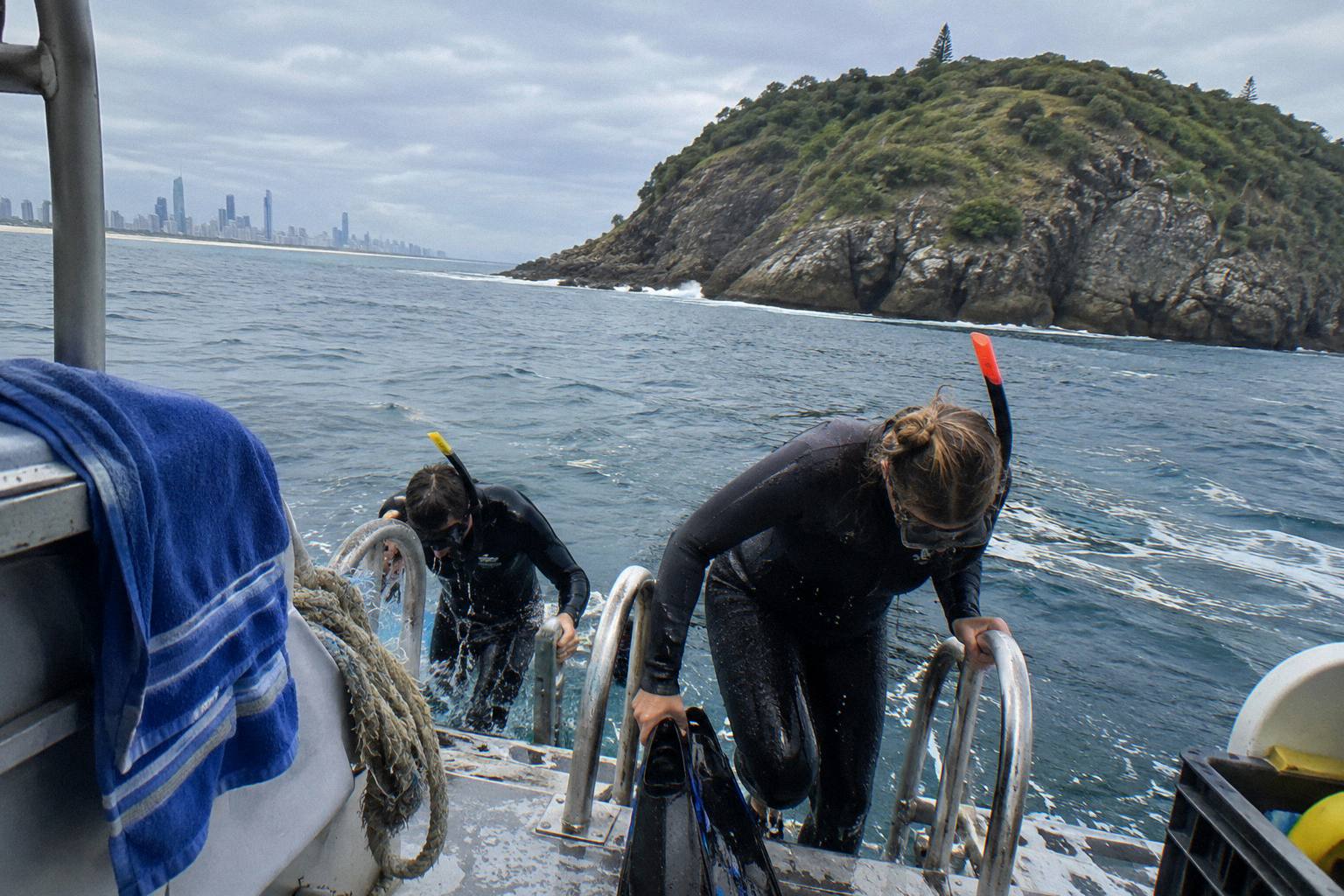
Timing your arrival matters as much as the calendar. The 15-minute boat ride from Fingal Head means the whole Watersports Guru trip, briefing, ride, 60 to 90 minutes in the water and the ride home, fits inside about 2.5 hours, so a morning trip still leaves the afternoon free. If you are staying on the Gold Coast, factor the drive south to the departure point, and check whether your booking page's times are Queensland or NSW clock, as covered above. Our broader piece on snorkelling with turtles on the Gold Coast pulls the turtle options together.
One further point on the sources: wheelchair accessibility is not stated by any of the operators, and items like visibility figures, tide tables and turtle sighting odds are simply not published anywhere in the official or operator material. Send any specific question of that kind to the operator or the booking page rather than assuming an answer.
Whether the reserve's turtles, rays and mixed-climate reef, or the wrecks and full-day scale of Moreton, is your trip, these are the Cook Island options worth a look.
Marine life decided the protection, and the protection sustains the marine life. Choose the operator whose swim standard and group size fit your group, arrive on the right clock, and let the reserve's rules do their work while you float above them.
Common Questions About Cook Island Aquatic Reserve Snorkelling
Can You Touch Turtles When Snorkelling In Australia?
No. The NSW DPI rules for the Cook Island Aquatic Reserve ban touching, chasing, disturbing or feeding marine life, along with collecting and turning rocks. These are legally enforceable reserve rules, and tour operators brief every guest on them before the water under their 2023 and 2024 Code of Conduct.
Can You Snorkel Cook Island Without A Tour?
Snorkelling is allowed in the reserve, but the island lies about 600 metres offshore from Fingal Head and no source describes any shore or swim access. Landing on the island is not permitted, vessels must stay under 4 knots and use the moorings, so the practical access is one of the licensed boat operators.
What Turtles Live At Cook Island?
NSW DPI names threatened green, hawksbill and loggerhead turtles at Cook Island and calls the island a hotspot for them. No source gives a turtle count, a guaranteed sighting or a month-by-month presence claim, so treat any such promise on a booking page with caution.
When Was Cook Island Declared An Aquatic Reserve?
1998, per the NSW Department of Primary Industries. Some operator pages state 1974, which conflicts with the regulator's own record; 1998 is the figure to rely on.
When Is Whale Watching Season At Cook Island?
NSW DPI records whale and bird watching at the reserve from May to November. Whale-watching and swim-with-whales trips are separate products from the snorkel tours covered here.
What Else Might You See Besides Turtles?
DPI lists the giant Queensland groper and grey nurse shark among threatened species in the reserve, and notes that tropical, subtropical and temperate marine life blend there. Blue Seafaris additionally lists eagle rays, seasonal manta rays and leopard sharks, attributed to the operator.