Snorkelling Or Scuba Diving On The Gold Coast
Snorkelling and scuba diving are both possible on the Gold Coast, but the covered tours here are all snorkel trips, and the two activities ask very different things of a swimmer. This guide sets out what each covered product requires, what the authorities say about each site, and where a diver-in-waiting can still get a good day in the water.
Short answer
Snorkelling wins for most Gold Coast visitors: every covered tour is a snorkel trip, several need no experience at all, and prices run from US$53.22 to US$206.16 per person on the booking pages. Diving is allowed at the same sites, but no dive product, course or certification appears among the tours covered here, so diving facts run thin on the ground.
Snorkelling asks you to float and look. Scuba diving asks you to breathe underwater, which takes training, gear and, for anything beyond a beginner try-dive, a certification. On the Gold Coast the practical difference is even sharper, because every tour covered by this site is a snorkel trip, from the two-and-a-half-hour Wave Break Island kayak runs to the eleven-hour Moreton Island wreck cruise. That does not make the snorkel-versus-dive question trivial: several of these trips sit at sites where diving also happens, and the authorities who manage those sites write their rules for both activities at once.
What the sources here do support is a clear decision framework. Cook Island, Wave Break Island and the Tangalooma wrecks are the three covered snorkel settings, and each is documented by an official or operator page that states who may enter the water and on what terms. Dive courses, dive-site prices, depths and certification pathways are not stated anywhere in those sources, and this article will say so once rather than guess. If you are weighing Gold Coast Snorkelling Tours against a scuba course elsewhere, the honest comparison is between what the covered snorkel products require and what diving generally demands, checked against the dive operator's own materials before you book.
Snorkelling Or Scuba Diving On The Gold Coast: Which Should You Choose?
Snorkelling suits almost every visitor because the Gold Coast trips covered here ask for either no experience at all or a stated swim distance of 50 to 200 metres, while scuba diving anywhere requires training none of these tours provide. Every product covered here is a snorkel trip, from US$53.22 to US$206.16 per person on the booking pages. No dive product, course, certification or depth figure exists in these sources.
The decision usually comes down to two honest questions. First, can you swim, and how far? The Cook Island turtle operators state three different requirements: Cooly Eco Adventures asks for 50 metres unassisted, Watersports Guru asks for the length of a 100 metre pool, and Blue Seafaris asks for 200 metres unassisted in open water plus reasonable fitness. The Wave Break Island operators ask far less. Seaway Kayaking Tours takes non-swimmers from age 4 with life jackets worn in the water, and Queensland Scuba Diving Company states no experience is necessary, with full instruction provided. Snorkelling on the Gold Coast therefore has an entry point for nearly everyone; diving does not, at least not through anything covered here.
- Boat Snorkel, Hotel TransfersUS$53.22
- Kayak To Wave Break Island, SnacksUS$66.69
- Breakfast Kayak, Fish FeedingUS$82.05
Second, what do you want to see, and how deep do you need to go to see it? The covered sites are shallow-water settings. Watersports Guru describes its Cook Island snorkelling as 3 to 6 metre deep water with 60 to 90 minutes in the water across an about 2.5 hour trip. The Gold Coast Waterways Authority describes Wave Break Island as having "clear, clean and mostly shallow waters". Tangalooma Island Resort's own page puts its standard wreck snorkel at about 30 to 35 minutes in the water from a beach-to-wrecks boat ride. None of that requires tanks, and none of it is a compromise: the marine life at each site, from green turtles grazing seagrass in Moreton Bay to the blended tropical, subtropical and temperate species at Cook Island, sits within reach of a snorkeller at the surface.
Divers reading this should treat the covered tours as a companion activity rather than a substitute. One real pattern from the tours covered here is worth naming: readers weighing a dive course often settle on the easier snorkel tour first, then take a course at home. The Seaway Kayak And Snorkel With Marine Life trip, from US$66.69 per person and rated 4.6 across 370 reviews, is the classic version of that first step, since no swimming, kayaking or snorkelling experience is needed.
What Do Snorkel Tours On The Gold Coast Actually Require?
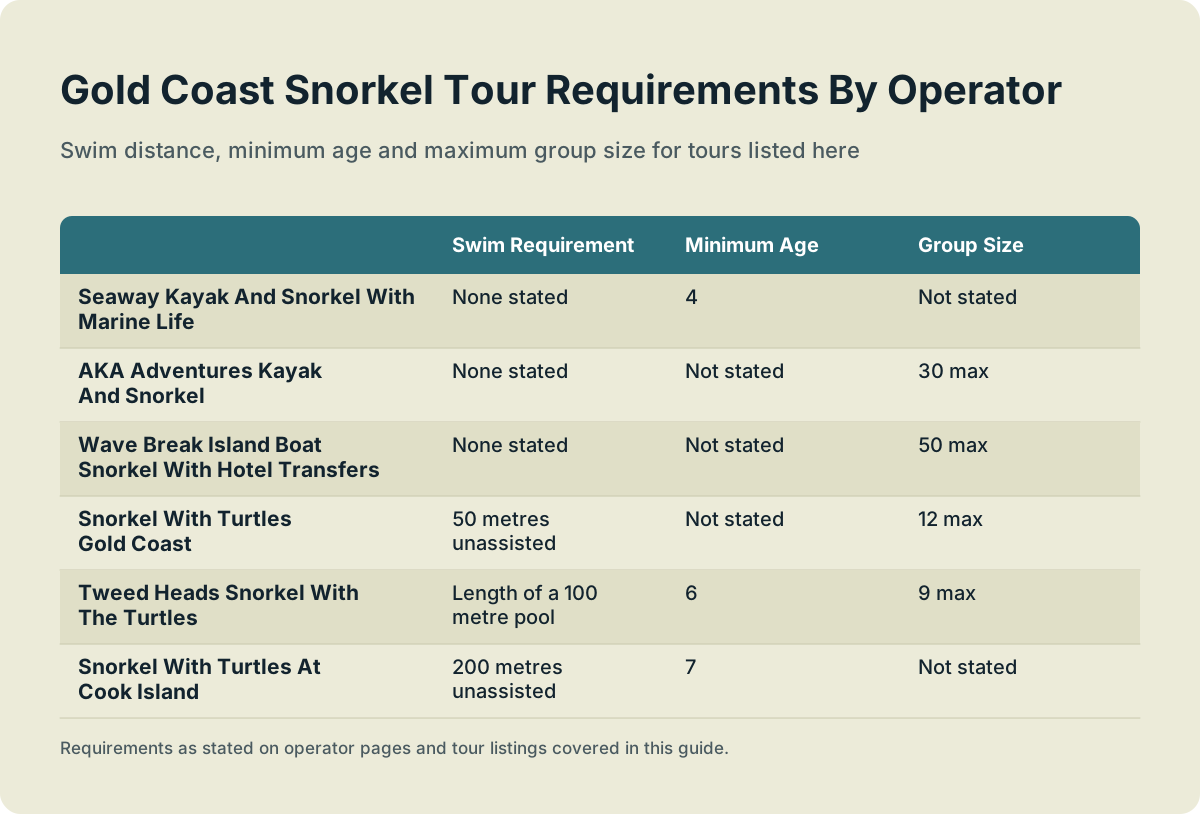
Requirements differ by operator, not by region: swim distances of 50, 100 and 200 metres, minimum ages of 4, 6 and 7, and two operators that welcome non-swimmers entirely. Seaway Kayaking Tours takes children from age 4 with no experience, Blue Seafaris requires swimmers of 200 metres aged at least 7, and Queensland Scuba Diving Company states no experience is necessary. There is no single Gold Coast standard.
The cleanest way to see the spread is a table built only from each operator's own stated figures. Where a figure was not read, it says so, and a blank is a fact, not an oversight.
| Tour | Operator | Swim requirement | Minimum age | Non-swimmers | Group size |
|---|---|---|---|---|---|
| Seaway Kayak And Snorkel With Marine Life | Seaway Kayaking Tours | None stated; life jackets worn in the water | 4 | Welcome | Not stated |
| AKA Adventures Kayak And Snorkel | AKA Adventures | None stated; life jackets worn at all times on the water | Not stated (listings conflict) | Welcome | 30 max |
| Wave Break Island Boat Snorkel With Hotel Transfers | Queensland Scuba Diving Company | None stated; full instruction provided | Not stated | Not stated | 50 max |
| Snorkel With Turtles Gold Coast | Cooly Eco Adventures | Swim 50 metres unassisted; no life jackets in the water | Not stated | Not suitable | 12 max |
| Snorkel With Turtles At Cook Island | Blue Seafaris | Swim 200 metres unassisted, confident in open water | 7 | Unsuitable; pool noodles offered | Not stated |
| Tweed Heads Snorkel With The Turtles | Watersports Guru | Swim the length of a 100 metre pool | 6 | Not for non-swimmers | 9 max |
| Moreton Island And Tangalooma Wrecks Snorkel Cruise | See Moreton | Not stated | Not stated | Not stated | Not stated |
Two patterns matter for the snorkel-versus-dive decision. The Wave Break Island products, inside the sheltered Broadwater, are the ones with the softest entry requirements, because the water is calm and shallow by design. The Cook Island products, which cross open water to a real oceanic reef, carry the swim requirements, because you are snorkelling over a reserve 600 metres offshore with no pool wall to hold. If a dive course feels daunting because of the swim, the Broadwater trips remove that barrier entirely.
The other pattern is family logistics. Seaway Kayaking Tours takes children from age 4 provided under-16s are with an adult, Watersports Guru takes them from 6 with 6 to 14 year olds accompanied, and Blue Seafaris starts at 7 with under-16s accompanied. A family with mixed ages and abilities has an obvious ladder here, and our snorkelling with kids on the Gold Coast guide walks it in detail. Nothing equivalent exists in the diving world among the tours covered here, because no dive product is included at all.
Can You Scuba Dive At The Same Sites As The Snorkel Tours?
Yes, in principle. NSW's Cook Island aquatic reserve rules explicitly allow swimming, snorkelling, scuba diving and photography, and the Gold Coast Waterways Authority calls Wave Break Island popular among snorkellers and scuba divers alike. But no dive operator, dive course, certification, depth or dive price is covered by this site, so this article cannot compare dive products, only the sites.
Cook Island is the clearest case. The NSW Department of Primary Industries states the reserve, declared in 1998 and covering 80 hectares out to a 500 metre radius from the survey marker, permits swimming, snorkelling, scuba diving and photography. Divers and snorkellers share the same rules: no collecting, touching, chasing, disturbing or feeding marine life, no turning rocks, no anchoring on reef or seagrass, no landing on the protected seabird nesting island, vessel speed under 4 knots and use of the moorings. Significantly for anyone weighing both activities, snorkel and dive operators together signed a Code of Conduct in 2023 and 2024 that includes a pre-dive briefing, which means the two communities are managed as one at this site. The full reserve rules are on the NSW DPI Cook Island page.
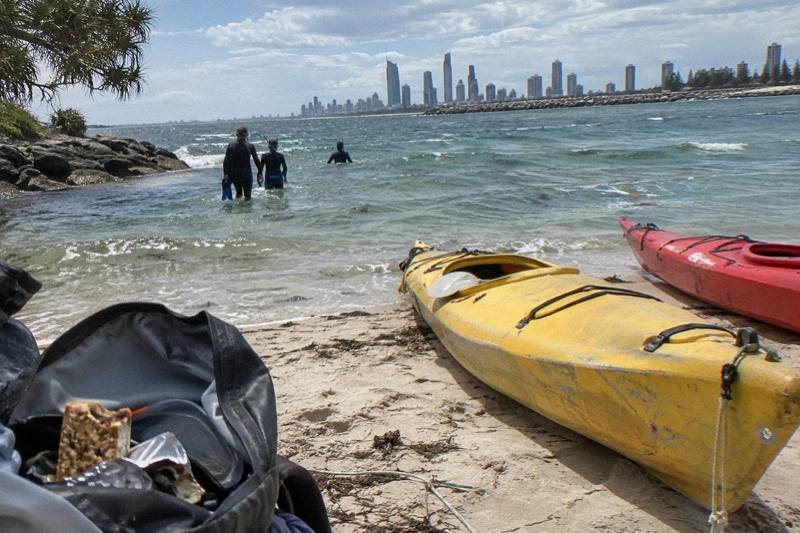
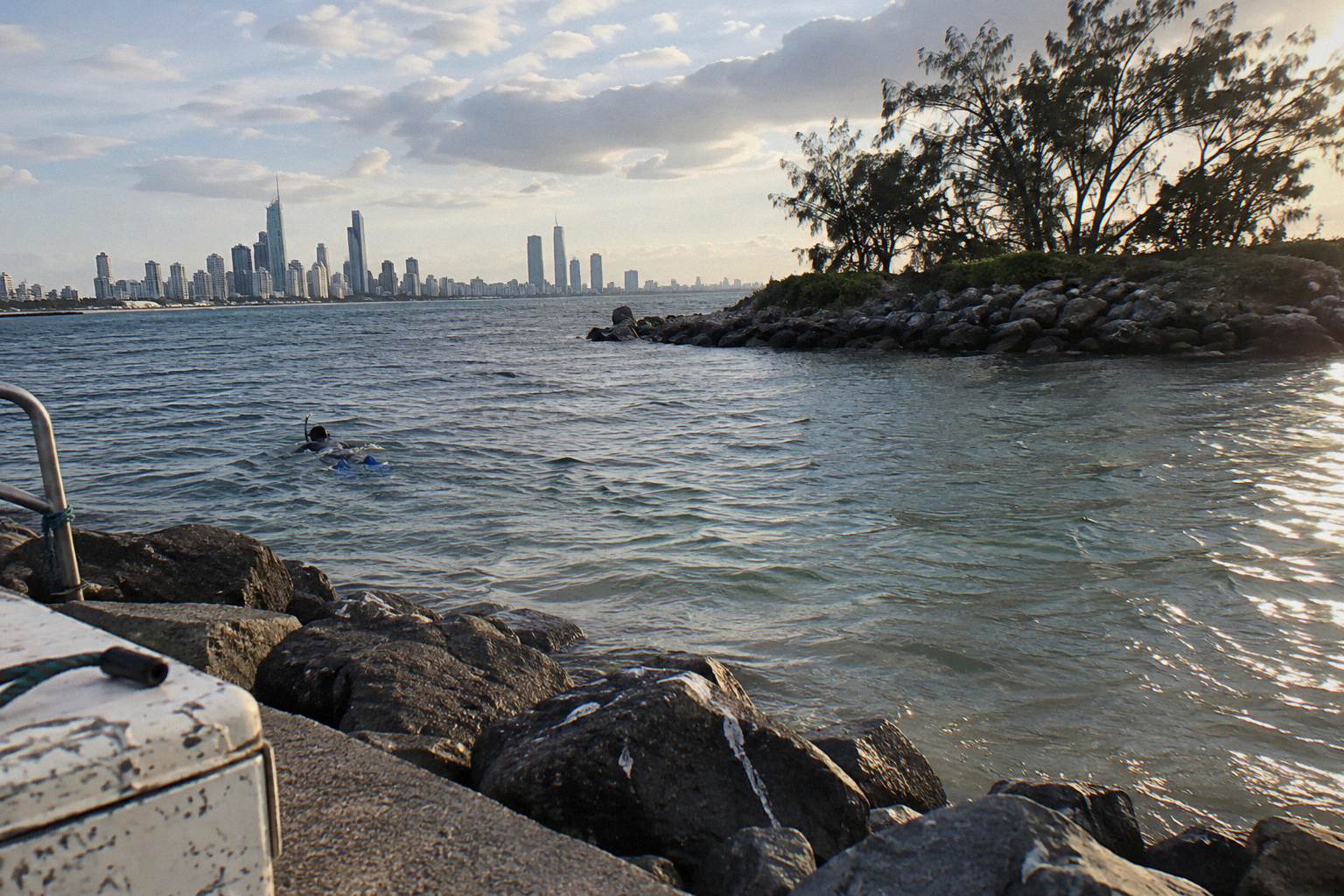
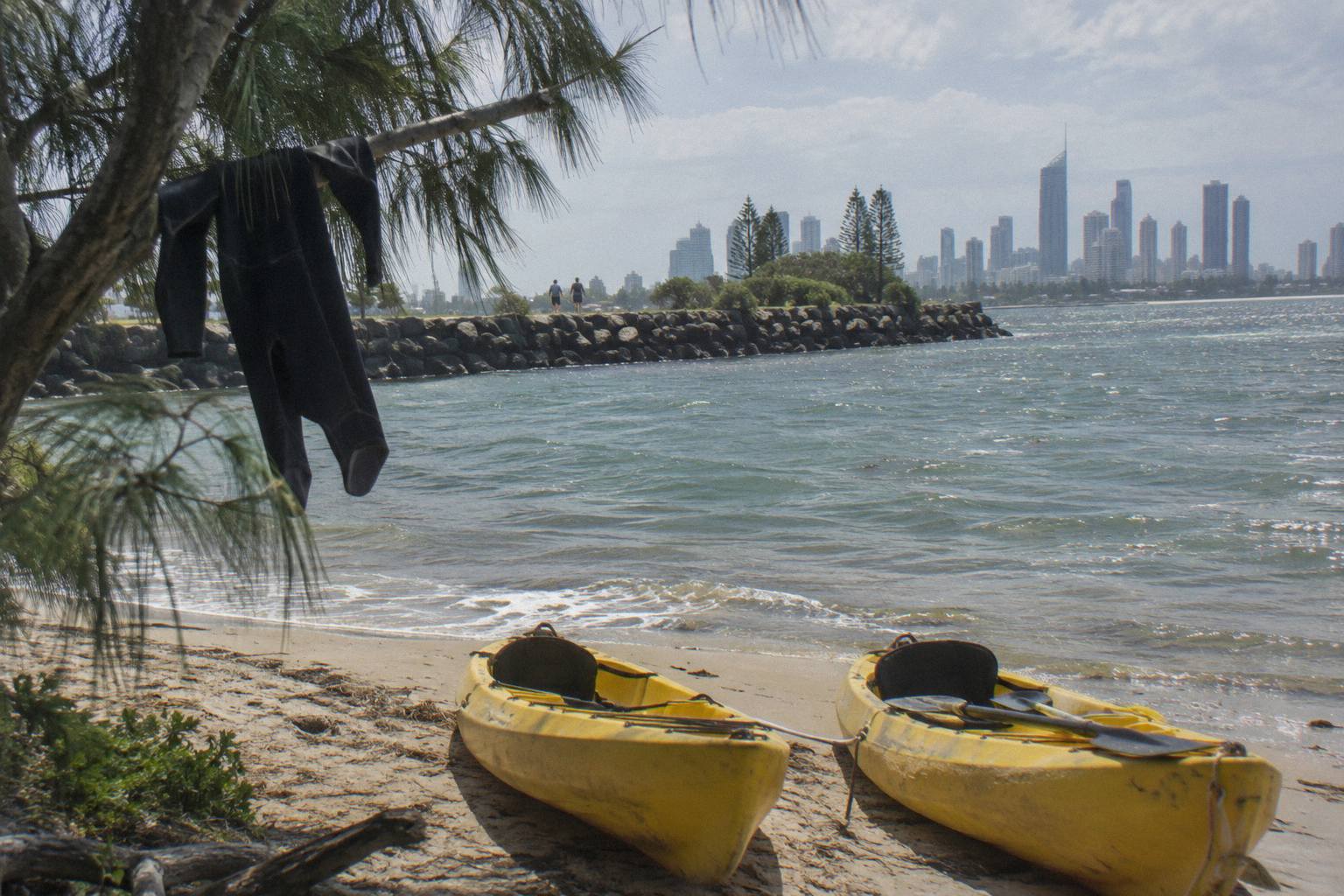
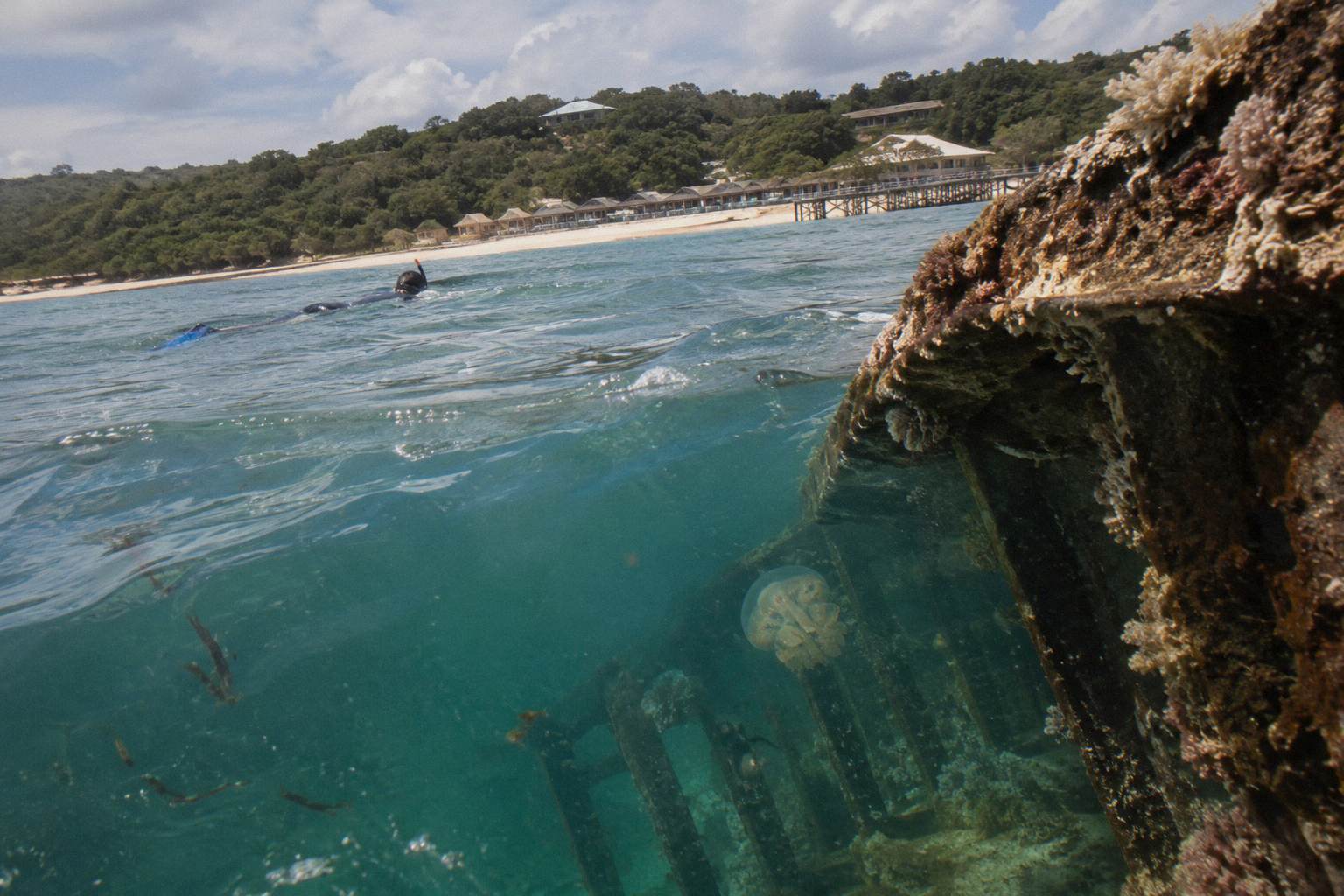
Wave Break Island is similar in spirit. The Gold Coast Waterways Authority's Wave Break Island page calls the island "particularly popular amongst snorkelers and scuba divers" with "clear, clean and mostly shallow waters", and notes access is over water only, by private vessel, kayak or stand-up paddleboard from the Labrador foreshore. The island is man-made, created in 1985 as part of the Gold Coast Seaway construction to protect the western Broadwater foreshore, and it is day use only, with no accommodation or camping. Its snorkel appeal comes from a man-made rock wall that the booking pages describe as now functioning as a reef; the Queensland Scuba Diving Company's booking page, in operator wording, lists a 10-minute cruise to the island and 50 or more fish species.
The honest gap must be stated once: dive courses, dive-site prices, depths and certification requirements are not stated in any source this site uses, so no dive product is covered here and none should be inferred from the dive companies' presence at these sites. What can be said is that the sites are shared, the rules are shared, and the shallow character that makes them good beginner snorkel spots is the same character that funnels much of the local diving interest toward the same walls and wrecks. Readers curious about which site suits which swimmer can start with our best places to snorkel on the Gold Coast overview.
For visitors who conclude that snorkelling is the right call this trip, the mid-range Cook Island option is worth a look. Blue Seafaris runs a 120-minute turtle tour with a marine biologist guide, premium gear and wetsuit included, from US$93.64 per person on the booking page (the operator's own price is A$139 per adult, A$119 per child), rated 4.3 across 241 reviews.
A paragraph of caution belongs here too, because the Cook Island operators sit on the New South Wales side of the border and the clocks differ: NSW runs one hour ahead of Queensland during daylight saving, and Blue Seafaris states its times in NSW time while Cooly Eco Adventures lists Queensland time. Arrive 30 minutes early for Blue Seafaris, whose boat cannot wait, and check which clock your booking page uses before you set an alarm.
How Deep Do You Need To Go To See The Good Stuff?
Not very. The covered sites are shallow by nature: Watersports Guru describes Cook Island snorkelling in 3 to 6 metres of water, the Tangalooma wrecks sit a short boat ride off the beach, and the resort attributes over 200 fish species and 3 turtle species to the site. Turtles, rays and reef fish at these sites live at snorkel depth, not dive depth.
The turtle evidence is the strongest. Queensland Parks states that six of the world's seven marine turtle species are found in Moreton Bay, that three are resident, that green turtles graze seagrass and loggerheads eat shellfish, crabs and jellyfish, and that green and loggerhead turtles nest on Bribie, Moreton, North and South Stradbroke islands. Green turtles graze seagrass meadows, which grow where sunlight reaches, which means shallow water. At Cook Island, NSW DPI calls the island a hotspot for threatened green, hawksbill and loggerhead turtles, and Blue Seafaris lists green and hawksbill turtles, eagle rays, seasonal manta rays and leopard sharks. None of that requires a tank.
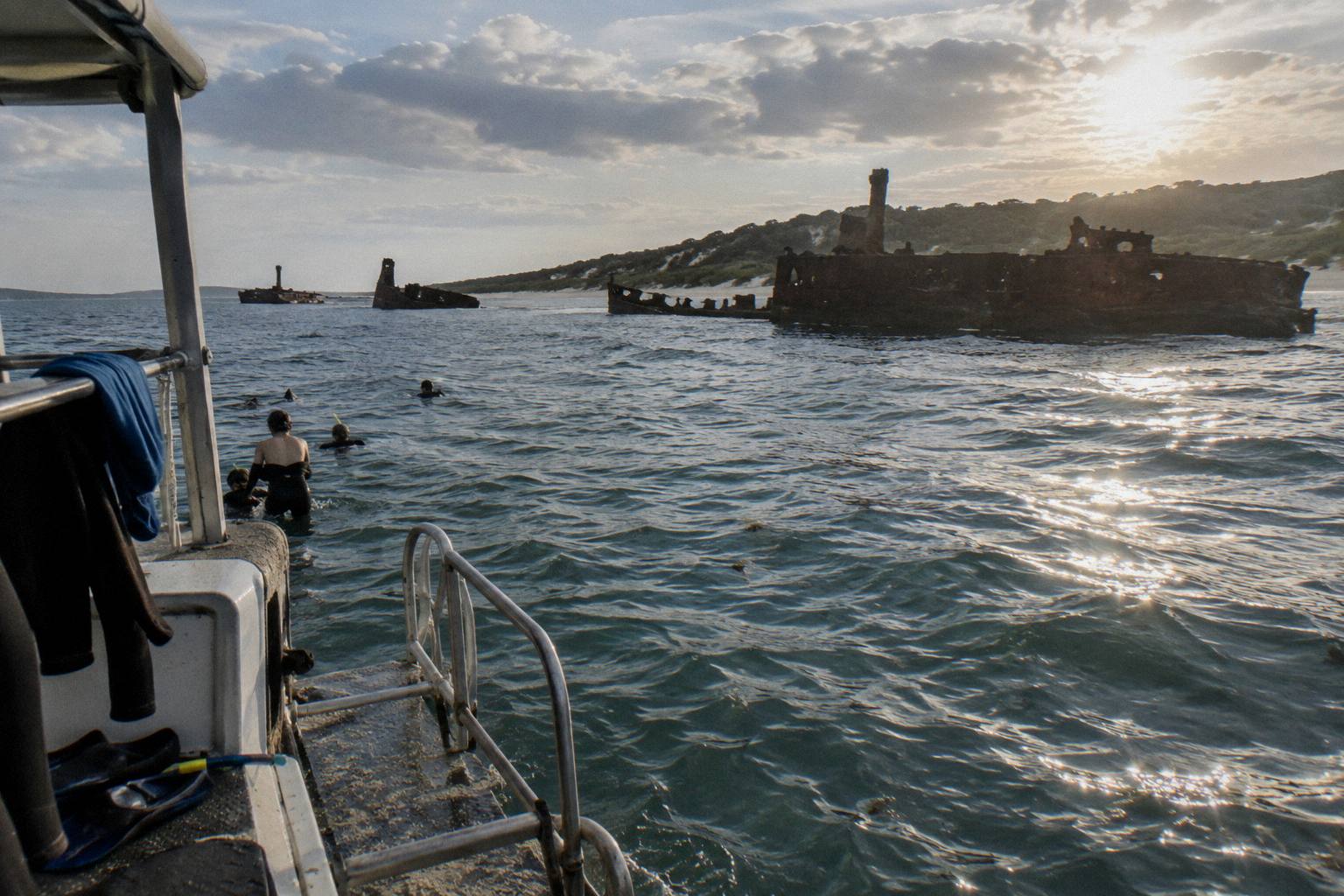
The Tangalooma wrecks make the point from another angle. The resort's own page says the wrecks cluster was scuttled by the Queensland Government between 1963 and 1984, 15 vessels by the resort's count (five in 1963, five in the 1970s, five in the 1980s), and sits a 15 to 20 minute walk up the beach from the resort. It is a snorkel site first and a dive site second: the resort recommends the guided tour rather than swimming out, warns of strong current between the wrecks and the beach when the tide runs, and notes the beach is unpatrolled with boat and jet-ski traffic. Our Tangalooma wrecks snorkelling from the Gold Coast guide covers the site, and Moreton Bay Marine Park itself, first declared 1993 and spanning 3,400 square kilometres from Caloundra to the Gold Coast Seaway, is documented on the Queensland Parks Moreton Bay page.
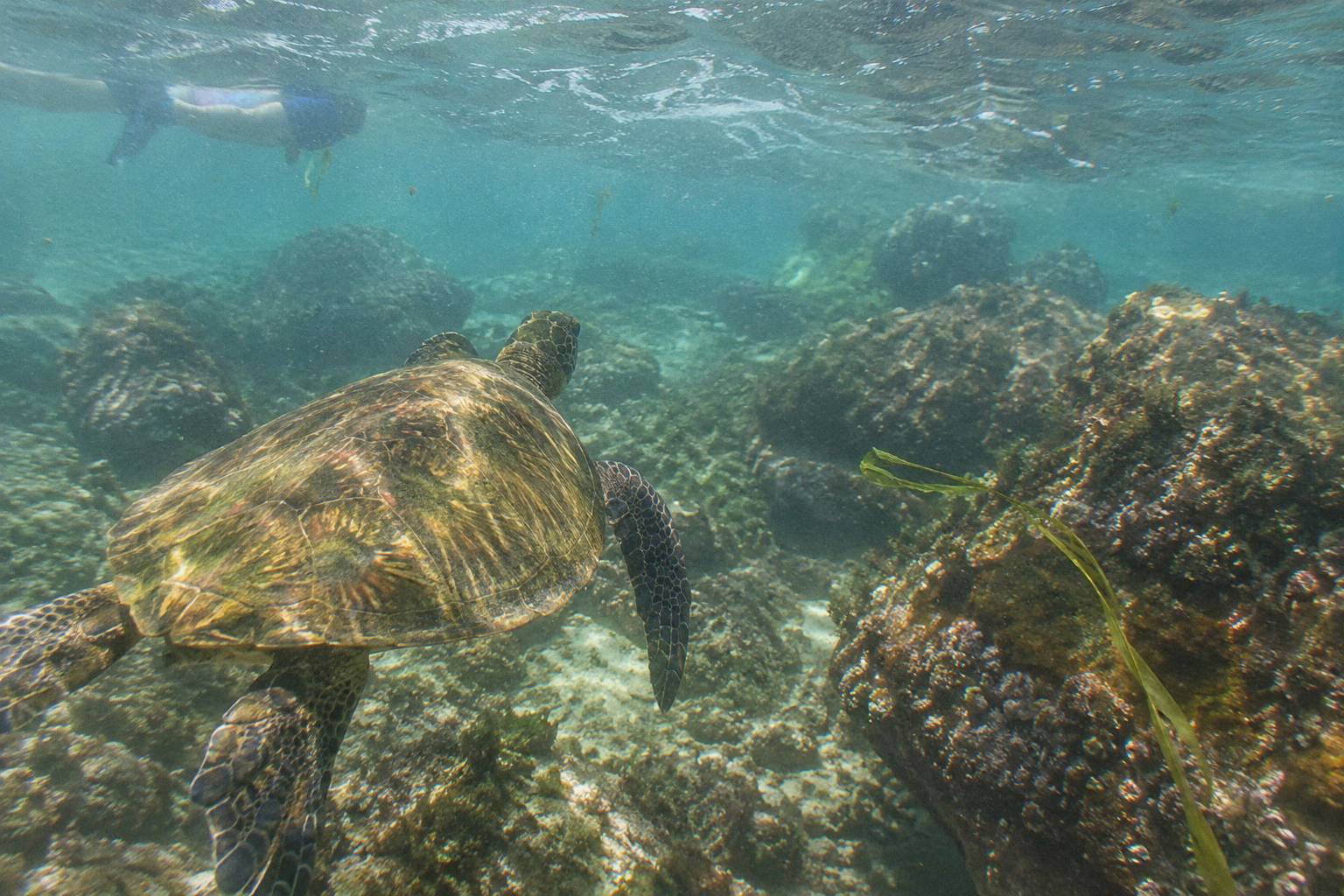
For a diver this is mildly deflating news, but it is also useful. The shallow character that keeps these sites beginner-friendly also keeps the marine life visible from the surface. The resort's wording, which should be treated as soft operator claims rather than counted facts, attributes over 200 fish species, 130 coral species, 3 turtle species and wobbegong sharks to the Tangalooma site. Whether a diver would see materially more by going deeper at these particular sites is not stated anywhere in the sources, and honesty says so plainly.
What Does Each Trip Cost And How Long Does It Take?
Covered snorkel trips run from US$53.22 to US$206.16 per person on the booking pages, over durations from about 2.5 hours to about 11 hours. There is no single Gold Coast snorkel price: figures differ by operator and by group size, and two operators publish their own prices in Australian dollars, which are listed separately and never mixed.
The price table below uses each operator's own stated figure and its basis. Where an operator publishes no price, it says so.
| Tour | Booking-page price | Operator's own price | Duration | Meal |
|---|---|---|---|---|
| Seaway Kayak And Snorkel With Marine Life | From US$66.69 pp | Not stated | About 2.5 hours | Snacks |
| AKA Adventures Kayak And Snorkel | From US$82.05 pp | Not stated | About 3 hours | Snacks (light continental breakfast, beverages not included) |
| Wave Break Island Boat Snorkel With Hotel Transfers | From US$53.22 pp | Not stated | About 4 hours pickup to drop-off | Not stated |
| Snorkel With Turtles Gold Coast | From US$116.52 pp | Not stated | About 2.5 hours | Not stated |
| Snorkel With Turtles At Cook Island | From US$93.64 pp | A$139 adult, A$119 child | About 2.5 hours (120 minutes per the operator) | Not stated |
| Tweed Heads Snorkel With The Turtles | From US$120.59 pp | A$119 per person | About 2.5 hours | Not stated |
| Moreton Island And Tangalooma Wrecks Snorkel Cruise | From US$206.16 pp | Not stated | About 11 hours | Included |
Against diving, the comparison is one-sided in a way worth stating carefully rather than cheerfully. Because no dive course or dive product price exists in these sources, this article cannot print a dive figure, and it will not invent one. What can be said is structural: a dive certification is a multi-session commitment wherever you take it, while every product above is a single morning or single day, bookable with free cancellation up to 24 hours in advance for a full refund on the booking pages. Our Gold Coast snorkelling prices guide breaks the price landscape down further.
The two currencies deserve one flag. The booking pages show US$ figures; the operators' own pages show A$ figures; the two are never converted or compared here, and the operator's price and the booking-page price for the same tour can differ. Watersports Guru, for instance, lists from A$119 per person on its own page for the premium tour that includes a personalised photo album, and a private boat at A$1,100, while its booking page shows from US$120.59 per person. Both are real, both are labelled, and neither is a bargain claim.
The smallest-group turtle option sits at the higher end of that table for good reasons. Watersports Guru runs a maximum of 9 guests with an in-water guide, a 15-minute boat ride from Fingal Head, and 60 to 90 minutes in the water, with wetsuit, mask, fins, lifejacket and flotation device included, from US$120.59 per person on the booking page. Its page claims a guaranteed turtle sighting, and that claim is exactly the kind of operator promise this site does not print as fact.
One more honest note on ratings, since divers comparing options often lean on them: Watersports Guru and See Moreton have no rating printed in the tours covered here, and the others range from 4.1 across 168 reviews to 4.9 across 172. A rating is one signal among several, and it says nothing about whether a tour suits a hesitant swimmer, which matters far more in this decision.
Is Snorkelling Safer Than Diving For A Beginner?
On the covered tours, snorkelling carries stated safety scaffolding a beginner can rely on: life jackets for non-swimmers on two Wave Break trips, in-water guides, group caps as small as 9, and operator briefings required by the 2023 and 2024 Cook Island Code of Conduct. Diving's safety record cannot be assessed here because no dive product is covered, so this comparison covers only what is stated.
Safety at these sites is layered, and the layers are documented. At Cook Island, the operator Code of Conduct signed in 2023 and 2024 includes a pre-dive briefing, which every covered turtle tour's safety briefing flows into; NSW DPI's reserve rules cover the environmental side, and its wildlife guidance explains why the rules exist, from the no-take sanctuary zone around the island to the ban on landing on the seabird nesting site. At Wave Break Island, the sheltered Broadwater does the heavy lifting: the waterways authority's description of clear, mostly shallow water, plus life jackets worn by non-swimmers on the Seaway and AKA trips, is why those products can take participants from age 4 and 6 respectively with no experience. Our is snorkelling on the Gold Coast safe post takes the question in full.
The open-water caveat belongs to the Cook Island products. Crossing to a reef 600 metres offshore in 3 to 6 metre water is why the swim requirements exist: Cooly Eco Adventures does not wear life jackets in the water and asks for 50 metres unassisted, Blue Seafaris offers no flotation jackets for non-swimmers (pool noodles only) and asks for 200 metres, and Watersports Guru excludes non-swimmers outright. If you are choosing between snorkelling and diving partly out of nervousness, the site matters as much as the activity: Broadwater first, ocean second. Readers who cannot swim at all have a dedicated answer in can non-swimmers snorkel on the Gold Coast.
Marine stingers deserve one calm paragraph, because safety questions always arrive here. Surf Life Saving Queensland states that dangerous tropical stingers, box jellyfish and irukandji, have a season typically from November through to May, but gives their range as north of Agnes Water and north of southern Fraser Island respectively, so their presence is not stated for the Gold Coast either way. Bluebottles occur Australia wide, and SLSQ's first aid for them is to remove tentacles, rinse with sea water, then hot water for about 20 minutes, no hotter than comfortable, with a cold pack if pain persists, and 000 in an emergency. The detail is on the SLSQ marine stingers page. Wetsuits are included by Blue Seafaris and Watersports Guru on the Cook Island trips.
Weather cancellation is the last safety layer, and it is genuinely two-tiered. The booking pages list free cancellation up to 24 hours in advance for a full refund on every covered product, but the operators' own terms can be stricter: Blue Seafaris requires guest changes by email at least 48 hours before (under 48 hours, payment is forfeited), and if the operator cancels for conditions it offers a credit voucher or a refund less booking and card fees. Read the terms on the booking page for the specific tour before you rely on either figure, and our what if a snorkel tour is cancelled for weather post explains the whole structure.
Which Tour Should A Would-Be Diver Book Instead?
A hesitant or would-be diver should book by swim confidence: Seaway Kayaking Tours for total beginners and families from age 4, the Queensland Scuba Diving Company boat snorkel for a gear-and-instruction taste of the dive-company format, and a Cook Island turtle trip only once the swim distance is comfortable. The Moreton cruise suits confident snorkellers wanting the biggest day out.
The ladder is real and it maps to how dive training itself is sequenced, shallow and supervised before deep and independent. The table below lays it out step by step, using each tour's own stated figures only.
| Step | Tour | Site | Booking-page price | Best for |
|---|---|---|---|---|
| 1 | Seaway Kayak And Snorkel With Marine Life | Wave Break Island, Broadwater | From US$66.69 pp | Total beginners, non-swimmers, families from age 4 |
| 2 | Wave Break Island Boat Snorkel With Hotel Transfers | Wave Break Island, Broadwater | From US$53.22 pp | A dive-company format day with instruction and no experience needed |
| 3 | A Cook Island turtle trip (Cooly Eco, Blue Seafaris or Watersports Guru) | Cook Island aquatic reserve | From US$93.64 pp | Confident swimmers ready for open ocean and turtles |
| 4 | Moreton Island And Tangalooma Wrecks Snorkel Cruise | Tangalooma wrecks, Moreton Bay | From US$206.16 pp | The biggest day out, wrecks and an island stop, about 11 hours |
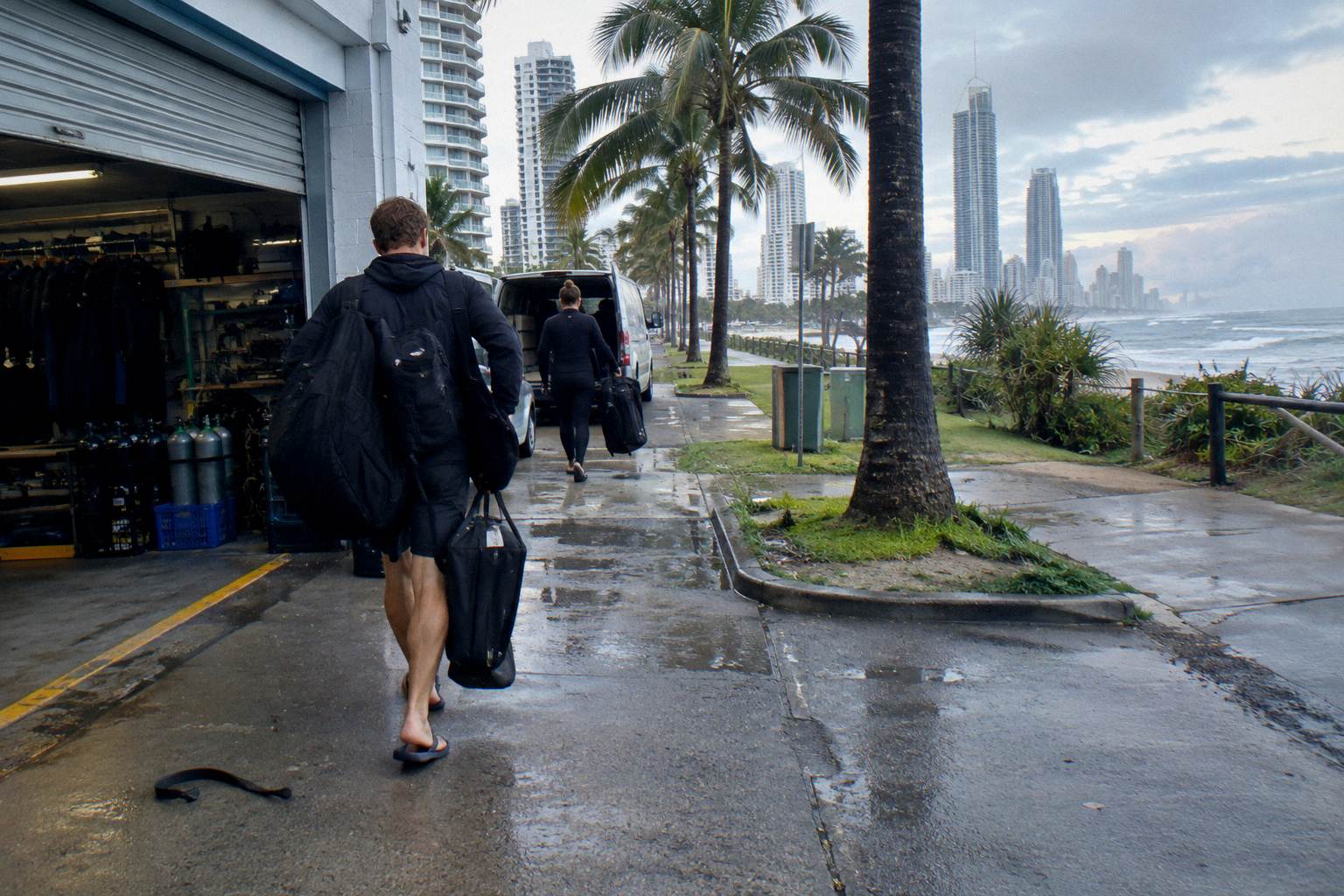
Step one, the Seaway trip: kayak about 30 minutes across the Broadwater, a short bushwalk to the sheltered snorkel site on the man-made rock wall, snacks included, non-swimmers welcome in life jackets, from US$66.69 per person and rated 4.6 across 370 reviews. Check availability on the listing for starting times, since several departures run a day and the van and trailer meet beachside on Marine Parade, Biggera Waters, between 456 and 484.
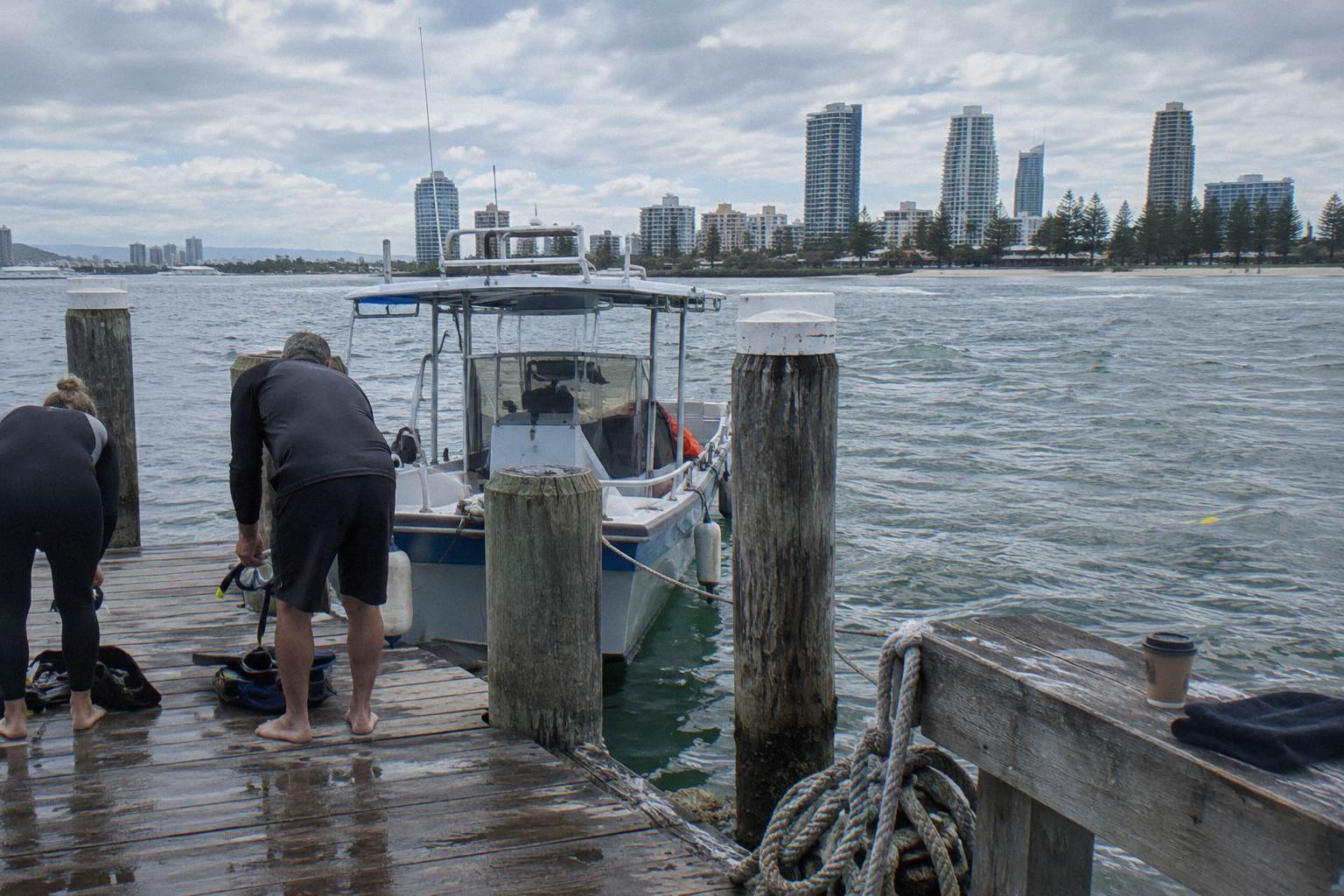
Step two is the boat-format trip, and it is the closest thing to a dive-company experience in the tours covered here without the certification. Queensland Scuba Diving Company runs about 4 hours pickup to drop-off, with hotel pickup from selected Surfers Paradise hotels (seats limited) or the dive store at 19 Karloo Street, then a boat from Marina Mirage, Main Beach, a 10-minute cruise to Wave Break Island, full instruction and no experience necessary, from US$53.22 per person. The group can run to 50, so it trades intimacy for ease, and it is rated 4.1 across 168 reviews.
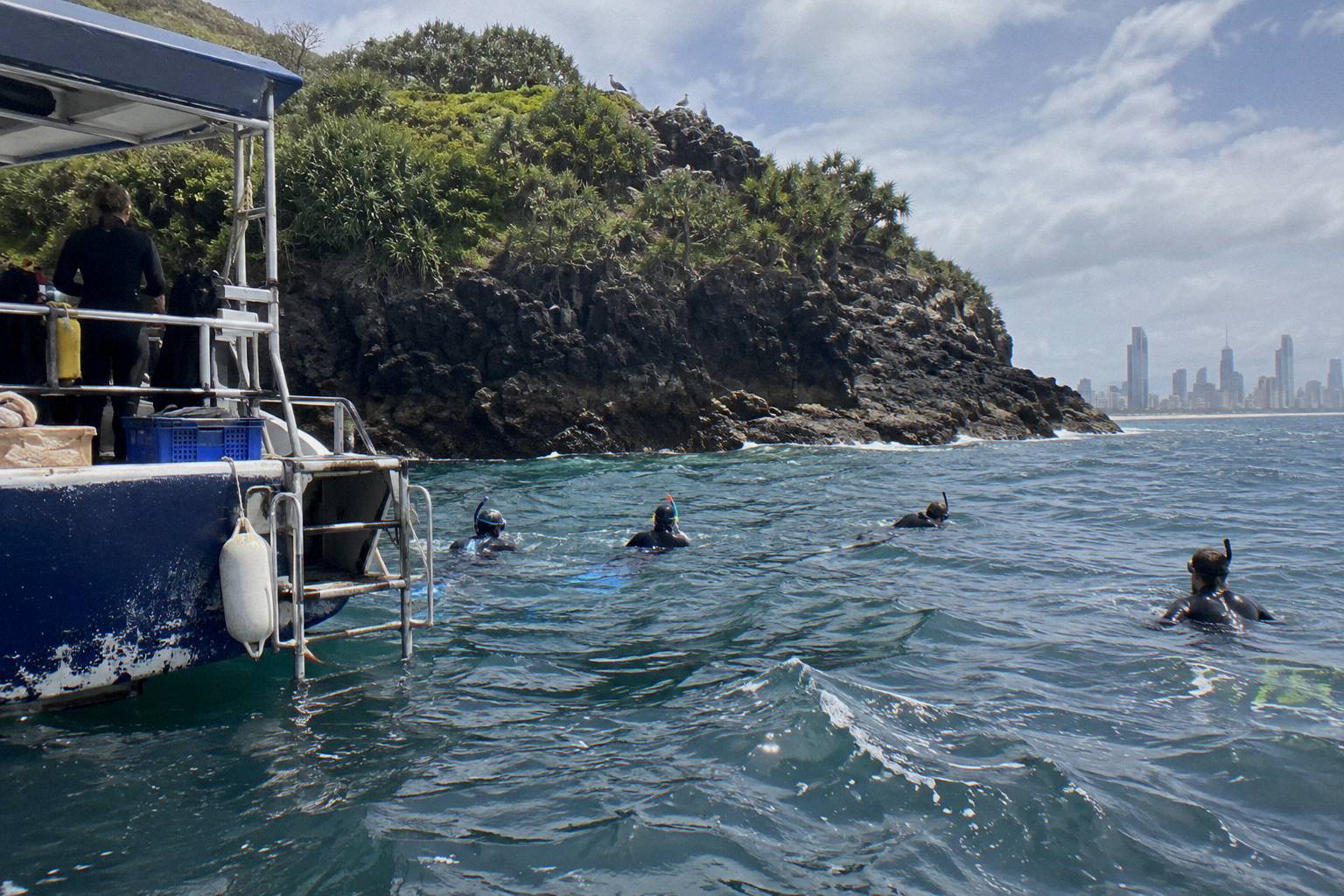
Step three is Cook Island, and the choice there is about group size and guide style. Watersports Guru caps at 9 with an in-water guide and 60 to 90 minutes in the water from Fingal Head. Blue Seafaris brings a marine biologist and premium gear for 120 minutes from the Tweed Heads South jetty. Cooly Eco Adventures takes up to 12 from Chinderah, from US$116.52 per person, rated 4.9 across 172 reviews, and asks only 50 metres of swimming, which makes it the most accessible of the three ocean trips. Step four, for the confident, is the See Moreton day: about 11 hours, a 7:30am start, about 4 hours at the wrecks stop and about 1 hour on Moreton Island, tropical buffet lunch included, transfers from selected Gold Coast hotels, from US$206.16 per person. Check the pickup point on the listing.
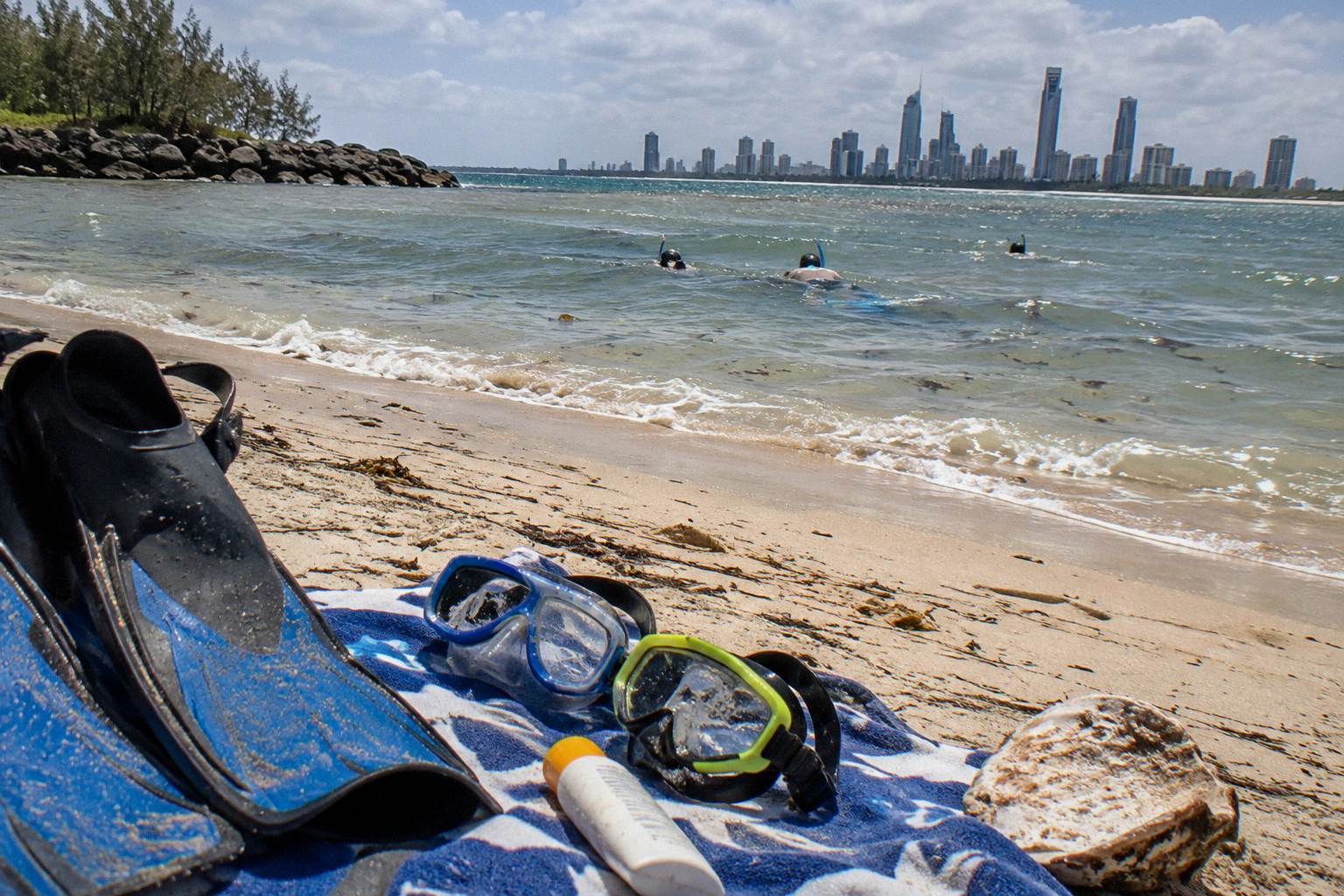
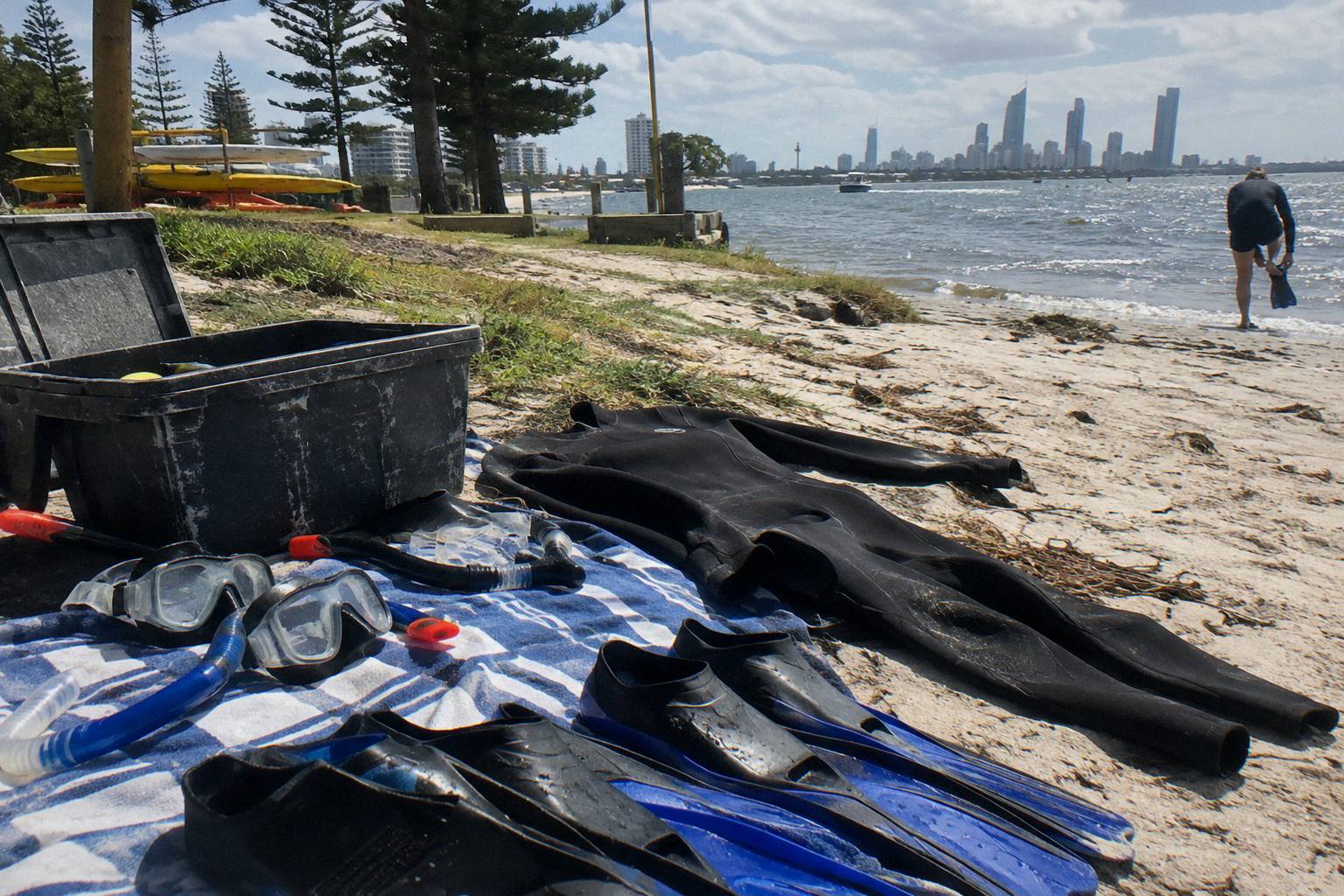
Whatever the step, the practical advice is the same: book with free cancellation up to 24 hours in advance on the booking page, confirm starting times and the clock your operator uses, and bring the basics the operators themselves list, swimmers, towel, hat, sunglasses, reef-safe sunscreen, water and a camera. Watersports Guru adds snacks (no bananas) and an optional motion-sickness remedy for the boat ride. None of that is dive-grade equipment, which is rather the point.
Snorkel Now, Dive Later: A Sensible Order Of Operations
The sensible order is a guided snorkel trip first, a swim-confidence check second, and dive training last, because every covered snorkel product builds exactly the skills a first dive course assumes: comfort in open water, mask and fins familiarity, and calm breathing at the surface. The tours here cover steps one and two; the dive course happens elsewhere, and no dive product is covered by this site.
This is not a dodge, it is the decision logic the facts support. Diving's entry barriers, training, certification and gear, are real wherever you take them, and they are not documented in any source this site holds, while snorkelling's barriers on the Gold Coast are documented tour by tour and start at zero for the Broadwater trips. A visitor who completes the ladder above arrives at a dive course already able to swim in open water, already comfortable in a mask, and already knowing whether 30 minutes or 90 minutes in the water suits them. That knowledge is worth more than any brochure.
The alternative order, dive first, snorkel after, also works, but it front-loads the cost and the commitment before you know whether you like being underwater at all. The covered tours make the cheaper test easy: from US$53.22 for the boat snorkel or US$66.69 for the kayak trip, both cancellable free up to 24 hours in advance on the booking pages. Between the two, our how to choose a Gold Coast snorkel tour guide works through the trade-offs, and first time snorkelling on the Gold Coast covers the absolute basics, including what to wear.
One last thing the sources support clearly: season matters less than you might think, and less than it does for diving further north. Typical sea temperature runs about 22 degrees in winter and about 26 to 27 in summer, with a typical minimum around 20.4 to 20.6 degrees in the July to October range, two Cook Island operators include wetsuits, and Seaway Kayaking Tours even lists hot drinks from June to August. Whales pass Cook Island from May to November per NSW DPI, a bonus for the boat ride out. There is no stated month when turtles are absent, and no best time of day for turtles is stated either, so treat any such claim from an operator as their own.
Common Questions About Snorkelling Or Scuba Diving On The Gold Coast
Snorkelling Or Scuba Diving On The Gold Coast: Which Should I Choose?
Snorkelling, for most visitors. Every tour covered here is a snorkel trip, several require no experience at all, and prices run from US$53.22 to US$206.16 per person on the booking pages. No dive product, course or certification appears among the tours covered here, so if you want to dive you will need to book elsewhere.
Can You Scuba Dive At Wave Break Island Or Cook Island?
Both sites are used by divers. The Gold Coast Waterways Authority calls Wave Break Island popular among snorkellers and scuba divers, and NSW DPI states that swimming, snorkelling, scuba diving and photography are all allowed in the Cook Island aquatic reserve, under the same rules. No dive operator or dive price is covered here.
Do I Need To Be A Strong Swimmer To Snorkel On The Gold Coast?
It depends entirely on the operator and site. Seaway Kayaking Tours and AKA Adventures welcome non-swimmers in life jackets at Wave Break Island, while the Cook Island operators ask for 50, 100 or 200 metres unassisted depending on the company. Check the requirement for your specific tour before booking.
Is Snorkelling Cheaper Than Diving On The Gold Coast?
Snorkel trips here run from US$53.22 to US$206.16 per person on the booking pages, and two operators publish their own prices in Australian dollars, A$119 and A$139 per adult. No dive course or dive price exists in this site's sources, so no honest comparison figure can be printed.
What Is The Best Gold Coast Snorkel Tour For A Beginner Who Might Dive Later?
Start with Seaway Kayak And Snorkel With Marine Life, from US$66.69 per person, which needs no swimming, kayaking or snorkelling experience and takes children from age 4. The Queensland Scuba Diving Company boat snorkel, from US$53.22, is the closest format to a dive-company day. Build to a Cook Island turtle trip once the swim distance is comfortable.