Gold Coast Water Temperature By Month For Snorkellers
Typical sea temperature on the Gold Coast runs from about 22 degrees in the middle of winter to about 27 in late summer. That range decides whether you will want a wetsuit, which month you book, and which tour style suits the season.
Short answer
Typical Gold Coast sea temperature ranges from about 21.7 degrees in July and August to about 27.2 in February. Most snorkellers are comfortable without a wetsuit from December to April, and want one from June to October. Operators that include wetsuits supply them year round.
Typical sea temperature on the Gold Coast sits between about 21.7 and 27.2 degrees across the year, a narrower and gentler band than most visitors expect. The water never drops to the point where snorkelling stops, and it never reaches bathtub warmth either. What the range does decide is comfort in the water for an hour or more, whether a wetsuit earns its place in your day bag, and which months pair best with the sheltered Wave Break Island trips versus the longer turtle swims off Cook Island.
This guide lays out the typical monthly averages, explains where the numbers come from, and answers the three questions that follow from them: when is the best month to snorkel, is winter water too cold, and what do the operators actually supply. The figures are long-run typical averages from a secondary source, not a forecast and not a promise, and they are written that way on purpose. The Bureau of Meteorology publishes sea temperature maps rather than a monthly Gold Coast table, so every number below is an about figure, not a guarantee for the week you arrive.
Typical Gold Coast Sea Temperature, Month By Month
Typical monthly sea temperature on the Gold Coast runs from about 21.7 degrees in July and August, the coolest months, to about 27.2 in February, the warmest, with the typical yearly minimum about 20.4 to 20.6 degrees and the typical maximum about 28.2. Spring warms slowly from about 22.1 in September, while autumn cools gradually from about 25.6 in April.
Those are long-run averages, and the spread within any month is real. A windy July morning after a week of southerlies can push inshore water a degree or two below the July average, and a still February day can feel warmer than the February number suggests. Treat the table as a planning baseline, not a forecast for your dates.
| Month | Typical average sea temperature | What most snorkellers find |
|---|---|---|
| January | About 26.2 degrees | Comfortable without a wetsuit |
| February | About 27.2 degrees | Warmest typical month, no wetsuit needed |
| March | About 26.4 degrees | Still warm, late-summer feel |
| April | About 25.6 degrees | Comfortable, wetsuit optional |
| May | About 24.2 degrees | Borderline, many still skip the suit |
| June | About 22.8 degrees | Wetsuit welcome on longer swims |
| July | About 21.7 degrees | Coolest typical month, wetsuit recommended |
| August | About 21.7 degrees | Same as July, suit recommended |
| September | About 22.1 degrees | Cool, suit still useful |
| October | About 22.8 degrees | Warming, suit optional |
| November | About 24.6 degrees | Comfortable for most |
| December | About 25.5 degrees | Summer pattern returns |
The short version: about 22 degrees in winter and about 26 to 27 in summer. That ten-degree swing sounds large, but in practice the Gold Coast sits in a comfortable middle zone. Tropical north Queensland runs hotter in summer, southern New South Wales runs colder in winter, and the Gold Coast straddles the blend. NSW DPI notes that at Cook Island, tropical, subtropical and temperate life all mix, which is the marine version of the same story: this is a transition coast, and the water temperature reflects it.
Two caveats worth carrying. First, no official monthly Gold Coast sea temperature table exists from the Bureau of Meteorology, only maps, so the figures above come from a secondary long-run average source and are labelled typical throughout. Second, sea temperature and comfort are not the same thing. A 24-degree day feels different after twenty minutes than after ninety, which is why tour length matters when you read the next sections.
Best Month To Snorkel On The Gold Coast
No official best month for Gold Coast snorkelling exists in any source, and none is claimed here. What the facts support: water is typically warmest from January to March, coolest in July and August, and the tropical stinger season runs typically November to May but is not stated for the Gold Coast coast. Your best month depends on whether you prioritise warmth, crowds or turtle conditions.
What the sources do say, plainly, is limited. Surf Life Saving Queensland describes dangerous tropical stingers, box jellyfish and irukandji, as having a season of typically November through to May, but gives their range as north of Agnes Water and north of southern Fraser Island respectively, which is why this site never states them as present or absent on the Gold Coast. Bluebottles occur Australia wide, with no Gold Coast season or count stated. NSW DPI separately notes whale and bird watching at Cook Island from May to November, though whale watching is a different product from snorkelling and belongs to its own discussion.
So the honest answer to "when should I go" is a personal trade-off, and the table below lays out the considerations the verified facts actually support. If you want the warmest water and do not mind the summer heat, February is your month on the averages. If you want quieter tours and do not mind a wetsuit, the June to August window is genuinely pleasant, and Seaway Kayaking Tours lists hot drinks for exactly those months, a small detail that tells you how the operators themselves treat winter.
| Period | Typical water | What the season brings | Trade-off |
|---|---|---|---|
| December to February | About 25.5 to 27.2 degrees | Warmest water, peak summer | Warmest but busiest holiday period |
| March to May | About 24.2 to 26.4 degrees | Warm, easing crowds | Tropical stinger season wording applies to the tropics, not stated here |
| June to August | About 21.7 to 22.8 degrees | Cool water, quiet tours, hot drinks listed at Seaway | Wetsuit wanted on longer swims |
| September to November | About 22.1 to 24.6 degrees | Steady warming into summer | Shoulder season, mixed conditions |
One more planning note: the month you choose also nudges which tour style fits. The Wave Break Island kayak trips run about 2.5 to 3 hours with shorter in-water time, which suits cooler months. The Cook Island turtle snorkels put you in the water for 60 to 90 minutes with Watersports Guru or 1.5 hours with Blue Seafaris, longer exposures where a wetsuit matters more in June than in January. The Moreton Island and Tangalooma Wrecks cruise is a full 11-hour day regardless of season, with about 4 hours at the wrecks stop, so comfort over a long day weighs heavier than the water reading alone.
Snorkelling On The Gold Coast In Winter: Cold, Clear, Quiet
Winter snorkelling on the Gold Coast means typical water of about 21.7 to 22.8 degrees in June through August, wetsuits supplied by the operators that list them, and noticeably quieter tour schedules. It is not tropical warmth, but it is far from too cold to snorkel, and the winter months are a legitimate booking window.
- Boat Snorkel, Hotel TransfersUS$53.22
- Kayak To Wave Break Island, SnacksUS$66.69
- Breakfast Kayak, Fish FeedingUS$82.05
About 22 degrees is the number to hold in your head. For comparison swimmers use, that is warmer than a typical unheated pool in Melbourne summer. You will feel the cool on entry, you will stop noticing within a few minutes, and on a 60 to 90 minute Cook Island swim you will be glad of a wetsuit by the end. On a shorter Wave Break Island snorkel of thirty to forty minutes, many people skip the suit entirely and regret nothing.
The operators themselves lean into winter rather than shutting down. Seaway Kayaking Tours lists hot drinks from June to August on its Wave Break Island kayak and snorkel trip, which runs about 2.5 hours with a roughly 30 minute paddle and a short bushwalk to the sheltered snorkel site. The trip is open to non-swimmers, from age 4 with an adult, and starts from US$66.69 per person on the booking page, rated 4.6 across 370 reviews. For a winter introduction to Gold Coast water, it is the gentlest format among the tours covered here.
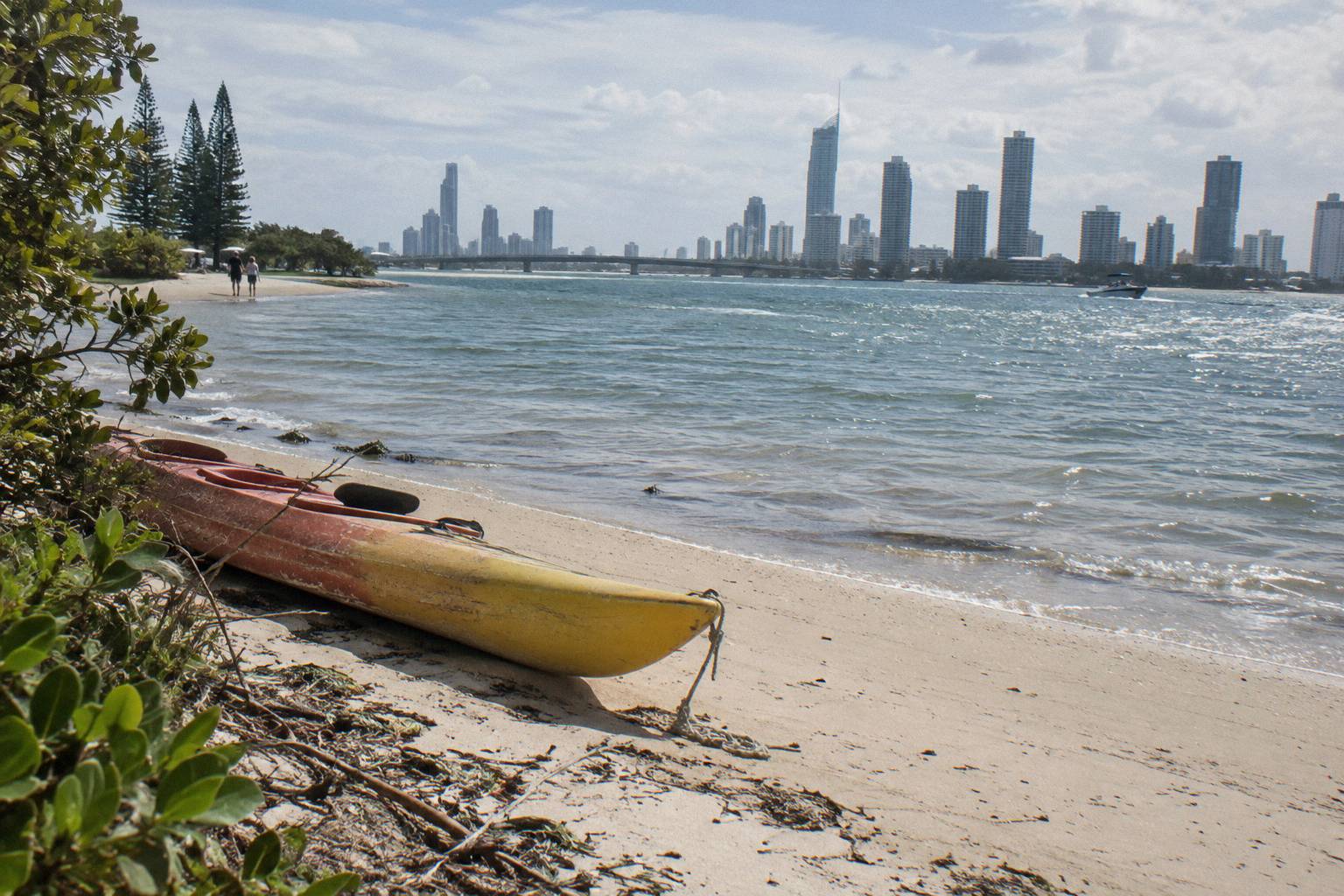
Quiet is the winter bonus nobody prices. Summer school holidays fill the Gold Coast from late December through January, and tour seats tighten with them. In July, the same boats and kayaks run with smaller groups, and the sheltered Broadwater around Wave Break Island, which the Gold Coast Waterways Authority describes as having clear, clean and mostly shallow waters, stays workable in conditions that would cancel an open-ocean trip. The island itself is man-made, created in 1985 as part of the Gold Coast Seaway construction, and it exists precisely because the seaway needed protection from waves, which is why its leeward side holds calm water in winter conditions.
If winter appeals, the site's guide to first time snorkelling on the Gold Coast covers the basics of masks, fins and breathing, and the Wave Break Island snorkelling guide maps the site itself. Neither depends on season, which is rather the point: the Gold Coast's winter is an adjustment of gear, not a closure.
Is The Water Too Cold To Snorkel On The Gold Coast In Winter?
No, not on the typical figures. Winter water sits near 21.7 to 22.8 degrees, which most snorkellers handle comfortably in a wetsuit, and the operators that state inclusions supply wetsuits at no extra charge. The real question is exposure length: a 30 minute swim is easy, a 90 minute swim wants a suit and reasonable fitness.
Breaking that down by product makes it concrete. The Cook Island turtle tours are the longest in-water exposures of the tours covered here. Watersports Guru runs about 2.5 hours total with 60 to 90 minutes in the water over a depth of 3 to 6 metres, including snorkel gear, wetsuit, mask, fins and an in-water guide, from US$120.59 per person on the booking page, with the operator's own price listed as from A$119. Blue Seafaris gives you 1.5 hours of snorkelling within its about 2.5 hour trip, with premium mask, snorkel, fins, wetsuit and a marine biologist guide included, from US$93.64 per person on the booking page or the operator's price of A$139 per adult and A$119 per child. Other pages covering the same trip are gathered on Gold Coast Snorkelling Tours.
Both include the wetsuit in the ticket, so the winter question is already answered in the price. What the suit cannot fix is individual cold tolerance, and the operators are explicit about who should book. Blue Seafaris asks for confidence in open water, the ability to swim 200 metres unassisted, a minimum age of 7, and calls the trip unsuitable for non-swimmers, with no flotation jackets offered in the water. Watersports Guru requires the ability to swim the length of a 100 metre pool, takes children from 6 with an adult, and states the trip is not for non-swimmers. In cooler months those requirements matter more, because a tired swimmer gets cold faster.
By contrast, the Wave Break Island formats are built for exactly the people the turtle tours turn away. Seaway Kayaking Tours takes non-swimmers from age 4, with life jackets worn in the water and no experience needed, and AKA Adventures, also at Wave Break Island, welcomes non-swimmers with life jackets worn at all times on the water, from US$82.05 per person for about 3 hours, rated 4.6 across 161 reviews. Seaway's minimum age is 4, AKA's booking pages conflict on age so none is printed, and under 16s need an adult on both. Shorter in-water time plus flotation makes winter genuinely accessible for families.
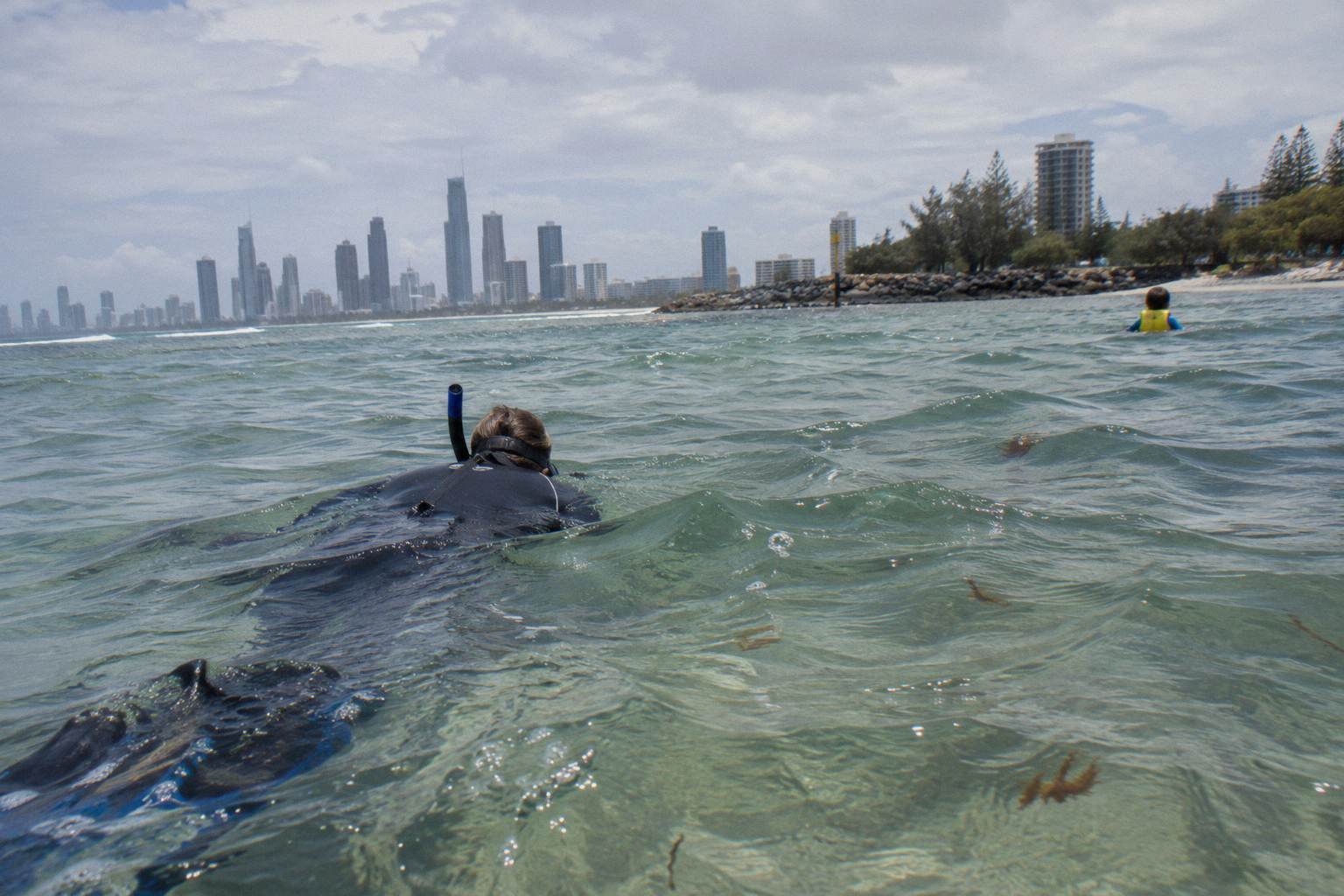
The one thing this article will not do is rank the seasons or promise clarity, because no visibility figure, no rainfall figure and no official quality ranking exists in the sources. What can be said is factual: winter water is about 22 degrees, wetsuits are included where stated, and every covered product runs year round subject to weather. For a fuller walkthrough of cold-water comfort and layering choices, see what to wear snorkelling on the Gold Coast.
Wetsuits And What Each Operator Supplies
Wetsuit inclusions differ by operator and are the deciding factor for cool-month bookings: Blue Seafaris and Watersports Guru include wetsuits with the ticket, Seaway Kayaking Tours adds wetsuits June to August, AKA Adventures supplies them on request in winter, and no operator covered here states a wetsuit hire fee. Check the booking page for your specific tour before assuming.
The table below shows what each booking page lists for wetsuits and flotation, so you can check a July trip against it before you book.
| Operator and tour | Booking-page price from | Wetsuit position | Flotation position |
|---|---|---|---|
| Seaway Kayaking Tours, Wave Break Island kayak and snorkel | US$66.69 per person | Included June to August; life jackets worn in the water | Life jackets, non-swimmers welcome, from age 4 |
| AKA Adventures, kayak and snorkel | US$82.05 per person | On request in winter | Life jackets at all times on the water, non-swimmers welcome |
| Queensland Scuba Diving Company, boat snorkel with transfers | US$53.22 per person | Not stated | No experience necessary, instruction provided |
| Cooly Eco Adventures, Cook Island turtle snorkel | US$116.52 per person | Included | Life jackets not worn in the water; swim 50 m unassisted |
| Blue Seafaris, Cook Island turtle tour | US$93.64 per person, operator A$139 adult | Wetsuit included | Pool noodles offered, no jackets for non-swimmers |
| Watersports Guru, Cook Island turtle snorkel | US$120.59 per person, operator from A$119 | Wetsuit included | Lifejacket and flotation device included |
| See Moreton, Tangalooma Wrecks cruise | US$206.16 per person | Not stated | Not stated |
Two operators outside the tours covered here charge separately for suits, which is useful context even though those trips are not sold here: Tweed Turtle Tours hires wetsuits at A$10, and Snorkel with the Turtles charges A$20 gear hire including the wetsuit. The covered operators that state the question at all answer it with inclusion, not hire, which is a genuine comfort when you are packing for July.
The See Moreton cruise deserves a seasonal note of its own. It is an 11-hour day from a 7:30am start, with about 4 hours at the Tangalooma Wrecks stop, a tropical buffet lunch, coffee, tea and cake on boarding, and transfers from selected Gold Coast hotels. Eleven hours includes a lot of time out of the water on a moving boat, so winter warmth on deck matters as much as the water reading, and the wrecks themselves carry a strong current between the wrecks and the beach when the tide runs, per Tangalooma Island Resort's own page. The resort recommends the guided tour rather than swimming out, which is exactly what this cruise is.
For budget planning across all seven products, the site's guide to Gold Coast snorkelling prices keeps the US$ booking-page figures and the operators' own A$ prices in separate labelled columns, because mixing them produces nonsense. Prices also differ by operator and group size, and no single Gold Coast snorkel price exists to quote.
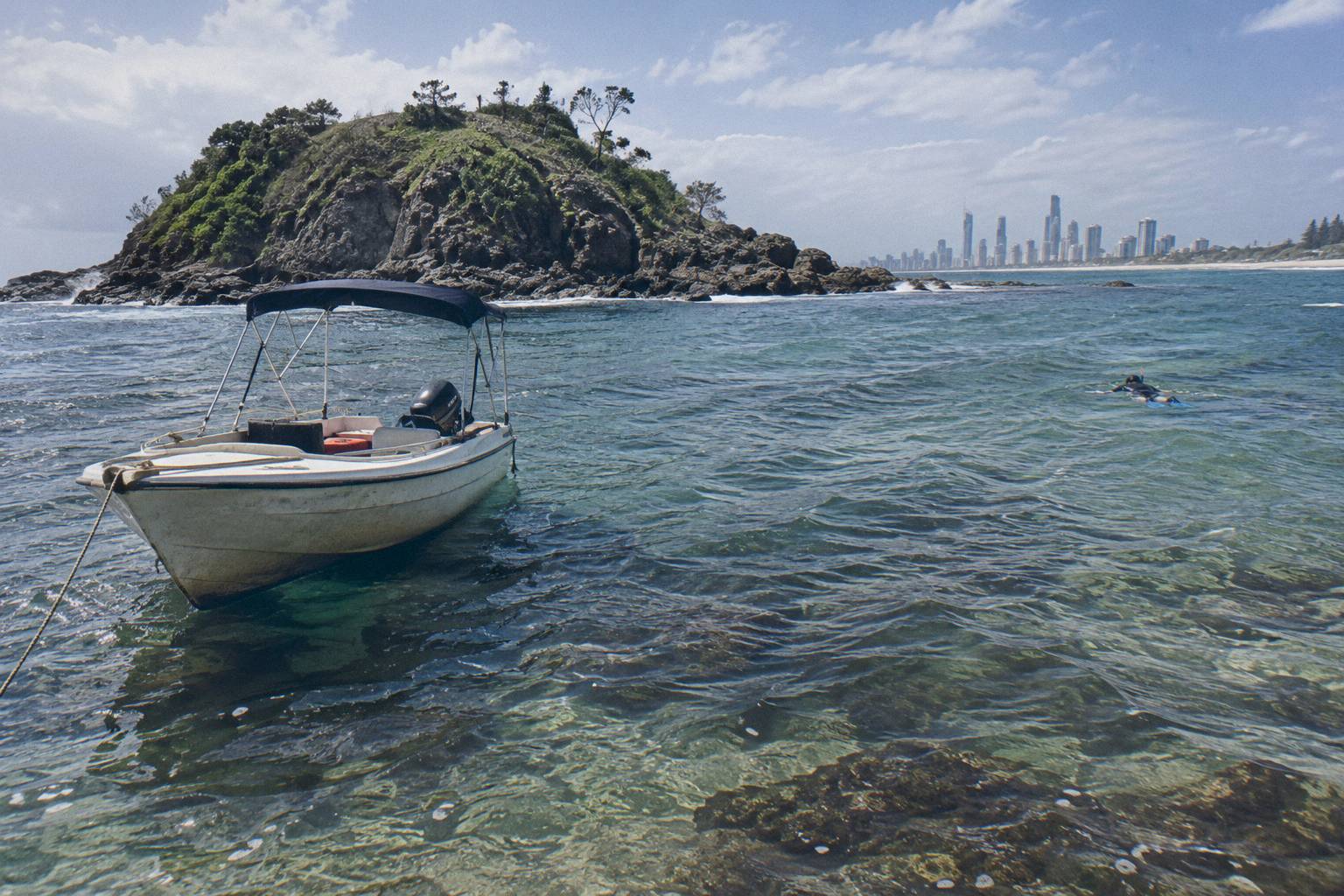
Seasonal Marine Notes: Stingers, Bluebottles And What The Authorities Say
Surf Life Saving Queensland states that dangerous tropical stingers have a season of typically November to May but places box jellyfish north of Agnes Water and irukandji north of southern Fraser Island, so neither is stated for the Gold Coast. Bluebottles occur Australia wide. No Gold Coast bluebottle season or count exists in the sources.
That is the whole of what can honestly be printed, and it is worth reading twice because most travel content gets it wrong in both directions. Some articles warn of irukandji on the Gold Coast, which the range information does not support. Others promise stinger-free water, which no source supports either. The correct position is the one above: the season wording exists, the range wording places the dangerous species well north, and the Gold Coast sits outside both stated ranges without anyone having stated its status outright.
What you can act on is first aid knowledge. For a bluebottle sting, SLSQ advises removing any tentacles, rinsing with sea water, then hot water for about 20 minutes, no hotter than comfortable, with a cold pack if pain is unrelieved. For tropical stingers the advice is vinegar, and in any emergency call 000. Operators brief their groups before entering the water, and the Cook Island snorkel operators signed a Code of Conduct in 2023 and 2024 that includes a pre-dive briefing, per NSW DPI.
Reserve rules matter at Cook Island whatever the month. The island, declared an aquatic reserve in 1998, sits about 600 metres off Fingal Head, with a no-take sanctuary zone around it and rules against touching, chasing or feeding marine life, turning rocks, or landing on the island, which is a protected seabird nesting site. Vessels keep under 4 knots and use moorings. None of that changes with water temperature, but winter's smaller groups make the briefing easier to hear.
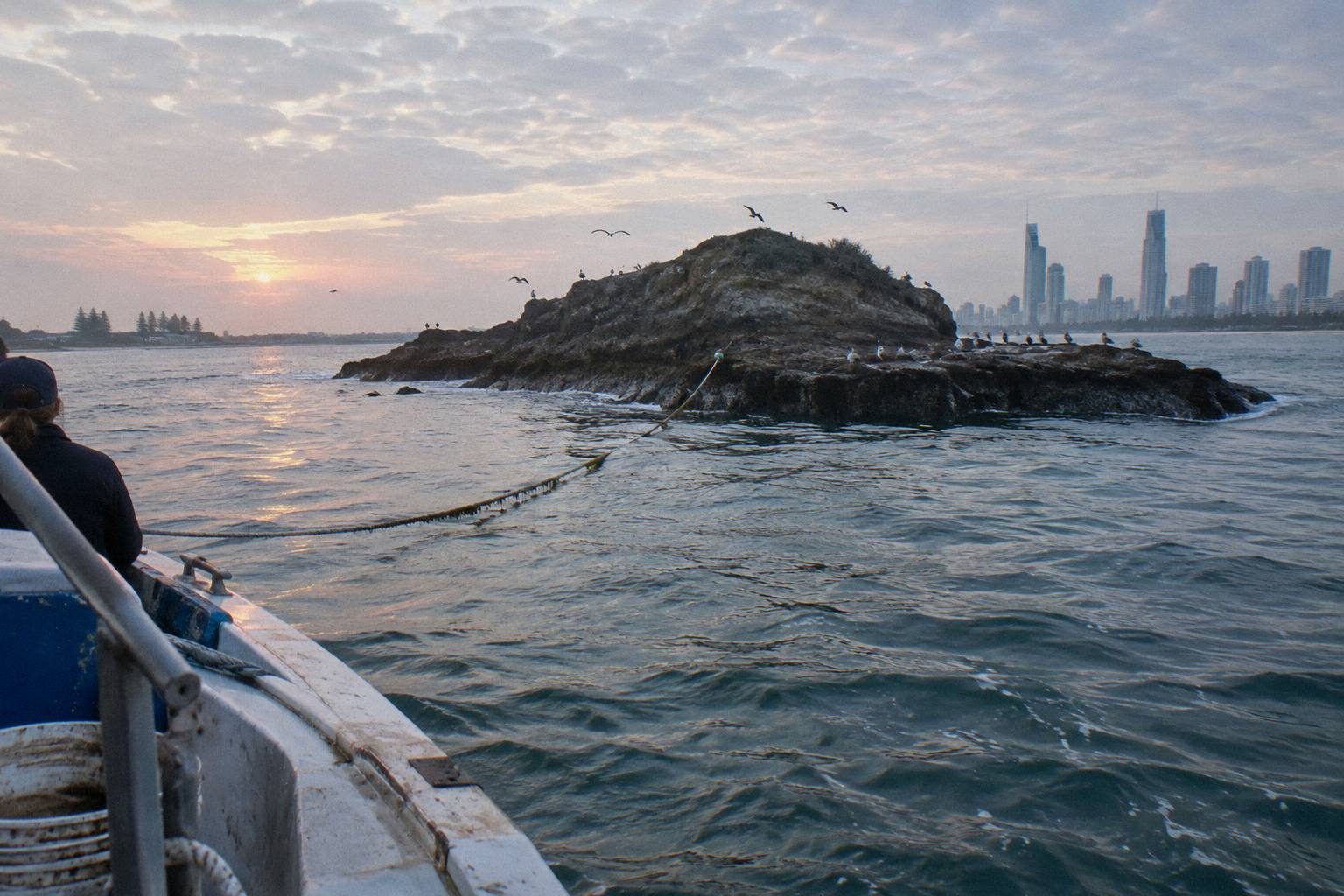
For the full safety picture, including first aid detail and what is genuinely not stated, the site's guide to stingers and bluebottles on the Gold Coast carries the complete SLSQ and DPI wording, and the guide to whether snorkelling on the Gold Coast is safe answers the broader question. Neither overstates what the sources support, and both link back to the authorities: SLSQ's marine stingers page and the NSW DPI Cook Island Aquatic Reserve page.
Planning around the season is simple on these numbers. The stated November to May window means June through October sits outside it, and those months line up with the whale watching listing and the winter kayaking trips noted above. Only May and November appear in both, so edge-of-season trips can pair the two.
If your trip continues north, the range lines matter more. Both markers in the SLSQ wording lie north of the Gold Coast, so the further north you travel, the closer you come to stinger ranges.
Common Questions About Gold Coast Water Temperature
What Is The Water Temperature On The Gold Coast By Month?
Typical averages run from about 26.2 degrees in January to 27.2 in February and 26.4 in March, easing through 25.6 in April and 24.2 in May, then 22.8 in June, 21.7 in July and August, 22.1 in September, 22.8 in October, 24.6 in November and 25.5 in December. These are long-run typical figures, not forecasts.
What Is The Best Month To Snorkel On The Gold Coast?
No official best month exists. Water is typically warmest January to March and coolest July and August. If warmth matters most, book summer; if quieter tours and a wetsuit-friendly pace appeal, June to August works well, and operators run year round subject to weather.
Is The Water Too Cold To Snorkel On The Gold Coast In Winter?
No. Winter water sits typically near 21.7 to 22.8 degrees, comfortable in a wetsuit for most snorkellers. Blue Seafaris and Watersports Guru include wetsuits, and the shorter Wave Break Island trips suit people who prefer less time in the water.
Do Gold Coast Snorkel Tours Provide Wetsuits?
Where the operator states it: Blue Seafaris, Watersports Guru and Cooly Eco Adventures include wetsuits, mask, snorkel and fins. Seaway Kayaking Tours adds wetsuits June to August, and AKA Adventures supplies them on request in winter. Check the booking page for your tour before booking a cooler month.
Are There Stingers On The Gold Coast In Summer?
Surf Life Saving Queensland gives dangerous tropical stingers a season of typically November to May but places box jellyfish north of Agnes Water and irukandji north of southern Fraser Island, so their presence on the Gold Coast is not stated either way. Bluebottles occur Australia wide.
Does Water Temperature Affect Which Tour I Should Book?
It affects exposure more than choice of site. Longer in-water trips such as the Cook Island turtle snorkels, 60 to 90 minutes in the water, reward a wetsuit in cooler months, while the shorter Wave Break Island kayak-and-snorkel format, open to non-swimmers from age 4, suits cooler water for families.