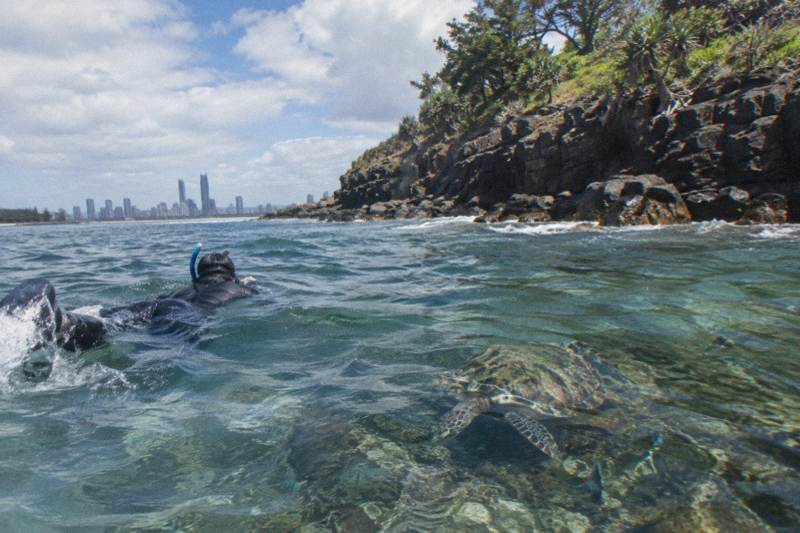
Snorkelling With Turtles On The Gold Coast: Where It Works
Turtle snorkelling from the Gold Coast means Cook Island, an aquatic reserve on the New South Wales side, with Moreton Bay as turtle context, where six of the world's seven marine turtle species are recorded. Here is what the sources actually say, operator by operator.
Short answer
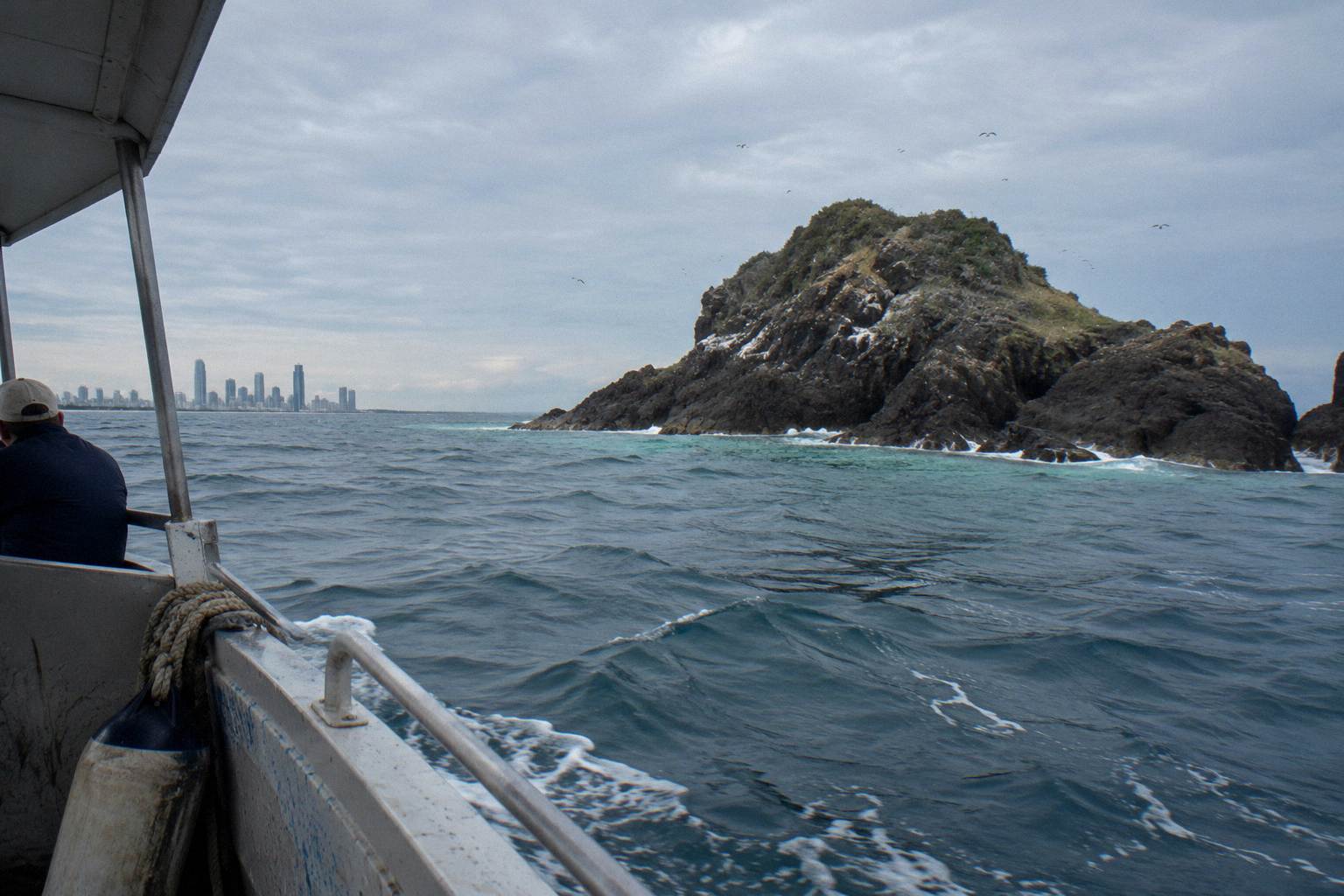
Turtle snorkel tours near the Gold Coast run to Cook Island aquatic reserve, about 600 metres off Fingal Head, a recognised hotspot for green, hawksbill and loggerhead turtles. Moreton Bay is home to six of seven marine turtle species, but the Moreton cruise makes no turtle-snorkel claim. Guided turtle tours cost from US$93.64 to US$120.59 per person on the booking pages.
Where Can You Actually Snorkel With Turtles From The Gold Coast?
Two places near the Gold Coast have an official, source-backed turtle story: Cook Island aquatic reserve, about 600 metres offshore from Fingal Head and 4 kilometres south-east of Tweed Heads, and Moreton Bay Marine Park, which Queensland Parks records as home to six of the world's seven marine turtle species. Wave Break Island, the Gold Coast's popular local snorkel site, is not a turtle product in any source this site has verified.
Start there, because the phrase "snorkelling with turtles Gold Coast" gets used loosely in search results and half the time it points at water that has no turtle claim behind it. The New South Wales Department of Primary Industries, which manages Cook Island, calls the island a hotspot for threatened green, hawksbill and loggerhead turtles, and notes the island was previously called Turtle Island. That is the strongest official turtle statement within reach of the Gold Coast, and it belongs to a specific, protected, 80-hectare patch of ocean on the New South Wales side of the border.
The second site is a different proposition entirely. Moreton Bay Marine Park, first declared in 1993 and covering 3,400 square kilometres from Caloundra to the Gold Coast Seaway, is where Queensland Parks says six of the world's seven marine turtle species are found, with three resident species. Green turtles graze the seagrass there and loggerheads eat shellfish, crabs and jellyfish. The one covered product that reaches that water is the long-day See Moreton cruise to the Tangalooma wrecks, an 11-hour trip with transfers from selected Gold Coast hotels, and its listing makes no turtle-snorkel claim.
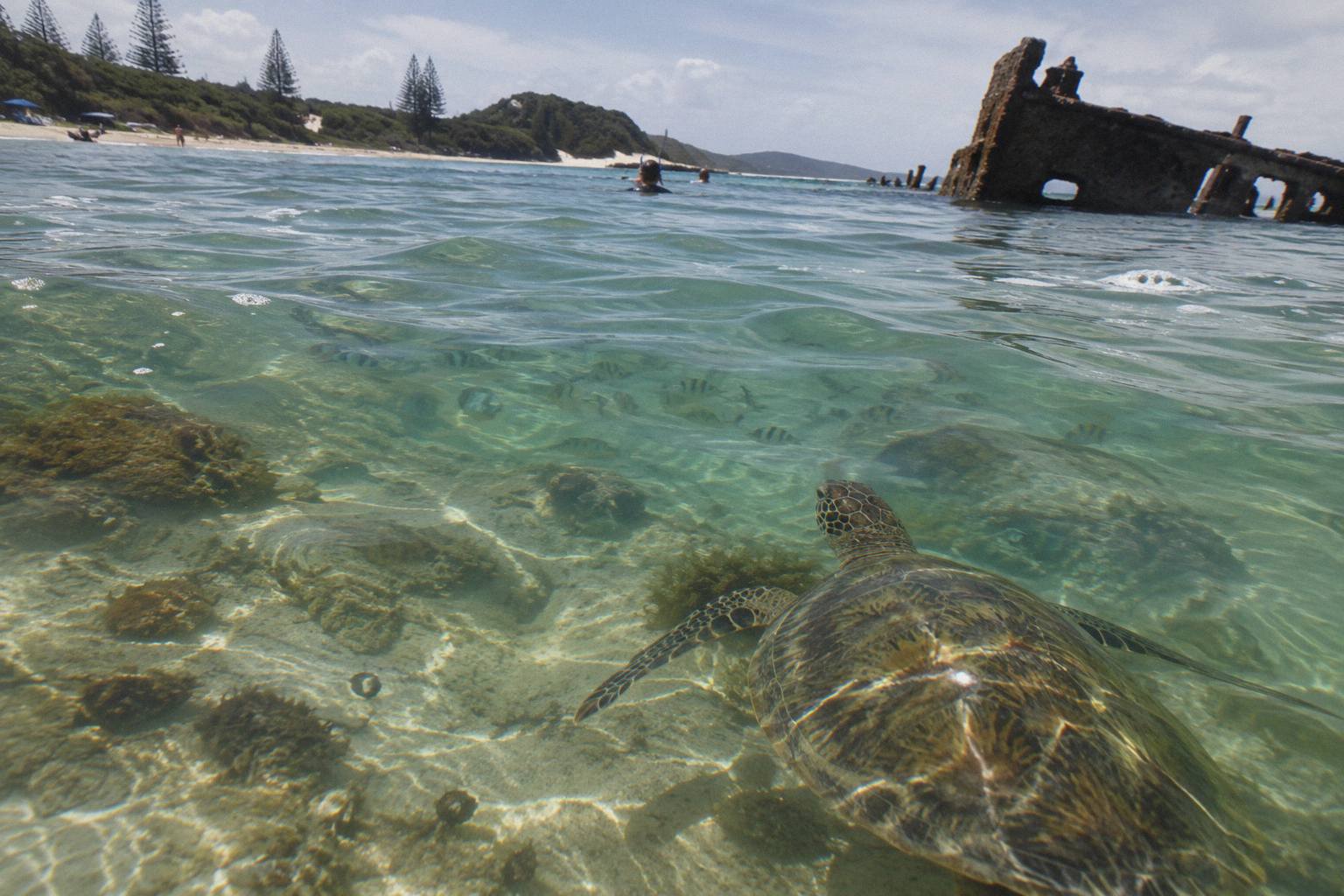
What does not work is assuming turtles turn up at the Gold Coast's sheltered local snorkel spot. Wave Break Island sits inside the Broadwater behind the Gold Coast Seaway, and the Gold Coast Waterways Authority's own page praises its clear, clean, mostly shallow waters for snorkellers and divers but makes no turtle claim at all. Turtles are a Cook Island and Moreton Bay product here. If you are weighing the local paddle-and-snorkel option against a turtle trip, the comparison guide to how to choose a Gold Coast snorkel tour separates the two experiences plainly.
A note on what this page will not do: no operator's guarantee is printed here, because none exists in an official source. Watersports Guru's page carries a guaranteed-sighting claim and this site will not repeat it. Turtles are wild animals in a protected reserve, and the honest framing is that Cook Island is a documented hotspot, not a petting zoo.
Which Turtle Snorkel Tours Can You Book From The Gold Coast?
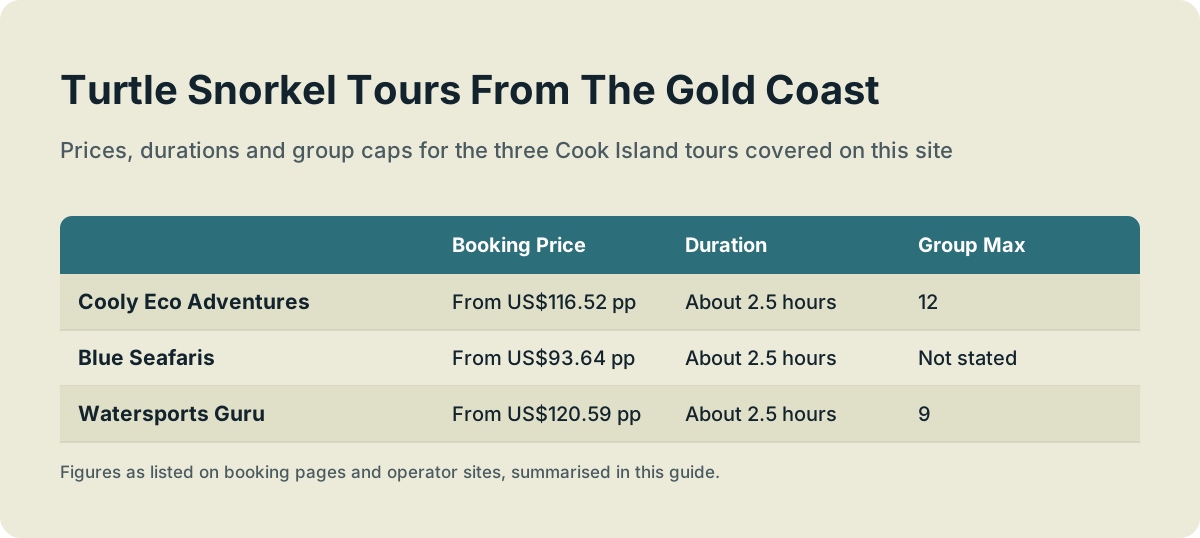
Three guided turtle snorkels are covered on this site, all departing from the New South Wales side to Cook Island: Cooly Eco Adventures from Chinderah, Blue Seafaris from Tweed Heads South, and Watersports Guru from Fingal Head. Booking-page prices run from US$93.64 to US$120.59 per person, durations sit around 2 to 2.5 hours, and group sizes range from a maximum of 9 to a maximum of 12.
These three are variations on the same half-day: a short boat ride out to the reserve, an hour or so in the water with a guide, and a return inside the morning or midday window. The differences that actually matter to a buyer are the meeting point, the group cap, the swimming requirement and the guide's background, and those genuinely differ between operators.
| Tour | Operator | Meets at | Duration | Group max | Booking-page price |
|---|---|---|---|---|---|
| Snorkel With Turtles Gold Coast | Cooly Eco Adventures | 139-151 Chinderah Bay Dr, Chinderah NSW | About 2.5 hours | 12 | From US$116.52 pp |
| Snorkel With Turtles At Cook Island | Blue Seafaris | Public jetty opposite 1A Minjungbal Dr, Tweed Heads South | About 2.5 hours (1.5 snorkelling; 120 minutes per the operator) | Not stated | From US$93.64 pp |
| Tweed Heads Snorkel With The Turtles | Watersports Guru | Fingal Head, NSW | About 2.5 hours | 9 | From US$120.59 pp |
Ratings, with their counts so you can judge the pool: Cooly Eco Adventures 4.9 across 172 reviews, Blue Seafaris 4.3 across 241, and Watersports Guru has no rating this site prints. Where a price is not stated, the table shows it as not stated, and Watersports Guru also publishes its own figure of A$119 per person for the premium tour, including a personalised photo album.
The featured turtle trip on this site is the Cooly Eco Adventures turtle snorkel, which caps its groups at 12 and meets at a clearly marked white trailer flying the operator's flag at Chinderah Bay Drive. For the wider picture of the reserve itself, including what lives below the surface, the guide to Cook Island snorkelling from the Gold Coast covers the crossing in detail.
There are other operators in the Tweed area, among them Tweed Turtle Tours and Snorkel with the Turtles, but they are not offered on this site, so they are named here for completeness only and not as booking options. Everything below concerns the three covered products.
How Does A Cook Island Turtle Snorkel Day Actually Run?
All three Cook Island operators meet on the New South Wales side. Watersports Guru states a roughly 15-minute boat ride out to the island, 60 to 90 minutes snorkelling in shallow water with gear supplied, and about 2.5 hours in all; Cooly Eco Adventures and Blue Seafaris do not state a ride time or water time. Watersports Guru runs two departures daily, 8am to 10:30am and 10:30am to 1pm; Blue Seafaris asks you to arrive 30 minutes early; Cooly Eco lists times in Queensland time.
- Marine Biologist Guide, Cook IslandUS$93.64
- Cook Island Turtles From ChinderahUS$116.52
- Small Boat, Fingal Head TurtlesUS$120.59
The details, operator by operator, because they are not interchangeable. Watersports Guru departs from Fingal Head for a 15-minute boat ride, with 60 to 90 minutes actually in the water over depths of 3 to 6 metres. Its price includes snorkel gear, wetsuit, mask, fins, lifejacket, a flotation device, an instructor and an in-water guide. Blue Seafaris runs a 120-minute trip from the public jetty in the park opposite 1A Minjungbal Drive, Tweed Heads South, with premium mask, snorkel, fins, wetsuit and a marine biologist guide, and a waiver required for every participant. Cooly Eco Adventures keeps things to 2.5 hours with a group of up to 12 from its Chinderah trailer.
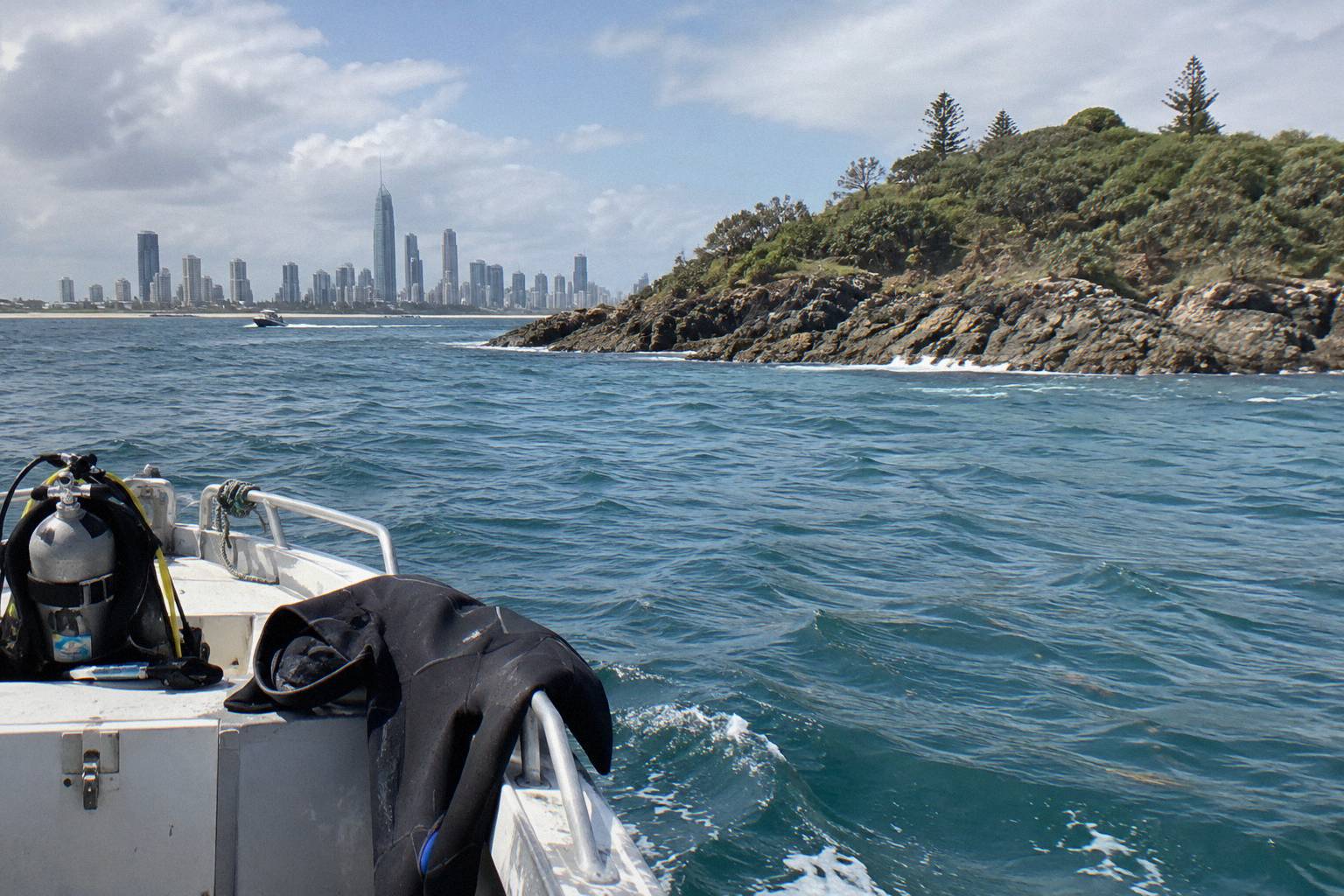
One clock detail catches people every summer: NSW is one hour ahead of Queensland during daylight saving, and the operators do not all use the same clock. Blue Seafaris states its times in New South Wales time; Cooly Eco Adventures lists in Queensland time. Check which clock your booking page uses before you set an alarm, or you will spend an hour cooling your heels at a boat ramp.
Arrival rules also differ. Blue Seafaris asks for 30 minutes before departure on its own page and says the boat cannot wait for late arrivals, while its booking page says 15 minutes. The sterner figure is the safer plan. As for what to bring, the operators converge: swimmers, towel, hat, sunglasses, camera, water, reef-safe sunscreen, and, for Watersports Guru, snacks with one specific exclusion, no bananas on the boat.
Booking-page cancellation terms are uniform across the covered products: free cancellation up to 24 hours in advance for a full refund. Blue Seafaris' own terms are stricter, allowing guest changes by email at least 48 hours before, with payment forfeited under 48 hours, though if the operator cancels for conditions you get a credit voucher or a refund less booking and card fees. Read the terms on the booking page you actually use, and if you want the fuller picture on weather call-offs, what happens when a snorkel tour is cancelled for weather walks through it.
What Will You Actually See At Cook Island?
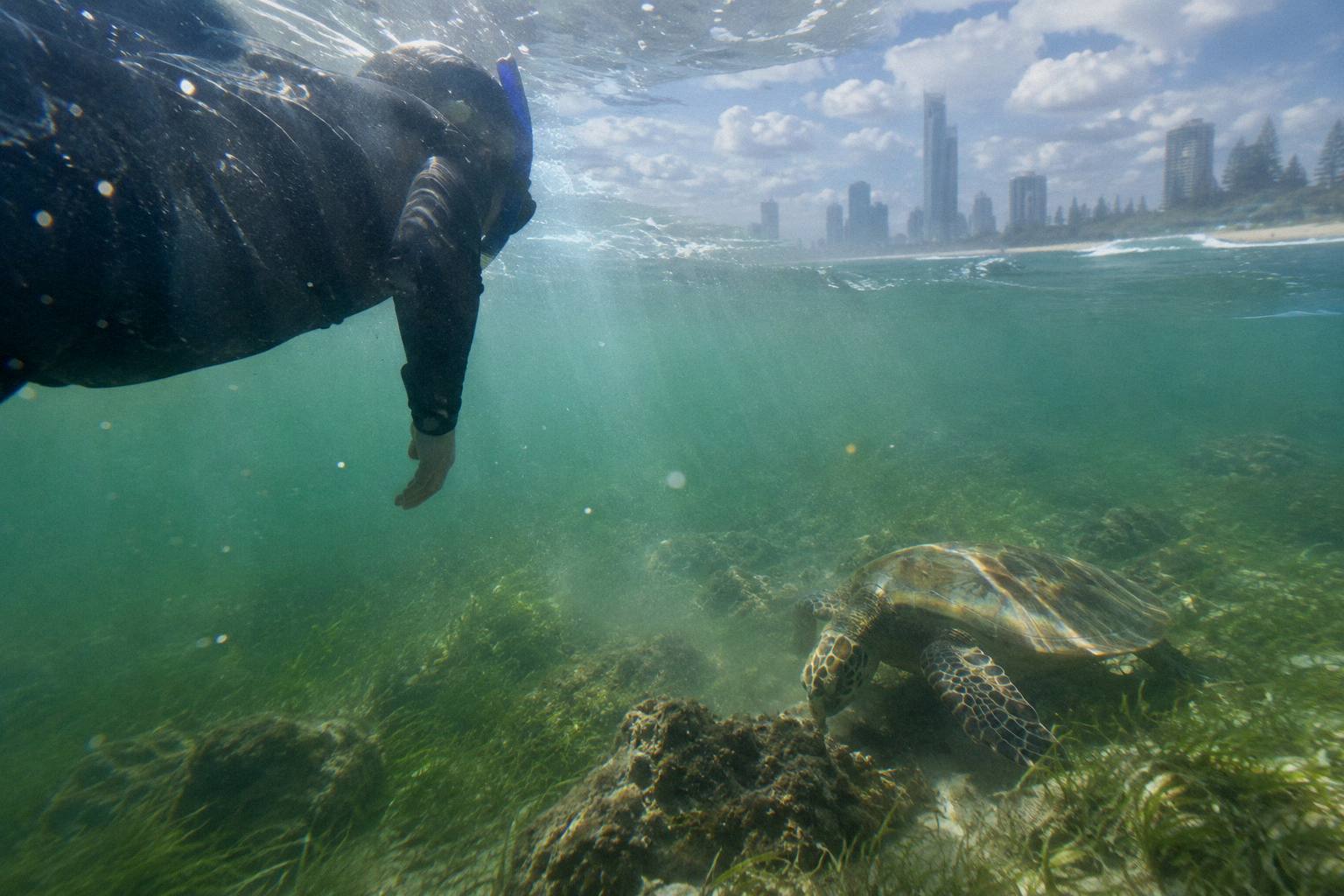
The official answer from NSW DPI is that Cook Island is a hotspot for threatened green, hawksbill and loggerhead turtles, in a reserve where tropical, subtropical and temperate marine life blend, and where threatened species also include the giant Queensland groper and the grey nurse shark. Blue Seafaris adds, as operator wording, eagle rays, seasonal manta rays and leopard sharks, and names the island Cook Island / Joong-urra-narrian.
No turtle count exists in any official source, and this site will not print one. What the DPI page does establish is that the reserve's protected status, declared in 1998, covers 80 hectares running from the mean high-water mark out to a 500-metre radius from the survey marker, and that the inner zone around the island is a no-take sanctuary. That zoning is the reason the snorkelling is what it is: the reef closest to the island has been left alone for decades.
The island's human history is short but real. DPI notes it was previously called Turtle Island, which is the name you will still hear locals use. Landing on it is not permitted, because it is a protected seabird nesting site, so every visit happens from the water. Snorkelling, scuba diving, swimming and photography are all explicitly allowed, and commercial snorkel and dive operators signed a Code of Conduct in 2023 and 2024 that includes a pre-dive briefing, which is why your guide will gather everyone for a talk before anyone gets wet.
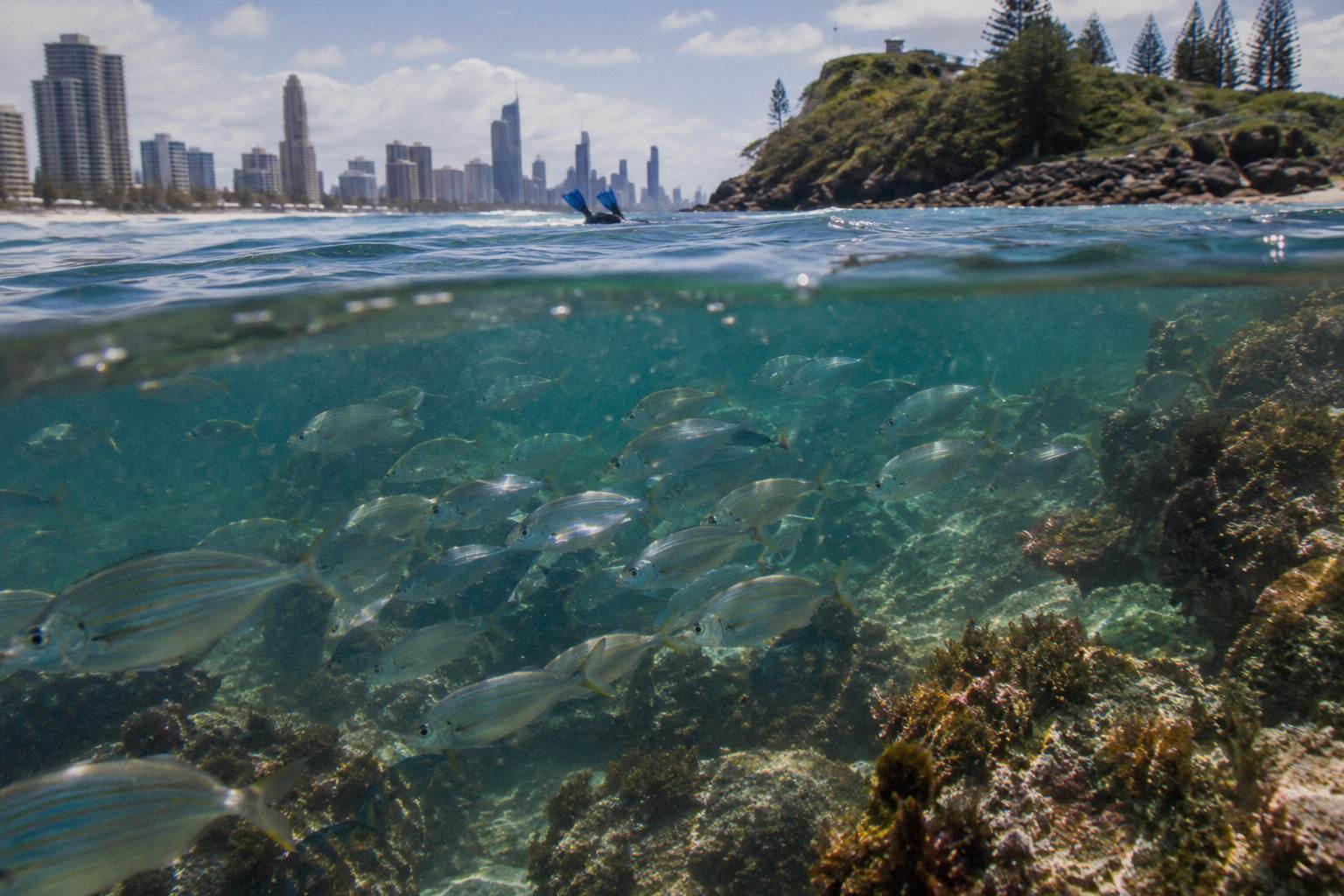
For a deeper dive into the species list and how the reserve works, the companion guide to Cook Island aquatic reserve marine life is the right next stop.
What Time Of Year Is Best To Snorkel With Turtles On The Gold Coast?
There is no official answer. Neither NSW DPI nor Queensland Parks states months when turtles are present or absent at Cook Island or in Moreton Bay, and no source this site has verified names a best turtle month. What is stated: turtles are resident in Moreton Bay year-round per Queensland Parks, whale watching at Cook Island runs May to November, and typical sea temperatures range from about 22 in winter to about 26 to 27 in summer.
That is an unsatisfying answer, and it is the honest one. Operators market turtle snorkels all year, and Watersports Guru runs weather permitting rather than seasonally, but the moment a page tells you "the best months for turtles are October to December", it is filling a gap no official source covers. This site will not. What you can plan around is water temperature, which shapes comfort more than it shapes sightings. More of these guides are collected on Gold Coast Snorkelling Tours.
The monthly picture, in typical averages: the water sits around 26.2 in January, peaks at about 27.2 in February, eases through 25.6 in April, drops to about 22 in the middle of the year, and climbs again through spring to 24.6 in November. The lowest typical readings are about 20.4 to 20.6, so this never becomes cold-water snorkelling by southern standards. Blue Seafaris and Watersports Guru both include a wetsuit, which covers the winter months comfortably. For the full month-by-month breakdown, see Gold Coast water temperature by month.
The one seasonal fact that is official belongs to a different animal: DPI records whale and bird watching at Cook Island from May to November. A whale-watching or swim-with-whales product is not a snorkel tour and is a separate subject. Humpbacks passing the reserve in those months are a real bonus of a winter or spring trip, just not the thing you book it for.
What Time Of Day Is Best To See Turtles When Snorkelling?
No source states a best time of day for turtle sightings, so this site prints none. What is verifiable is the departure schedule: Watersports Guru runs 8am to 10:30am and 10:30am to 1pm, Blue Seafaris schedules daily subject to weather, tides and sea conditions, and Cooly Eco confirms starting times on its booking page. The 8am and 10:30am slots are simply the two windows that exist.
The practical decision is between the morning slot and the late-morning slot, and the honest differentiators are sea state and crowd tolerance rather than turtle behaviour. Early departures tend to meet calmer water before the day's breeze fills in, which matters if anyone in your group is prone to seasickness, even on a 15-minute ride. The later slot suits families who cannot face a dawn drive to the border and still returns you by early afternoon.
| Operator | Stated departure window | Notes |
|---|---|---|
| Watersports Guru | 8am-10:30am and 10:30am-1pm | Two tours daily, weather permitting |
| Blue Seafaris | Scheduled daily, subject to weather, tides and sea conditions | Times listed in NSW time; arrive 30 minutes early |
| Cooly Eco Adventures | Confirm on the listing | Operator lists times in Queensland time |
One trap worth repeating: the clock difference. During daylight saving, Queensland does not change but NSW does, so an "8am" departure can mean two different real times depending on which operator wrote it. Build the drive from the Gold Coast around the listing's stated time zone, and if the crossing logistics are new to you, how to get to Cook Island from the Gold Coast maps the meeting points and the run down the coast.
Who Can Book A Turtle Snorkel?
Swimming ability is the gate, and it differs sharply by operator: Cooly Eco requires 50 metres unassisted with no life jacket in the water, Blue Seafaris requires 200 metres unassisted and confident open-water snorkelling from age 7, and Watersports Guru requires the length of a 100-metre pool, from age 6, and excludes non-swimmers outright. None of the three is a learn-to-swim product.
This is where turtle tours differ most from the family-friendly Wave Break Island kayak trips, where Seaway Kayaking Tours takes children from age 4 and welcomes non-swimmers in life jackets. The Cook Island operators take you into open ocean over reef, and each one has drawn its own line. The table below puts the stated requirements side by side so nobody books the wrong trip.
| Operator | Min age | Swimming requirement | Non-swimmers |
|---|---|---|---|
| Cooly Eco Adventures | Not stated | Swim 50 m unassisted; no life jackets in the water | Not suited |
| Blue Seafaris | 7, under 16 with an adult | Confident in open water, swim 200 m unassisted | Unsuitable; pool noodles offered, no flotation jackets |
| Watersports Guru | 6, ages 6-14 with an adult | Swim the length of a 100 m pool | Not for non-swimmers |
If your group includes a hesitant swimmer, the honest options are the sheltered-water trips, where non-swimmers are explicitly welcome, or waiting until confidence improves. The guide to whether non-swimmers can snorkel on the Gold Coast covers the trade-offs, and snorkelling on the Gold Coast with kids does the same for families weighing minimum ages.
Accessibility details are not stated by any operator; ask the operator directly before booking.
What Does A Turtle Snorkel Cost?
Covered turtle snorkels run from US$93.64 to US$120.59 per person on the booking pages, with operator-side figures of A$139 adult and A$119 child at Blue Seafaris and from A$119 per person at Watersports Guru. There is no single Gold Coast turtle price: figures differ by operator and by group size, and any page quoting one number for all of them is guessing.
Prices below are each operator's own stated figure, never one product's number set against another operator's heading, and the two currencies are kept separate because they come from different sources: the booking page in US dollars, the operator's own page in Australian dollars.
| Operator | Booking-page price (US$) | Operator's own price (A$) |
|---|---|---|
| Cooly Eco Adventures | From US$116.52 pp | Not stated |
| Blue Seafaris | From US$93.64 pp | A$139 adult, A$119 child under 12 |
| Watersports Guru | From US$120.59 pp | From A$119 pp (premium tour, photo album included) |
Two extras sit at the edges of the market. Watersports Guru also lists a private boat at A$1,100 for groups wanting the reserve to themselves. And if you are comparing against the big day out rather than the half-day, the See Moreton Moreton Island and Tangalooma Wrecks cruise, at 11 hours from US$206.16 per person with a tropical buffet lunch included, is a different product at a different scale: a full-day crossing to the wrecks with about 4 hours at the stop and about an hour on Moreton Island itself, starting 7:30am with transfers from selected Gold Coast hotels. For a fuller breakdown of what every covered trip costs, Gold Coast snorkelling prices is the dedicated comparison.
What Rules Protect The Turtles At Cook Island?
Inside the inner sanctuary zone around Cook Island, all taking is banned: no collecting, touching, chasing, disturbing or feeding marine life, no turning rocks, no landing on the island, vessels must stay under 4 knots, anchor only in sand and use the moorings. Snorkelling, diving and photography are allowed, and operators who signed the 2023 and 2024 Code of Conduct give a pre-dive briefing covering these rules.
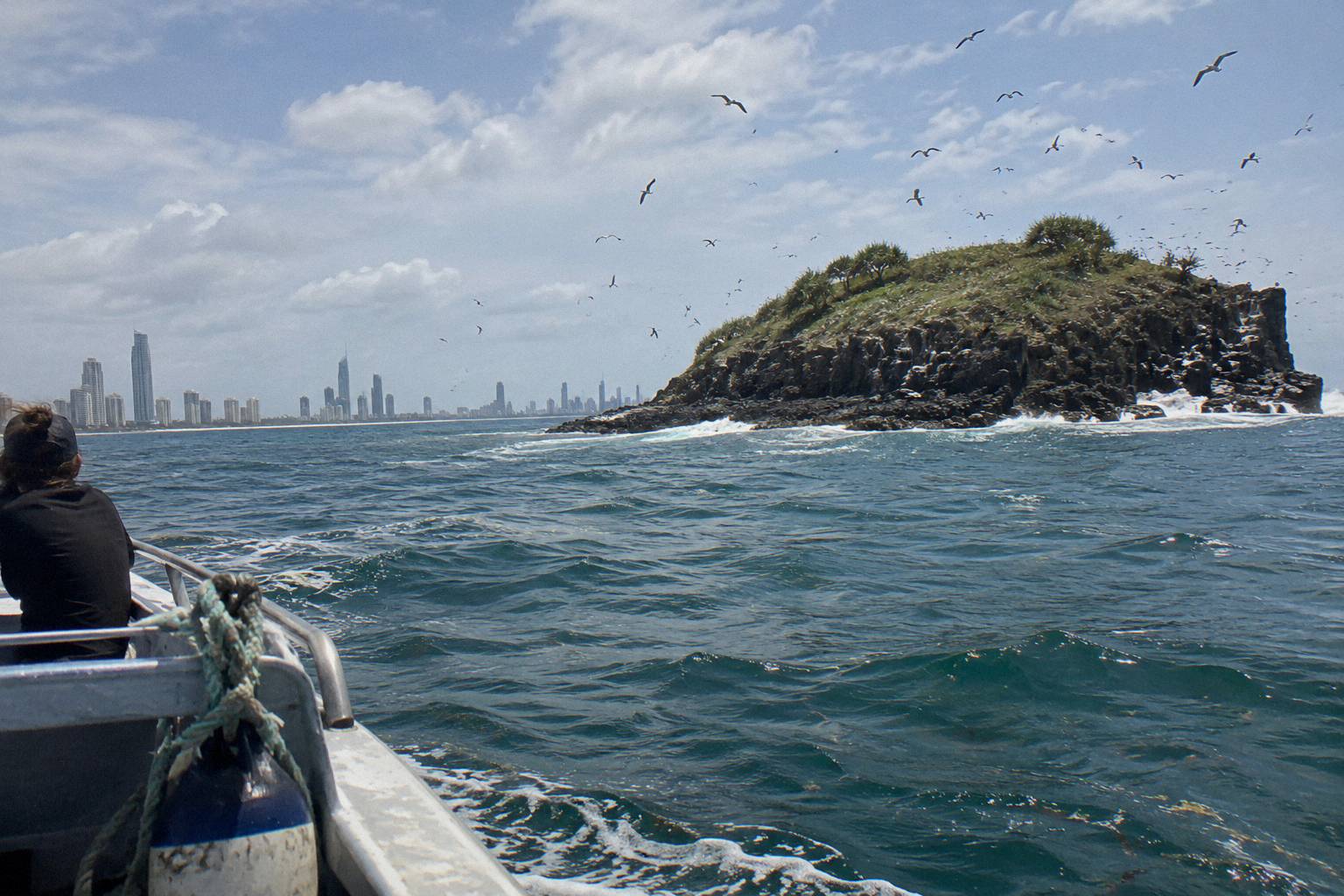
For a snorkeller, the rules translate into a few simple behaviours: keep your distance, never reach out, let turtles choose their line, and stay off the island itself, which is closed because it is a seabird nesting site. DPI publishes the full reserve rules on its respecting-the-reserve page. The outer zone of the reserve allows some fishing, which is why you may see boats outside the sanctuary line, but the snorkelling happens in the inner zone where everything stays in the water.
Is Turtle Snorkelling At Cook Island Safe?
The safety record this site can verify is procedural rather than statistical: Watersports Guru states guided trips in shallow water 3 to 6 metres deep with in-water guides, the reserve has vessel speed limits and moorings, and no incident or risk figure exists in any source. Safety here means a guide in the water with you, honest self-assessment on the swim requirements, and checking the conditions policy before you travel.
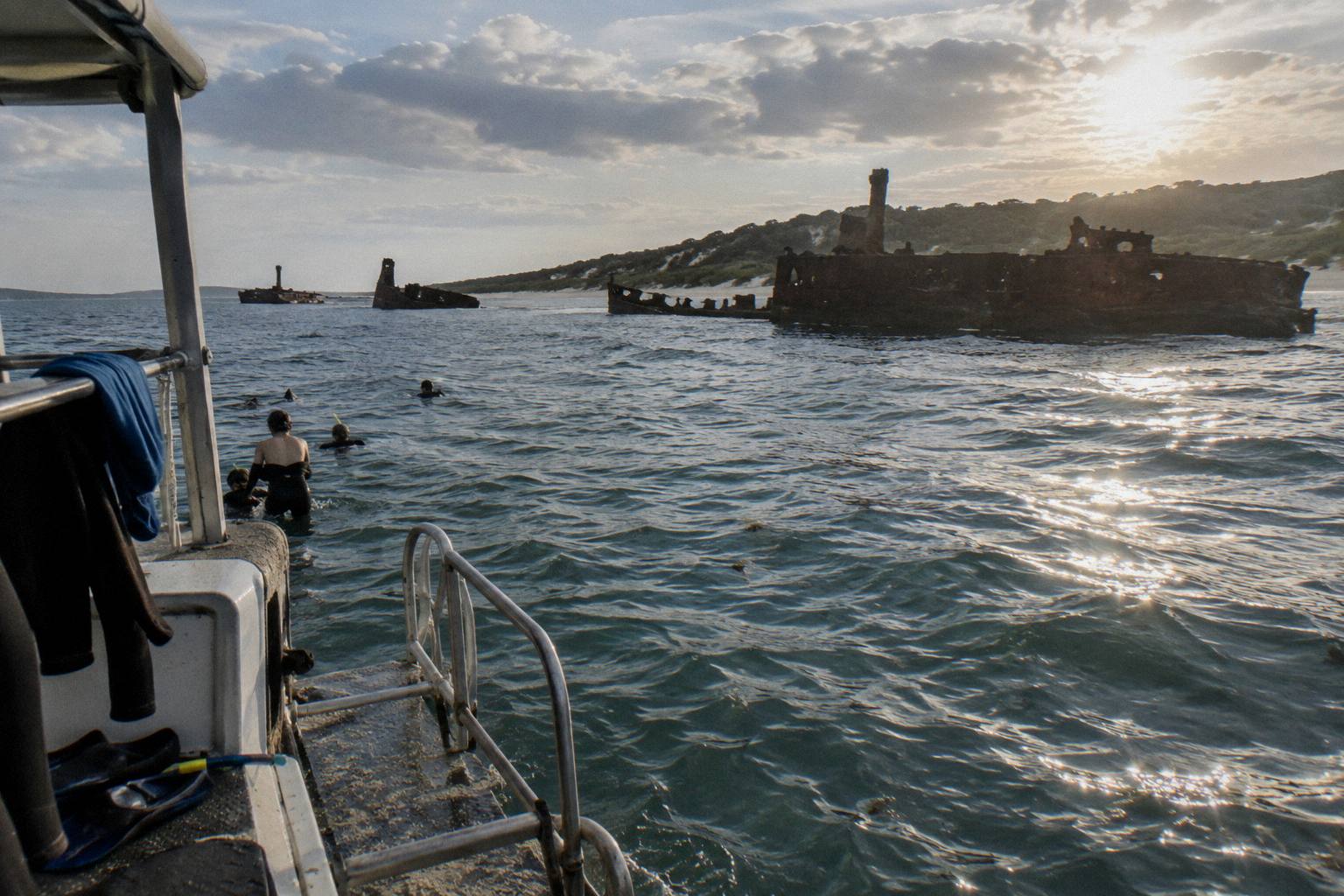
Watersports Guru runs weather permitting, Blue Seafaris schedules daily subject to weather, tides and sea conditions, and its own terms spell out what happens if the operator calls it off: a credit voucher or a refund, less booking and card fees. The broader marine-safety picture, including what Surf Life Saving Queensland says about stingers and bluebottles on this coast, is covered in the guide to stingers and bluebottles when snorkelling the Gold Coast, and the general question has its own treatment in is snorkelling on the Gold Coast safe. For the species detail behind the protected waters, Queensland Parks' Moreton Bay turtles page is the primary source.
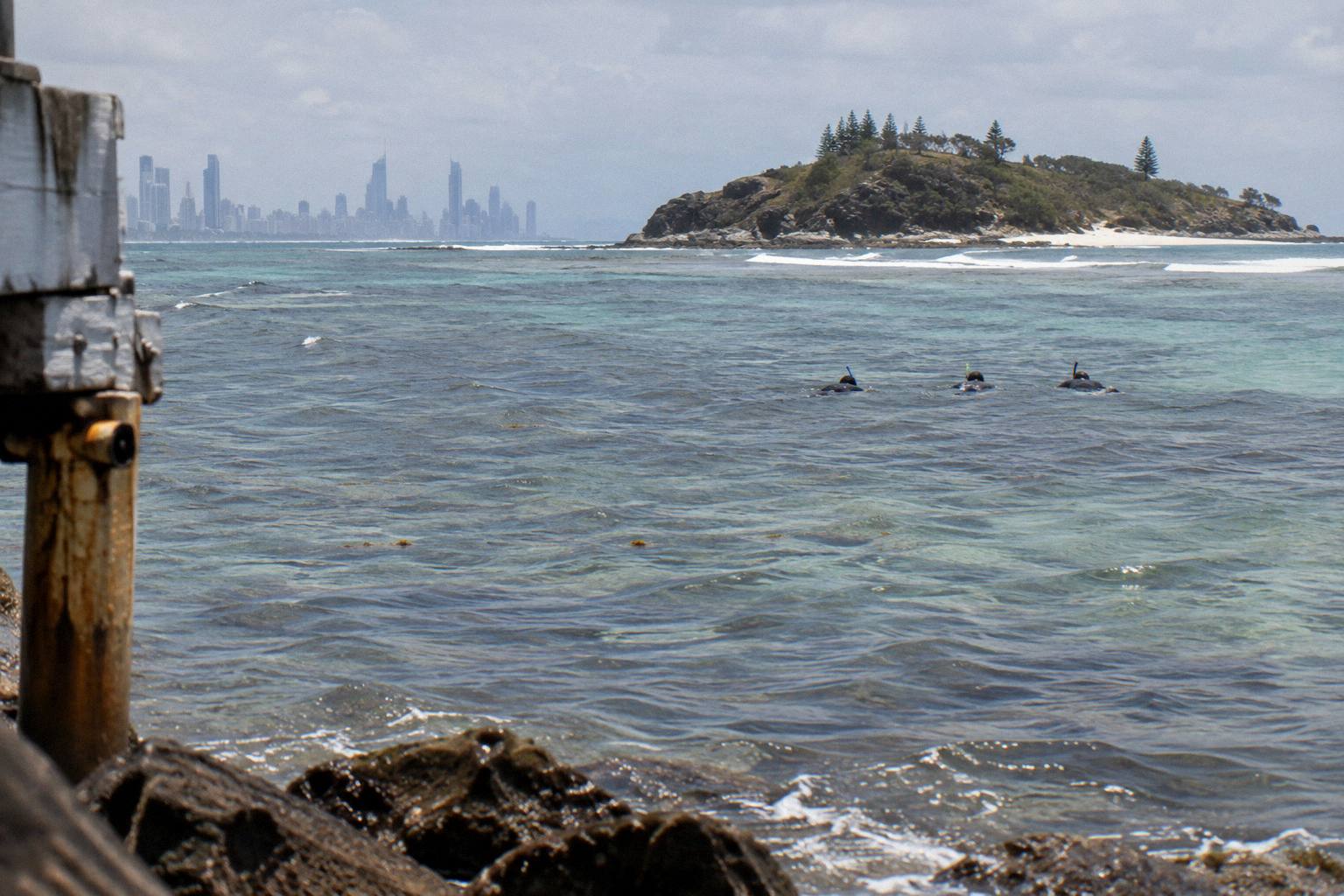
If the Moreton option pulls at you, know its shape before committing. The Tangalooma wrecks themselves are a cluster the resort's own page says was scuttled by the Queensland Government between 1963 and 1984, 15 vessels by the resort's count, lying a 15 to 20 minute walk up the beach from the resort. The resort warns of strong current between the wrecks and the beach when the tide runs, an unpatrolled stretch of sand with no lifesavers, and boat and jet-ski traffic, and it recommends the guided tour over swimming out independently. That is exactly what the covered cruise is. The Tangalooma wrecks snorkelling guide and the Moreton Island day trip guide cover the long day in full.
Common Questions About Snorkelling With Turtles On The Gold Coast
What Time Of Year Is Best To Snorkel With Turtles On The Gold Coast?
No official source states turtle months, so there is no verified best time of year. Turtles are recorded as resident in Moreton Bay, and Cook Island is described by NSW DPI as a turtle hotspot without a season. Water temperature is the practical variable: typically about 26 to 27 in summer and about 22 in winter, with wetsuits included by the covered operators.
What Time Of Day Is Best To See Turtles When Snorkelling?
No source states a best time of day for turtle sightings. The two departure windows that exist are Watersports Guru's 8am to 10:30am and 10:30am to 1pm trips; Blue Seafaris schedules daily subject to conditions and Cooly Eco confirms times on its booking page. Choose your slot for sea state and family timing, not for a claimed sighting pattern.
Can You See Turtles At Wave Break Island?
No turtle claim exists for Wave Break Island in any source this site has verified. The Gold Coast Waterways Authority page for the island praises its clear, shallow snorkelling but names no turtles. Turtles are a Cook Island and Moreton Bay product.
Is A Turtle Sighting Guaranteed?
No. Watersports Guru's page carries a guaranteed-sighting claim, but no sighting is guaranteed here. Cook Island is a documented hotspot for green, hawksbill and loggerhead turtles, and no operator's booking-page terms promise a refund for an animal that did not appear.
Do I Need To Be A Strong Swimmer?
Yes, on all three covered turtle tours. Cooly Eco requires 50 metres unassisted, Watersports Guru the length of a 100-metre pool, and Blue Seafaris 200 metres unassisted plus confidence in open water. None of the three suits non-swimmers.
Where Do The Turtle Tours Leave From?
All three depart from the New South Wales side: Cooly Eco Adventures from Chinderah Bay Drive in Chinderah, Blue Seafaris from the public jetty opposite 1A Minjungbal Drive in Tweed Heads South, and Watersports Guru from Fingal Head. Watersports Guru states a boat ride of about 15 minutes from Fingal Head; the other two operators do not state a ride time.