Stingers, Bluebottles And Jellyfish When Snorkelling The Gold Coast
Bluebottles occur Australia wide and can drift onto any beach, while the dangerous tropical stingers sit well north of the Gold Coast according to Surf Life Saving Queensland's own range statements. Here is what the authorities actually say, the correct first aid for each sting, and how local snorkel operators handle it.
Short answer
Bluebottles occur Australia wide and can reach Gold Coast waters. Dangerous tropical stingers, box jellyfish and irukandji, have a season of typically November through to May, but Surf Life Saving Queensland places box jellyfish north of Agnes Water and irukandji north of southern Fraser Island. First aid differs: sea water and heat for bluebottles, vinegar for tropical stingers, and 000 in an emergency.
Bluebottles are the jellyfish most likely to actually sting a Gold Coast snorkeller, and they occur Australia wide, so any question about safety here starts with them. The headline species people fear, box jellyfish and irukandji, sit in a different category: Surf Life Saving Queensland gives their ranges as north of Agnes Water and north of southern Fraser Island respectively, and no official source states them as present or absent on the Gold Coast. This guide separates what the authorities actually say from what travel folklore repeats, gives the correct first aid for both sting types, and covers what the local tour operators do on the water. The short version: bluebottles are a real, occasional nuisance; the tropical stingers are a northern problem by official range; and every covered operator runs briefings that include marine life.
What Actually Stings Snorkellers On The Gold Coast?
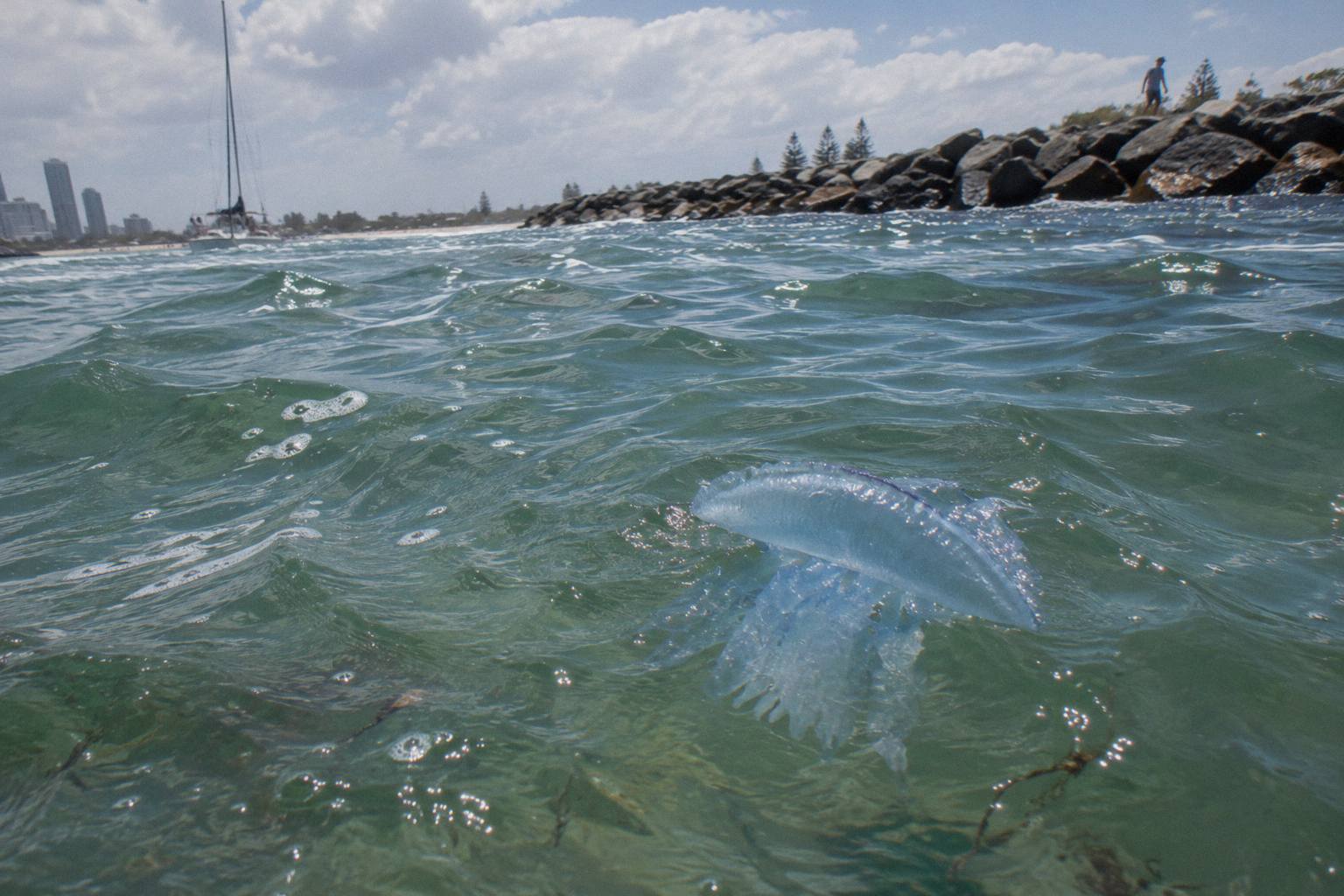
On the information published by the authorities, the jellyfish most relevant to Gold Coast snorkellers is the bluebottle, which Surf Life Saving Queensland describes as occurring Australia wide. Dangerous tropical stingers, box jellyfish and irukandji, are given a season of typically November through to May, but SLSQ places box jellyfish north of Agnes Water and irukandji north of southern Fraser Island, so it does not state either for the Gold Coast.
That distinction matters because the two groups need completely opposite first aid, and mixing them up makes a bluebottle sting worse. A bluebottle is a small drifting animal with a gas-filled float and a single trailing tentacle; its sting is sharp and unpleasant but usually self-limiting. Heat is the treatment. The tropical stingers, by contrast, are potentially life-threatening and vinegar is the recommended first aid because it prevents unfired stinging cells from discharging.
It also matters for planning, because the two categories get talked about as if they were one. A visitor who reads "stinger season November to May" on a Queensland travel page and assumes it describes the Gold Coast has read a northern warning with a statewide headline. The season statement is real and official, but its attached range statements put the dangerous animals far up the coast. Reading the range line, not just the season line, is the whole trick.
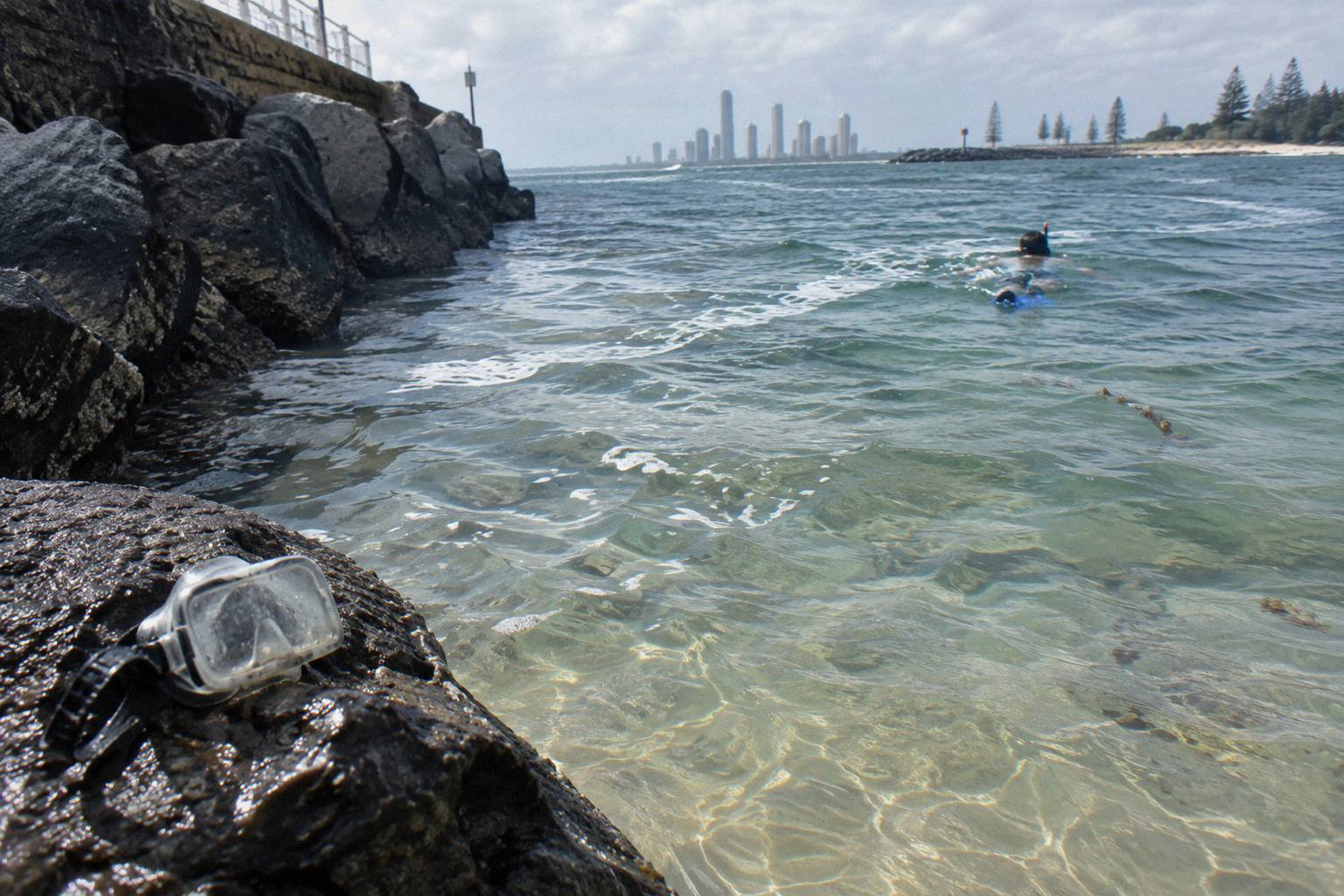
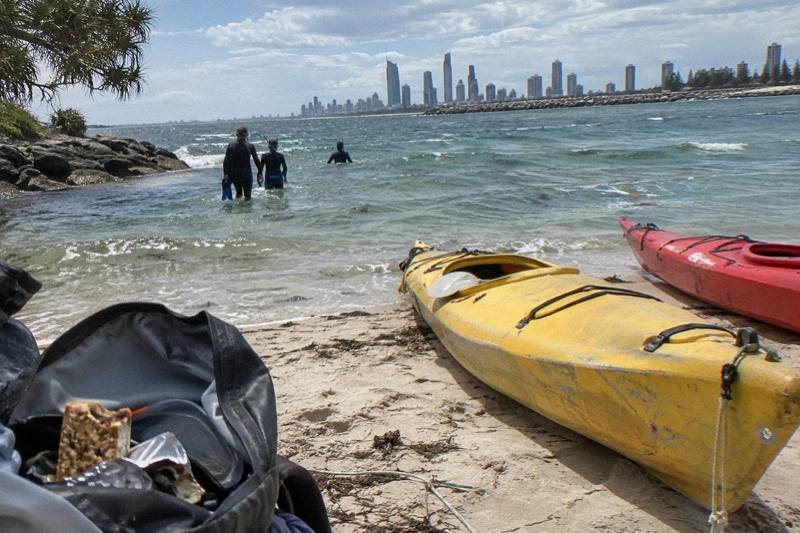
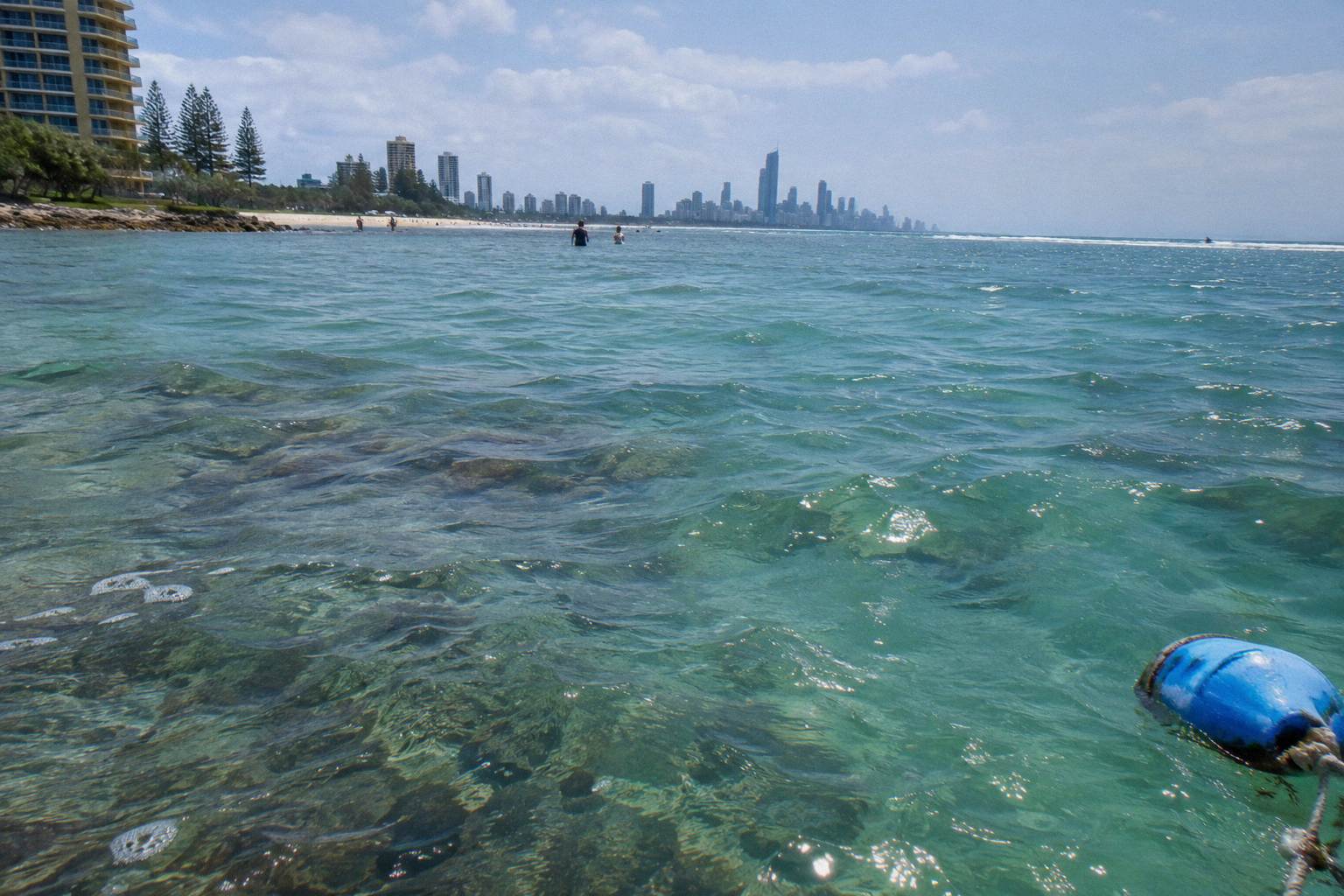
The Gold Coast's snorkel sites matter here too. The Wave Break Island trips run inside the Broadwater behind the Gold Coast Seaway, where the Gold Coast Waterways Authority notes clear, clean and mostly shallow waters; the Cook Island turtle trips cross to a New South Wales aquatic reserve about 600 metres off Fingal Head. Neither is an open-ocean surf beach, which is where most bluebottle stings in Australia happen, though bluebottles drift with wind and current and no site is immune. Wave Break Island itself is man-made, created in 1985 as part of the Seaway construction, and access is over water only, by kayak, vessel or stand-up paddleboard, which is one reason nearly every snorkeller there arrives with an operator. There is more site detail in the guide to the best places to snorkel on the Gold Coast.
One point of honesty: no official source publishes a Gold Coast bluebottle season, a sting count, or a month-by-month presence chart. Anyone who tells you "the bluebottle season is X to Y" for this coast is extrapolating. What can be said is that bluebottles are an Australia-wide animal, that onshore winds push them toward beaches, and that the operators covered on this site brief every group on marine life before entering the water. Between those three facts and a glance at the sand before you swim, you have better information than any invented calendar.
Are Box Jellyfish And Irukandji Found On The Gold Coast?
Surf Life Saving Queensland does not state either animal for the Gold Coast. Its marine stingers page gives the box jellyfish range as north of Agnes Water and the irukandji range as north of southern Fraser Island, both well to the north of this coastline, while noting their season as typically November through to May within those ranges. Neither presence nor absence on the Gold Coast is claimed by the official source, so this guide claims neither either.
Agnes Water and southern Fraser Island both sit a long way up the Queensland coast from here. Those range statements are why stinger suits and vinegar stations are standard equipment on North Queensland beaches and not a fixture on Gold Coast sand. The SLSQ advice to treat an unexplained severe sting with vinegar and urgent medical care still applies anywhere, because ranges describe where the animals are known, not a sealed border.
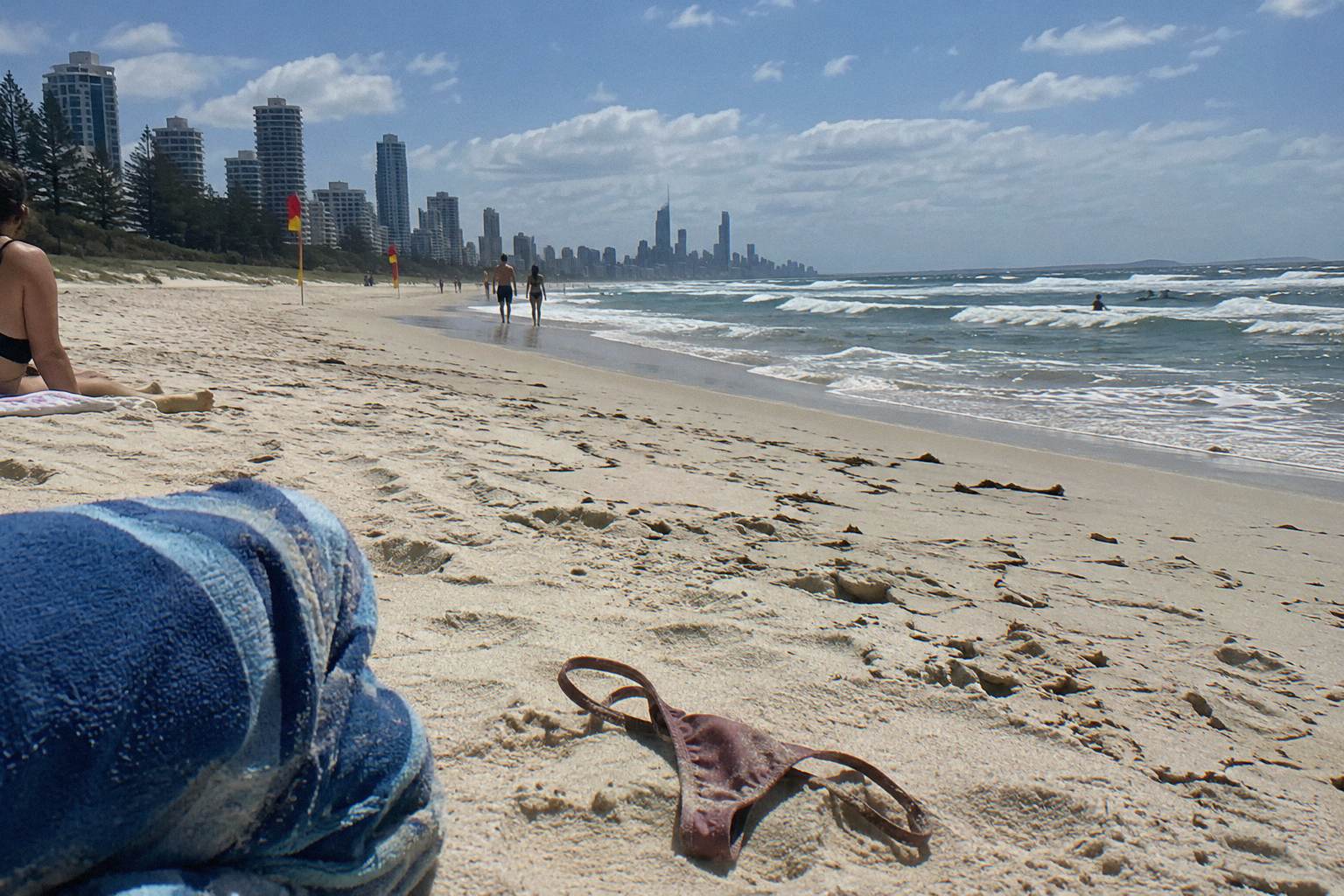
For snorkellers, the practical reading is proportion. The tropical stingers are a genuinely dangerous animal with a genuinely northern range per the official page. The bluebottle is a minor animal with a nationwide range. Neither fact justifies panic, and neither justifies ignoring a sting that looks or feels wrong. The full first aid steps for each are in the next section, and the SLSQ marine stingers page is the primary source for all of it. Safety questions reach beyond jellyfish, and the longer treatment of the whole picture is in whether snorkelling on the Gold Coast is safe.
If a sting does reshape your plans, the booking pages for every tour covered on this site list free cancellation up to 24 hours in advance for a full refund, though the operators' own terms can differ (Blue Seafaris asks for 48 hours by email, for example), so read the terms on the booking page you actually use. Weather cancellations follow a similar pattern: operators run subject to conditions and will not launch into unsafe seas, which removes most of the judgment calls a solo swimmer has to make alone. What happens to your money when a trip is called off is covered in full in what happens when a snorkel tour is cancelled for weather.
- Marine Biologist Guide, Cook IslandUS$93.64
- Cook Island Turtles From ChinderahUS$116.52
- Small Boat, Fingal Head TurtlesUS$120.59
What Is The Correct First Aid For A Bluebottle Sting?
Surf Life Saving Queensland's bluebottle first aid has four steps: remove any tentacles, rinse the area with sea water, immerse in hot water for about 20 minutes (no hotter than comfortable), and apply a cold pack if pain is unrelieved. In an emergency, call 000. Do not use vinegar for a bluebottle, and do not use fresh water to rinse, as both can cause remaining stinging cells to fire.
The sea water rinse is the step people most often get wrong, because the instinct is to rinse with fresh water from a bottle. Fresh water is a trigger for the stinging cells; sea water is not. Tentacles should be lifted off rather than rubbed, and if hot water is not available, a cold pack is the fallback while you get help. Severe or worsening symptoms, difficulty breathing, chest pain, or a sting covering a large area, are a 000 call, not a wait-and-see.
On a tour, all of this is simpler than it sounds, because you are not alone with the decision. The skipper and in-water guide carry the training, the briefing has already covered what to do, and the boat is a few minutes away rather than a swim back to shore. That is the quiet argument for guided snorkelling on any coast: the first aid knowledge travels with you.
The contrast with tropical stinger first aid is worth printing side by side, because the two protocols are opposites and mixing them is the classic error.
| Situation | Bluebottle sting | Suspected tropical stinger sting |
|---|---|---|
| First step | Remove tentacles | Call 000, monitor the person |
| Rinse with | Sea water (not fresh water) | Vinegar, per SLSQ |
| Pain relief | Hot water about 20 minutes, no hotter than comfortable | Vinegar soaking while waiting for help |
| If pain persists | Cold pack | Ongoing emergency care |
| Emergency | 000 for severe symptoms | 000 immediately |
A final note on honesty: no Gold Coast bluebottle season or sting count exists in the official sources, so this page never prints one. If a beach has bluebottles washed up on the sand, that is your best real-time indicator, and it is one your eyes are better at than any calendar.
What Do Gold Coast Snorkel Tour Operators Say And Do About Stingers?
Every operator covered on this site briefs its group before the water, and the Cook Island operators work under a signed Code of Conduct from 2023 and 2024 that includes a pre-dive briefing. Wetsuits are included by Blue Seafaris and Watersports Guru, which cover the skin they cover, and Seaway Kayaking Tours lists hot drinks in winter. No operator publishes a stinger-specific guarantee, and none should be asked for one.
The Code of Conduct point is the strongest documented safety structure here: New South Wales authorities record that snorkel and dive operators running Cook Island trips signed a Code of Conduct in 2023 and 2024, and that a pre-dive briefing is part of it. That briefing is where marine life, reserve rules and stings get covered. At Cook Island itself the reserve rules also protect the animals: no touching, chasing or disturbing marine life, and the NSW DPI page on respecting the reserve sets them out in full.
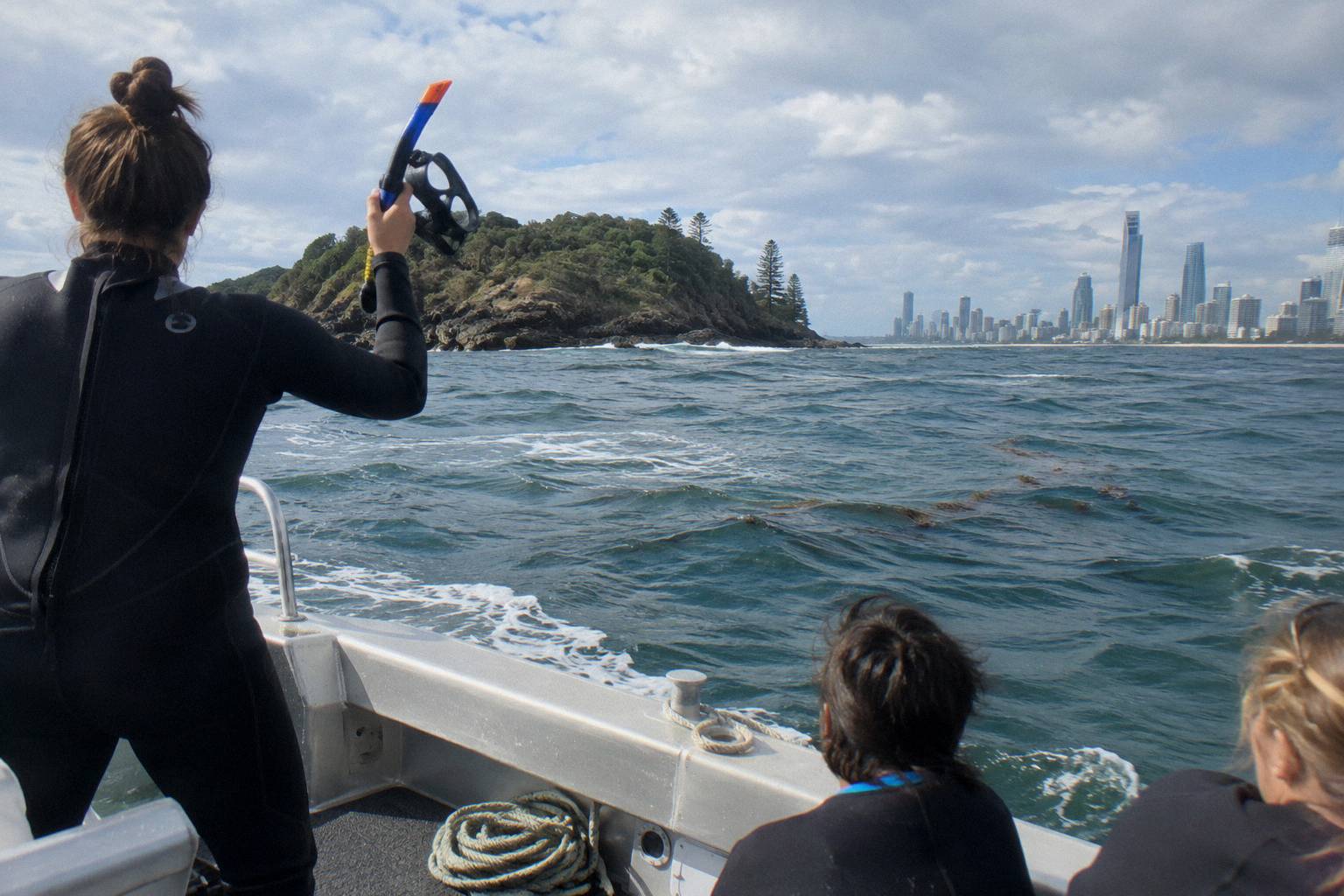
What each operator supplies and expects differs, and the differences are real enough to base a booking on.
| Operator | Trip | Swim requirement | Flotation | Skin covering |
|---|---|---|---|---|
| Seaway Kayaking Tours | Wave Break Island kayak and snorkel | None needed; non-swimmers welcome | Life jackets worn in the water | Not stated |
| AKA Adventures | Wave Break Island kayak and snorkel | Non-swimmers welcome | Life jackets worn at all times on the water | Not stated |
| Queensland Scuba Diving Company | Wave Break Island boat snorkel | No experience necessary, instruction provided | Not stated | Not stated |
| Cooly Eco Adventures | Cook Island turtle snorkel | Swim 50 m unassisted | Life jackets not worn in the water | Not stated |
| Blue Seafaris | Cook Island turtle tour | Swim 200 m unassisted, confident in open water | Pool noodles offered, no flotation jackets | Wetsuit included |
| Watersports Guru | Cook Island turtle snorkel | Swim the length of a 100 m pool | Lifejacket and flotation device included | Wetsuit included |
A covering is not a stinger suit, and no operator on the tours covered here markets one. A wetsuit does cover most skin, which is a comfort factor rather than a guarantee, and for nervous swimmers the flotation column above matters more than the covering column. If that is you, the companion piece on whether non-swimmers can snorkel on the Gold Coast works through the options in detail.
The Seaway Kayaking Tours trip deserves a specific mention for anxious first-timers: it runs in the sheltered Broadwater, takes children from age 4 with an adult, needs no swimming or snorkelling experience at all, and lists 4.6 across 370 reviews on its booking page, from US$66.69 per person. It is the natural first snorkel for a family whose real worry is stings rather than depth, and you can check availability alongside the full site rundown on Gold Coast Snorkelling Tours.
For a Cook Island turtle trip instead, the Cooly Eco Adventures snorkel, 4.9 across 172 reviews and a group capped at 12, is the small-group option from US$116.52 per person. Watersports Guru's version from Fingal Head runs max 9 guests with an in-water guide and gear included, from US$120.59 per person on its booking page, with the operator's own price listed as from A$119.
Blue Seafaris takes a marine biologist as guide, includes the wetsuit and premium gear, and its booking page shows 4.3 across 241 reviews from US$93.64 per person, with the operator's own price at A$139 per adult and A$119 per child under 12. Note its eligibility line before booking: swimmers must manage 200 metres unassisted, and it is unsuitable for non-swimmers.
Do Wetsuits, Stinger Suits Or Covering Skin Help Here?
A wetsuit covers the skin it covers, and that is the honest limit of the claim: Blue Seafaris and Watersports Guru both include one, while no operator on the tours covered here supplies a dedicated stinger suit or makes a stinger-protection promise. On the official ranges, the animals a stinger suit exists for are northern species anyway, so on the Gold Coast a wetsuit is a warmth and sun-protection garment first and a physical barrier second.
Typical sea temperature makes the wetsuit question concrete. Monthly averages run about 27 in February at the top and about 22 in the July and August winter, with a typical minimum of about 20.4 to 20.6, so from late autumn through spring a wetsuit is about comfort, full stop. The monthly breakdown is in the guide to Gold Coast water temperature by month.
| Month | Typical average sea temperature |
|---|---|
| January | About 26.2 |
| February | About 27.2 |
| March | About 26.4 |
| April | About 25.6 |
| May | About 24.2 |
| June | About 22.8 |
| July | About 21.7 |
| August | About 21.7 |
| September | About 22.1 |
| October | About 22.8 |
| November | About 24.6 |
| December | About 25.5 |
What About Sharks When Snorkelling Here?
The Queensland SharkSmart program lists shark control equipment at Gold Coast beach locations including Burleigh, Kirra, North Burleigh, North Kirra, Palm Beach and Rainbow Bay, though the net and drumline split was not captured and no counts are printed. Cook Island and Wave Break Island are not shark-control beaches. No source supports any verdict on shark risk at the covered snorkel sites, so none is offered here.
What the sources do state: NSW DPI lists the grey nurse shark among threatened species at Cook Island, a protected animal, and Blue Seafaris lists leopard sharks as seasonal marine life there, a docile bottom-dwelling species. Neither statement is a risk statement, and the honest framing is that the operator's pre-water briefing covers how to behave around any large animal. The full discussion belongs to the safety piece linked earlier; for this page, the one-clause version is that shark control equipment is a beach program and your snorkel trip is not a beach swim. The SharkSmart equipment locations page is the primary source for the beach list.
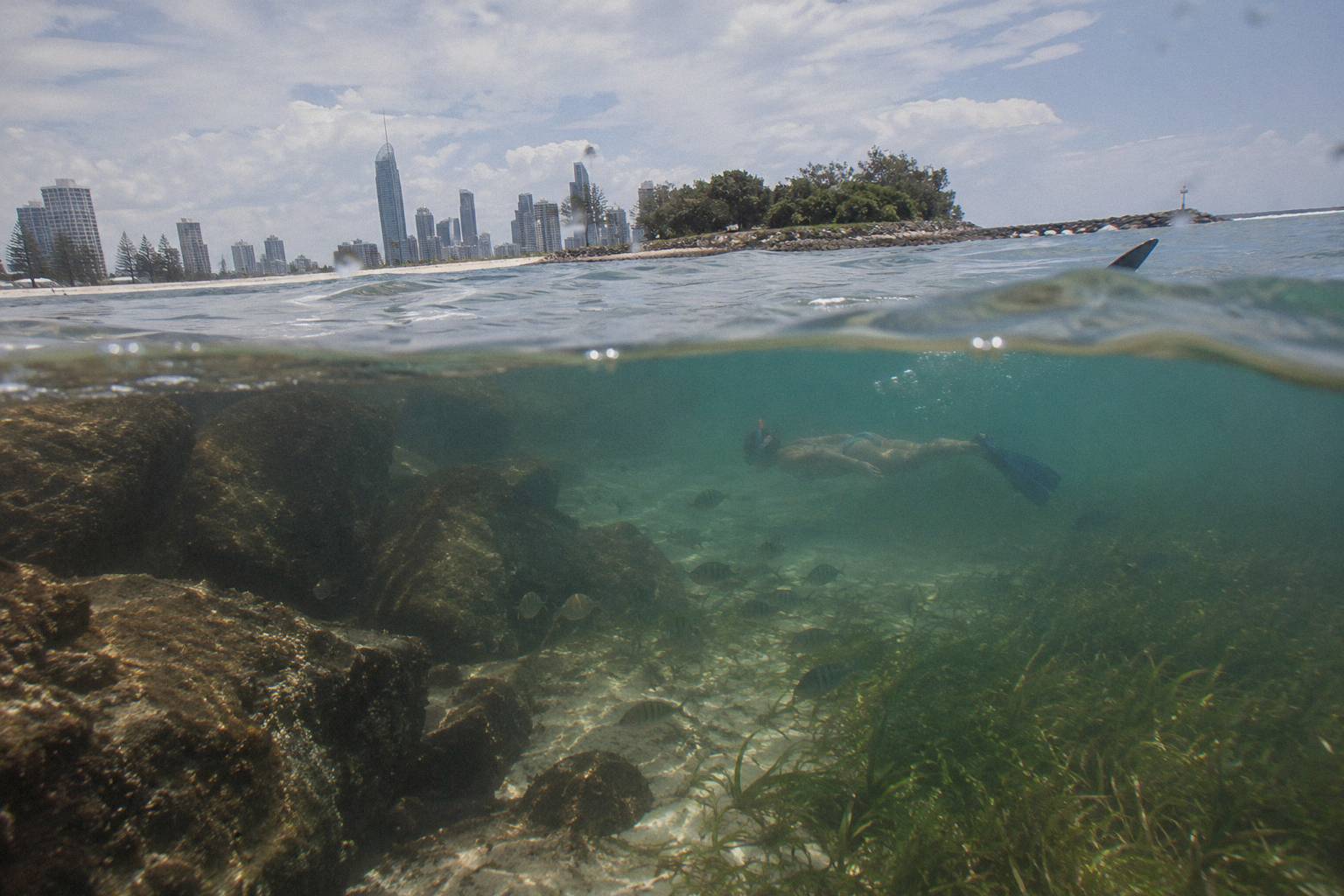
Which Tour Should A Nervous Snorkeller Book?
For stinger-worried and confidence-worried snorkellers alike, the Wave Break Island kayak trips are the gentlest entry: Seaway Kayaking Tours takes non-swimmers from age 4 with life jackets worn, and AKA Adventures also welcomes non-swimmers with life jackets worn at all times, from US$82.05 per person. The Cook Island turtle trips demand real swimming ability by contrast, 50 to 200 metres unassisted depending on the operator.
The AKA trip adds a light continental breakfast (no beverages included) per its booking page, shows 4.6 across 161 reviews, and runs about 3 hours from 7:30am. Like the Seaway trip it meets at the van and trailer on Marine Parade, Biggera Waters, which is not a shop, so allow time to find street parking. The boat alternative, Queensland Scuba Diving Company's Wave Break Island snorkel with hotel transfers from selected Surfers Paradise hotels, needs no experience, runs about 4 hours pickup to drop-off, and lists 4.1 across 168 reviews from US$53.22 per person.
The pattern across all three Wave Break options is the reason this page exists: the calmest water, the loosest swim requirements and the most flotation all sit on the same side of the coast as the lowest jellyfish relevance. Nervous snorkellers are not choosing between safety and experience here; the gentlest trips are also the ones where a sting question is least likely to arise in the first place.
At the far end of the scale, the See Moreton cruise to the Tangalooma Wrecks is the full-day commitment: about 11 hours with a 7:30am start, roughly 4 hours at the wrecks stop, a tropical buffet lunch included, and transfers from selected Gold Coast hotels, from US$206.16 per person on its booking page. The wrecks sit in Moreton Bay Marine Park, where Queensland Parks notes go-slow areas protect turtles and dugong, and the resort's own page records a strong current between the wrecks and the beach when the tide runs, which is a fair reminder that full-day trips reward confident swimmers most. Marine life knowledge adds to the day rather than distracting from it: Queensland Parks records that six of the world's seven marine turtle species are found in Moreton Bay, three of them resident.
What To Actually Take From All This
Bluebottles are the jellyfish a Gold Coast snorkeller might realistically meet, they occur Australia wide, and their first aid is sea water, heat and a cold pack if needed. The dangerous tropical stingers carry official ranges well north of this coast, and no source claims them here. Every covered operator briefs its group, and the calmest water on the tours covered here is the Broadwater behind the Seaway.
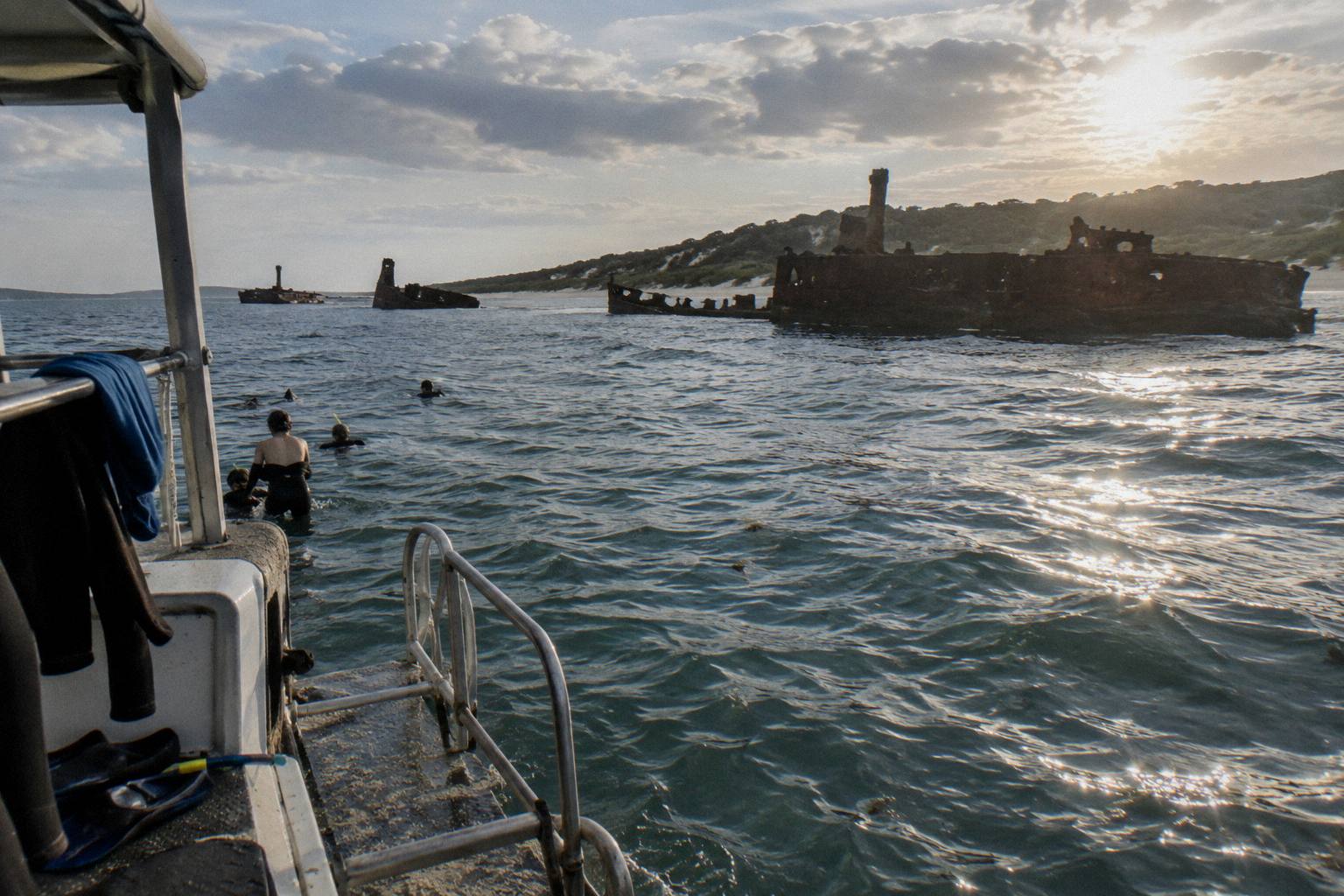
If you take three things from this page: learn the two first aid protocols before you swim anywhere, not just here; match the tour to the swimmer, because the eligibility gaps between operators are large; and treat any operator "guarantee" language about wildlife or safety as marketing rather than fact. Nature does not sign contracts, and the honest operators on the tours covered here do not pretend otherwise. Book the trip that matches your swimmer, read the cancellation terms on the booking page you actually use, and the jellyfish question takes its proper place as a footnote rather than a fear.
Common Questions About Stingers And Bluebottles On The Gold Coast
Are There Stingers On The Gold Coast?
Bluebottles, which Surf Life Saving Queensland describes as occurring Australia wide, are the jellyfish most relevant to this coast. Dangerous tropical stingers, box jellyfish and irukandji, are given official ranges north of Agnes Water and north of southern Fraser Island respectively, and no official source states them as present or absent on the Gold Coast.
When Is Stinger Season On The Gold Coast?
Surf Life Saving Queensland gives the dangerous tropical stinger season as typically November through to May, within ranges that sit north of the Gold Coast. No official Gold Coast bluebottle season exists, so no month-by-month claim can be honestly made for this coastline.
What Is First Aid For A Bluebottle Sting?
Per SLSQ: remove any tentacles, rinse with sea water (not fresh water), immerse in hot water for about 20 minutes no hotter than comfortable, and use a cold pack if pain is unrelieved. Call 000 in an emergency or for severe symptoms.
Should I Use Vinegar On A Bluebottle Sting?
No. Vinegar is the SLSQ first aid for suspected tropical stinger stings, not bluebottles. For a bluebottle, the sequence is sea water rinse then heat. Using the wrong protocol can make things worse.
Do The Tour Operators Provide Stinger Suits?
No operator on the tours covered here supplies a dedicated stinger suit. Blue Seafaris and Watersports Guru include a wetsuit, which covers the skin it covers, and every covered operator briefs its group before the water.
Can Non-Swimmers Join A Gold Coast Snorkel Tour?
On some trips, yes. Seaway Kayaking Tours welcomes non-swimmers from age 4 with life jackets worn, and AKA Adventures also welcomes non-swimmers. The Cook Island operators require 50 to 200 metres of unassisted swimming depending on the operator, and Blue Seafaris states its trip is unsuitable for non-swimmers.