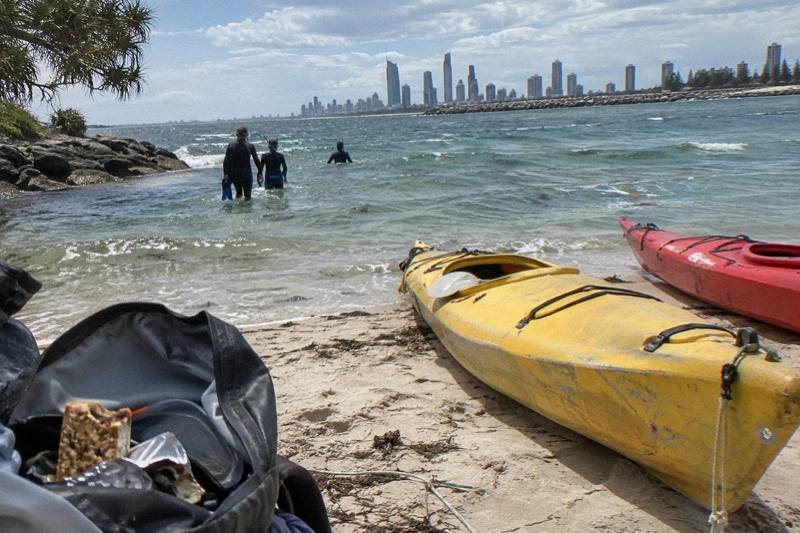
Gold Coast Seaway Tide Times And What They Mean For Snorkelling
Tide timing governs Seaway snorkel departures, but no published tide table for the site exists in the sources. Here is what operators and authorities state, and how to use it.
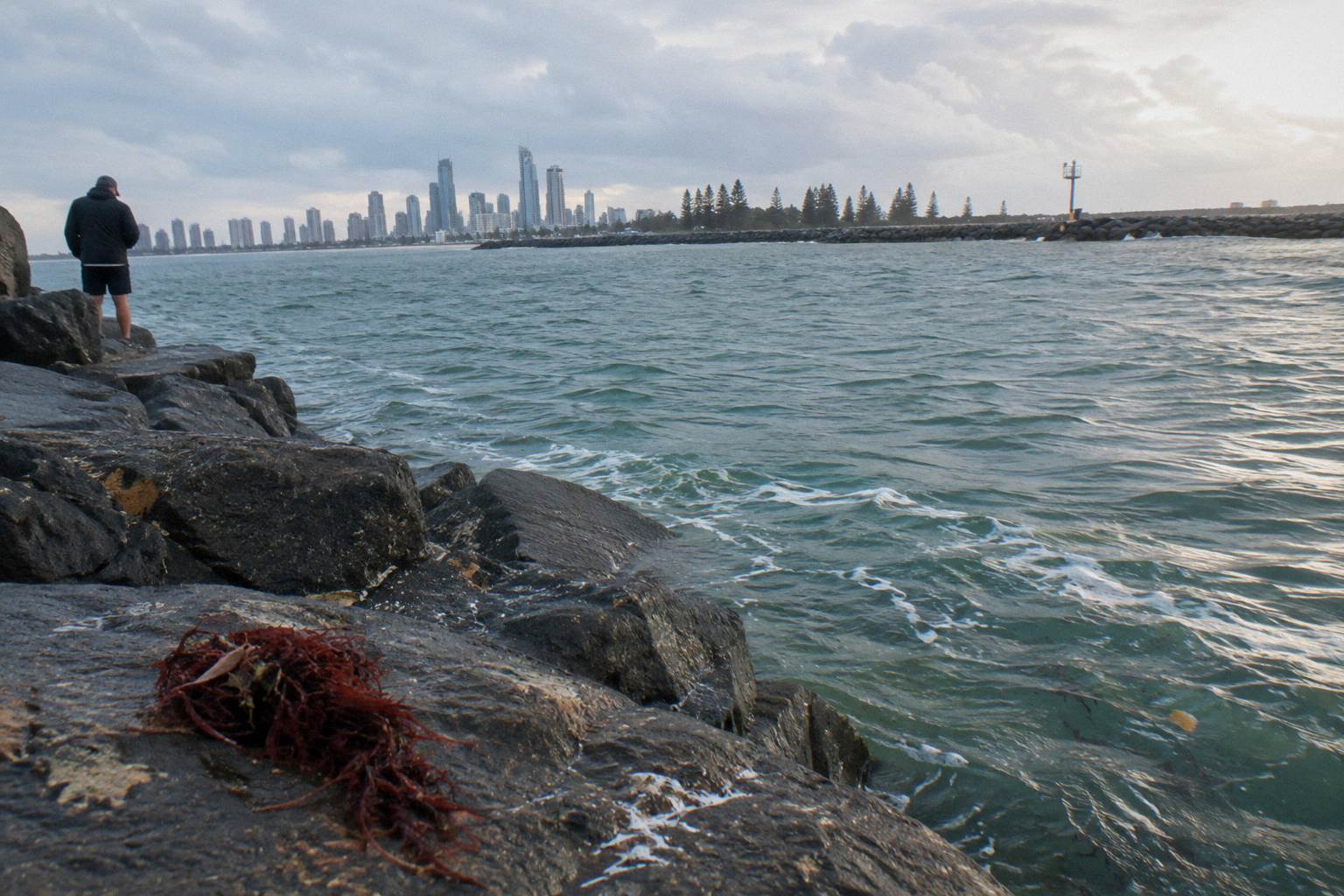
Short answer
The Gold Coast Seaway was built in 1985 and Wave Break Island is its man-made shelter. No tide table, visibility figure or current strength for the site appears in any source checked. Operators schedule around weather, tides and sea conditions and cancel when unsafe, so the practical move is to ask the operator before booking.
Why Tide Times Matter For Gold Coast Seaway Snorkelling
Tide and sea conditions, not a fixed timetable, decide when Seaway-area snorkel trips actually run. No official tide table for the Gold Coast Seaway or Wave Break Island appears in any source this site checked, so the honest answer is that timing sits with the operators, who schedule each day around conditions and cancel when water is unsafe.
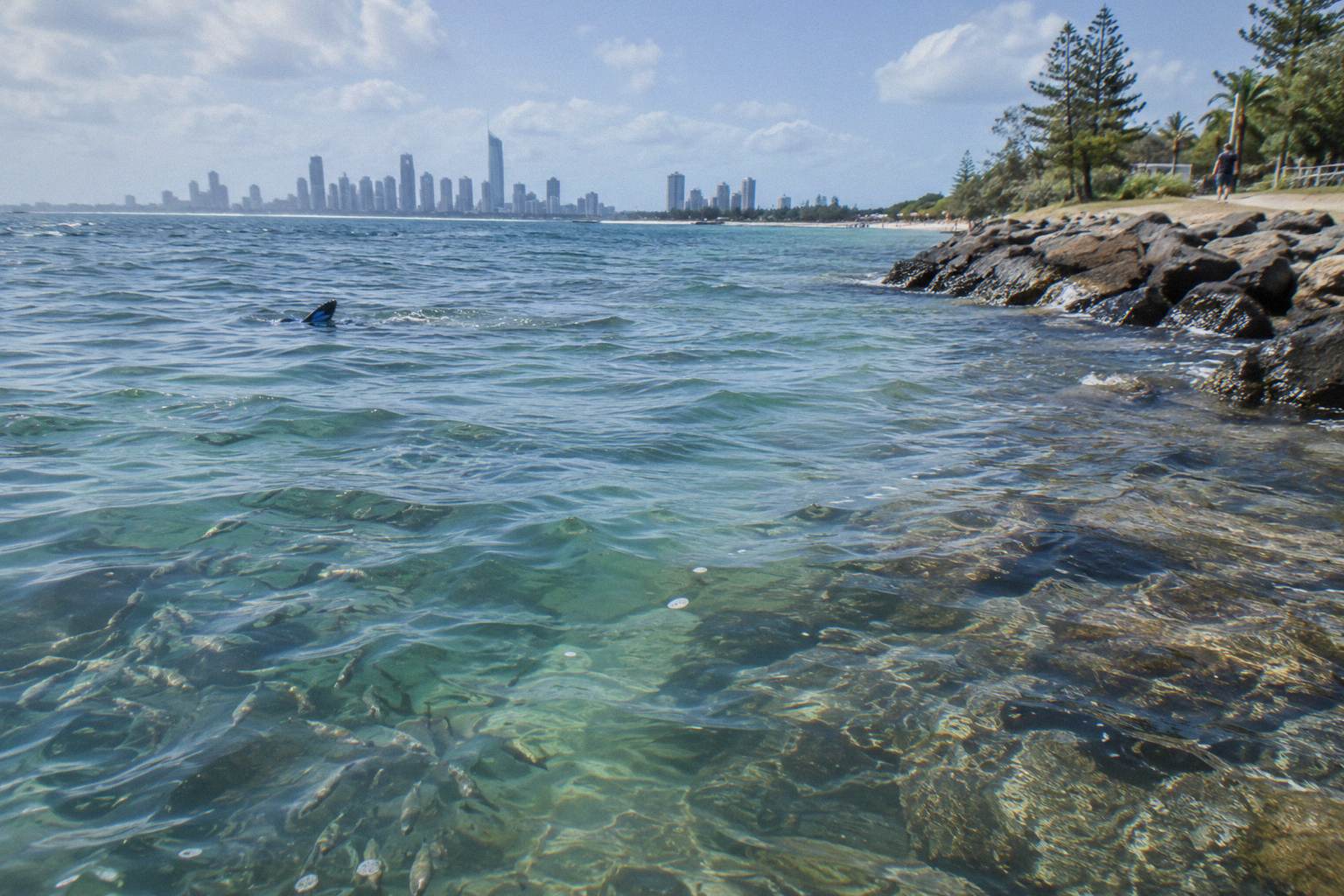
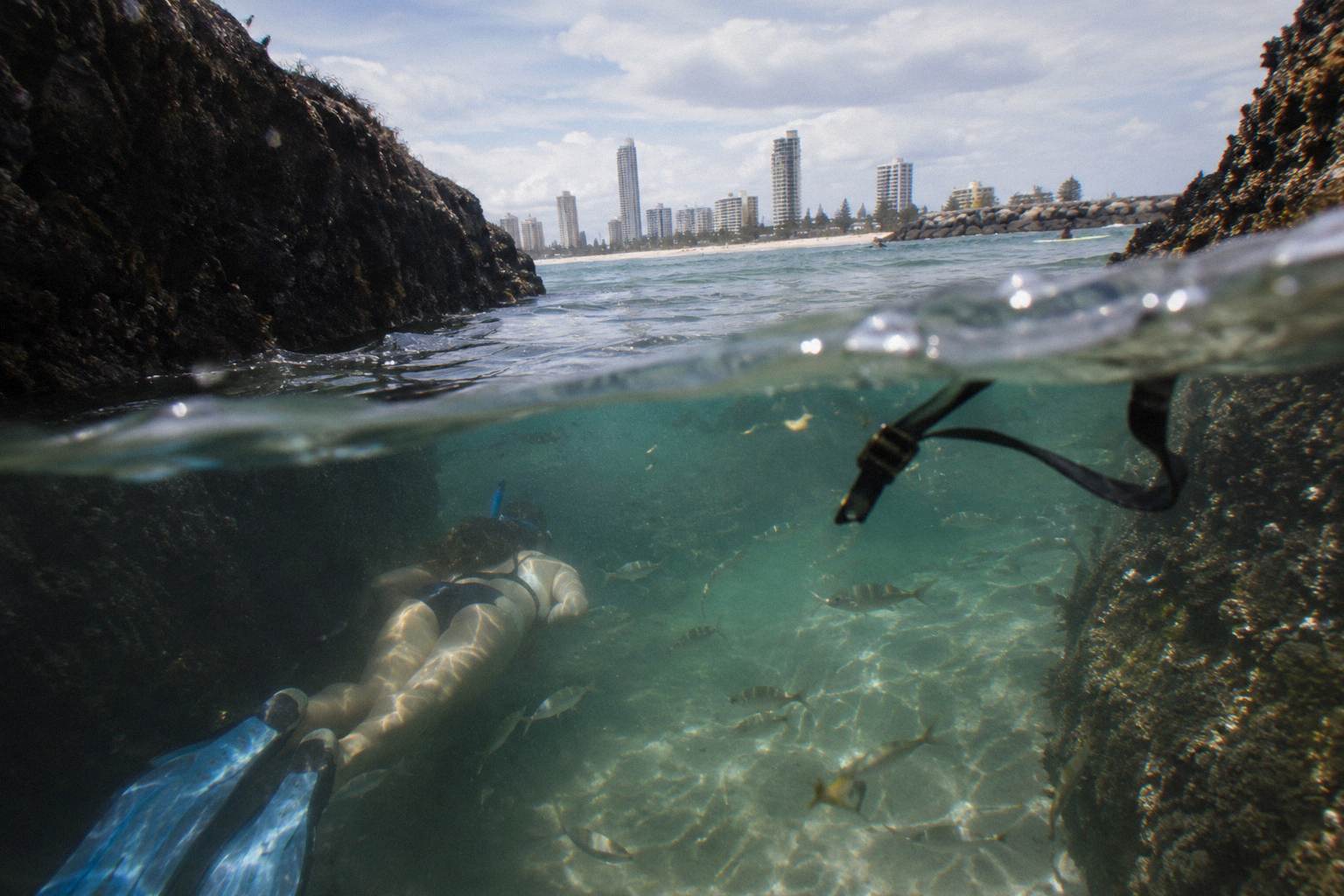
The Gold Coast Seaway is the engineered entrance between the Broadwater and the ocean, and Wave Break Island is the island built beside it. According to the Gold Coast Waterways Authority, the island was created in 1985 as part of the Seaway construction, its job being to protect the western Broadwater foreshore from waves entering the new entrance. The same authority describes the water around it as clear, clean and mostly shallow, and calls the island particularly popular among snorkelers and scuba divers.
That popularity exists because of the shelter, not despite it. The rock walls and the island dampen ocean swell, which is why commercial kayak and boat snorkel trips can run there on days when the open beaches are rough. But shelter from swell is not shelter from everything. Tide and current still move water through the entrance continuously, and that movement is what operators watch when they set departure times. Blue Seafaris, a Cook Island operator, states plainly that its tours are scheduled daily subject to weather, tides and sea conditions, and that wording reflects how the whole region works.
This page is a logistics page, and it has to be honest about its limits. The verified research behind this site found no tide table, no tide height, no visibility-in-metres figure and no current or rip strength figure for the Seaway, Wave Break Island or any other covered snorkel site. Rather than invent numbers, this guide sets out what operators and official bodies do state, site by site, and turns the gaps into a practical checklist of questions to ask before you book. For a broader look at the site itself, see the Wave Break Island snorkelling overview.
Gold Coast Seaway Snorkelling: Tides, Entry And Fish
Seaway snorkelling is really Wave Break Island snorkelling: access is over water only, by private vessel, kayak or stand-up paddleboard, with day use only and no camping or accommodation. The snorkel site is a man-made rock wall that has become a reef, reached after a paddle of about 30 minutes and a short bushwalk.
Entry to the water here is not a beach walk-up in the usual sense. The Gold Coast Waterways Authority is explicit that the island has no land access except over water, and that it is day use only. That is why every commercial product in the tours covered here that covers the area is either a kayak trip or a boat trip. There is no ferry, no bridge and no road.
- Boat Snorkel, Hotel TransfersUS$53.22
- Kayak To Wave Break Island, SnacksUS$66.69
- Breakfast Kayak, Fish FeedingUS$82.05
The covered operators each approach it differently. Seaway Kayaking Tours runs a kayak and snorkel trip from Biggera Waters: the group meets at a van and trailer parked beachside on Marine Parade, paddles about 30 minutes, then takes a short bushwalk down to the sheltered snorkel site along the rock wall. AKA Adventures runs a similar kayak-and-snorkel format from the same Marine Parade stretch, with a light continental breakfast only per the booking page, and a 7:30am start. Queensland Scuba Diving Company takes a different route entirely, picking up from selected Surfers Paradise hotels and running a boat from Marina Mirage at Main Beach, with the booking page describing a 10-minute cruise to the site and 50 or more fish species, which is operator wording rather than a counted survey.
The wall-as-reef point matters for expectations. What you snorkel along is structure that was built as engineering and colonised by marine life afterwards, not a natural coral reef. The fish life the operators describe is real but it is their own wording, and no independent species count for Wave Break Island exists in the sources. One firm limit from the research: turtles are a Cook Island product. No covered operator claims turtles at Wave Break Island, and this site will not either. If swimming with turtles is the goal, the Cook Island turtle snorkelling guide covers the New South Wales side trips.
If you are weighing which Wave Break Island format suits you, these three are the current options:
The kayak formats and the boat format differ in more than the paddle. The kayak trips welcome non-swimmers with life jackets worn on the water, while the boat trip states no experience is necessary with full instruction provided. The kayak trips include snacks and run about 2.5 to 3 hours; the boat trip runs about 4 hours pickup to drop-off and saves you the drive to Biggera Waters if you are staying in Surfers Paradise.
How Operators Handle Tides, Weather And Cancellations
Every covered booking page lists free cancellation up to 24 hours in advance for a full refund, but operator-owned terms can be stricter: Blue Seafaris requires 48 hours by email, and operators who cancel for unsafe conditions offer a refund or a new date. Read both, and trust the booking page's terms for your booking.
This is where the tide question becomes a money question. If a trip is rescheduled because conditions are unsafe, what happens to your payment depends on which set of terms applies, and the two sets do not always match. The table below compares the stated positions, source by source, with the basis named for each.
| Product (operator) | Booking-page cancellation | Operator's own weather and cancellation terms | What happens if the operator cancels |
|---|---|---|---|
| Seaway Kayak And Snorkel With Marine Life (Seaway Kayaking Tours) | Free cancellation up to 24 hours ahead, full refund | Not stated on any page read | Not stated on any page read |
| Wave Break Island Boat Snorkel (Queensland Scuba Diving Company) | Free cancellation up to 24 hours ahead, full refund | Not stated on any page read | Not stated on any page read |
| AKA Adventures Kayak And Snorkel (AKA Adventures) | Free cancellation up to 24 hours ahead, full refund | Not stated on any page read | Not stated on any page read |
| Snorkel With Turtles Gold Coast (Cooly Eco Adventures) | Free cancellation up to 24 hours ahead, full refund | Not stated on any page read | Not stated on any page read |
| Snorkel With Turtles At Cook Island (Blue Seafaris) | Free cancellation up to 24 hours ahead, full refund | Guest changes and cancellations by email at least 48 hours before; under 48 hours, payment forfeited | Credit voucher or refund, price less booking and card fees |
| Tweed Heads Snorkel With The Turtles (Watersports Guru) | Free cancellation up to 24 hours ahead, full refund | Runs weather permitting; no own-page policy read | Not stated on any page read |
| Moreton Island And Tangalooma Wrecks Snorkel Cruise (See Moreton) | Free cancellation up to 24 hours ahead, full refund | Not stated on any page read | Not stated on any page read |
Blue Seafaris is the clearest worked example of the gap. Its booking page carries the standard 24-hour free cancellation, but its own page sets a 48-hour deadline for guest-initiated changes, with payment forfeited inside that window. If the operator itself cancels for weather, tides or sea conditions, it offers a credit voucher or a refund minus booking and card fees. Neither term is hidden; they simply live on different pages, and the booking-page terms are what governs a booking made there.
One line of fine print deserves its own warning. Tweed Turtle Tours, an operator not offered on this site, states plainly on its own page that there is no refund because animals did not appear. That is the honest industry position everywhere, and no covered operator on this site promises otherwise. A snorkel tour sells the trip, not a sighting, and any guarantee of wildlife should be read as marketing, not a refund term.
The Wave Break Island kayak and snorkel trip is the one most exposed to tide timing in practice, because the paddle out and the sheltered wall site are the whole product. Its booking page shows several departures a day and a rating of 4.6 across 370 reviews, and it takes children from age 4 and non-swimmers with life jackets. Before locking a date, ask the operator which departure usually gets the calmer water.
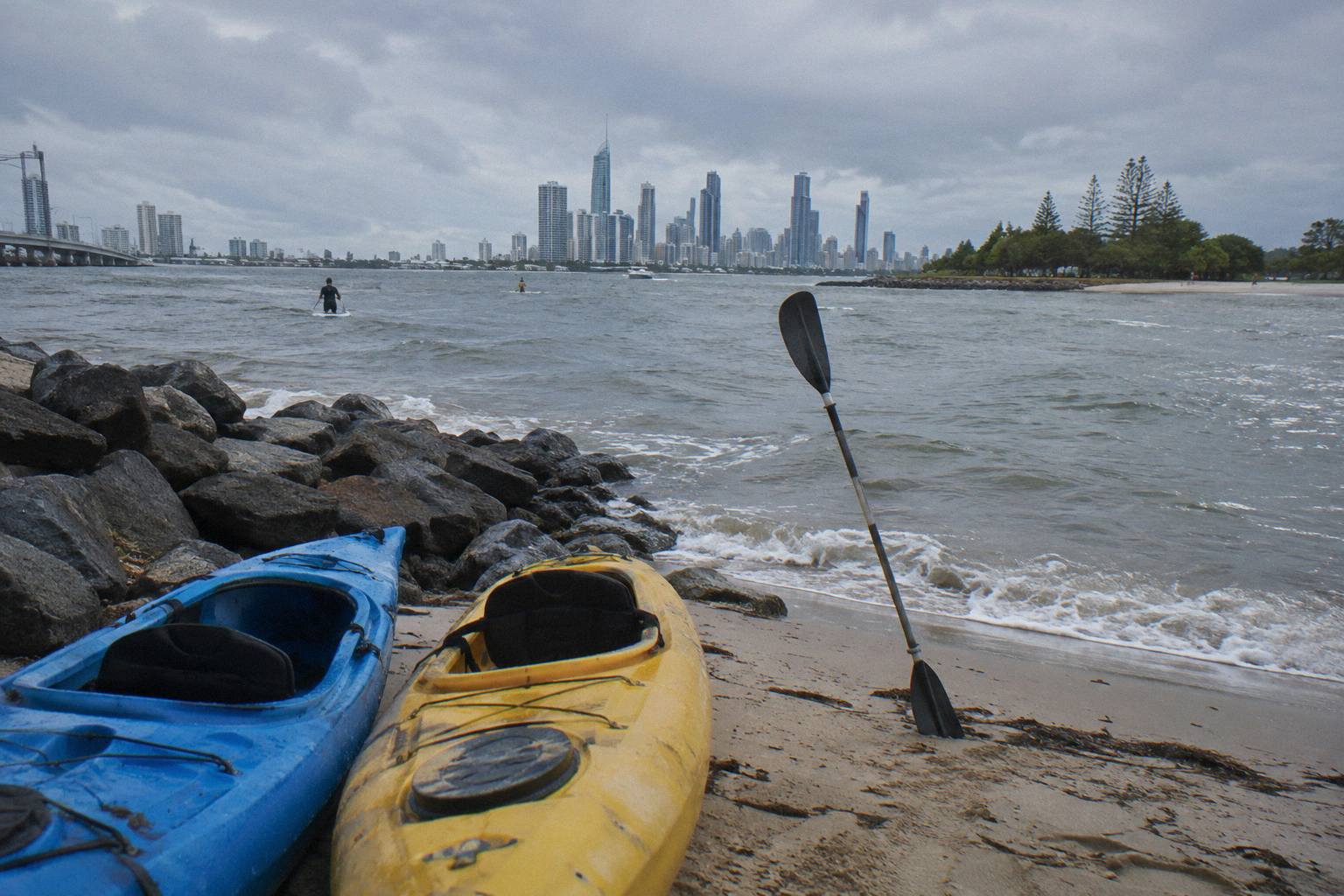
Gold Coast Snorkelling Visibility: What To Expect And When
Visibility is the most asked and least answerable question in Gold Coast snorkelling. Every generic travel answer gives a number; none of the official or operator sources this site verified does. The Gold Coast Waterways Authority's description of Wave Break Island, clear, clean and mostly shallow, is a characterisation, not a measurement. Watersports Guru's 3 to 6 metre figure describes the depth of its Cook Island snorkel site, not how far you can see.
What can be said honestly is structural. The Broadwater side, where Wave Break Island sits, is sheltered behind the Seaway walls, so it avoids ocean swell, but it is also an estuary system where tidal movement stirs things up. Cook Island sits in open ocean off Fingal Head, so its water quality behaves differently again. The two are not interchangeable, and a visibility report from one tells you nothing about the other.
The practical translation: expect variation between days, not a reliable figure, and treat any specific metres-per-day claim you read elsewhere with suspicion unless it names a source and a date. Operators know their sites and know what the water looked like yesterday. A quick question through the booking page, phrased as how has visibility been this week rather than what is the visibility, will usually get you a straight answer, because operators would rather set expectations than field complaints.
The one weather-driven pattern worth planning around is rain. Heavy rain and flooding degrade inshore water everywhere on the coast, and the Broadwater is the most exposed of the covered sites to run-off. If it has poured for two days before your trip, that is the moment to message the operator and ask whether the trip is still worth taking, before the free-cancellation window closes. For the seasonal picture of water temperature rather than clarity, the monthly water temperature guide has the verified figures.
Reading The Gold Coast Marine Forecast Before A Snorkel Trip
No specific Gold Coast marine forecast source is named in the verified research, so this site names none. What matters instead is the decision logic: operators already watch wind, swell and tides, they cancel when conditions are unsafe, and your job is to give them an easy way to reach you on the morning.
This is deliberately a short section, because the honest content is thin. The sources verified for this site name no forecast website, no tide service and no app for the Gold Coast, and inventing a recommendation would be exactly the kind of filler this site refuses to publish. What the sources do establish is who actually makes the weather call, and it is not you.
Tweed Turtle Tours, though not offered here, documents the pattern explicitly on its own page: if wind, swell or the Tweed bar make the trip unsafe, the operator cancels, usually the morning of the trip, and the guest chooses another date or a full refund. That is how coastal snorkel operators everywhere in this region operate. Watersports Guru states it runs weather permitting. Blue Seafaris schedules daily subject to weather, tides and sea conditions. At Tangalooma, the resort warns of strong current between the wrecks and the beach when the tide runs, and recommends the guided tour rather than swimming out.
There is one trap in all of this that catches Queensland visitors every summer: the time-zone clock. All Cook Island operators depart from New South Wales, and during daylight saving NSW is one hour ahead of Queensland, a point Blue Seafaris makes on its own page. An 8am departure in Queensland time is a different moment than an 8am departure in NSW time, and operators differ: Blue Seafaris lists times in NSW time, Cooly Eco Adventures lists times in Queensland time. Check which clock your booking page uses before you set an alarm.
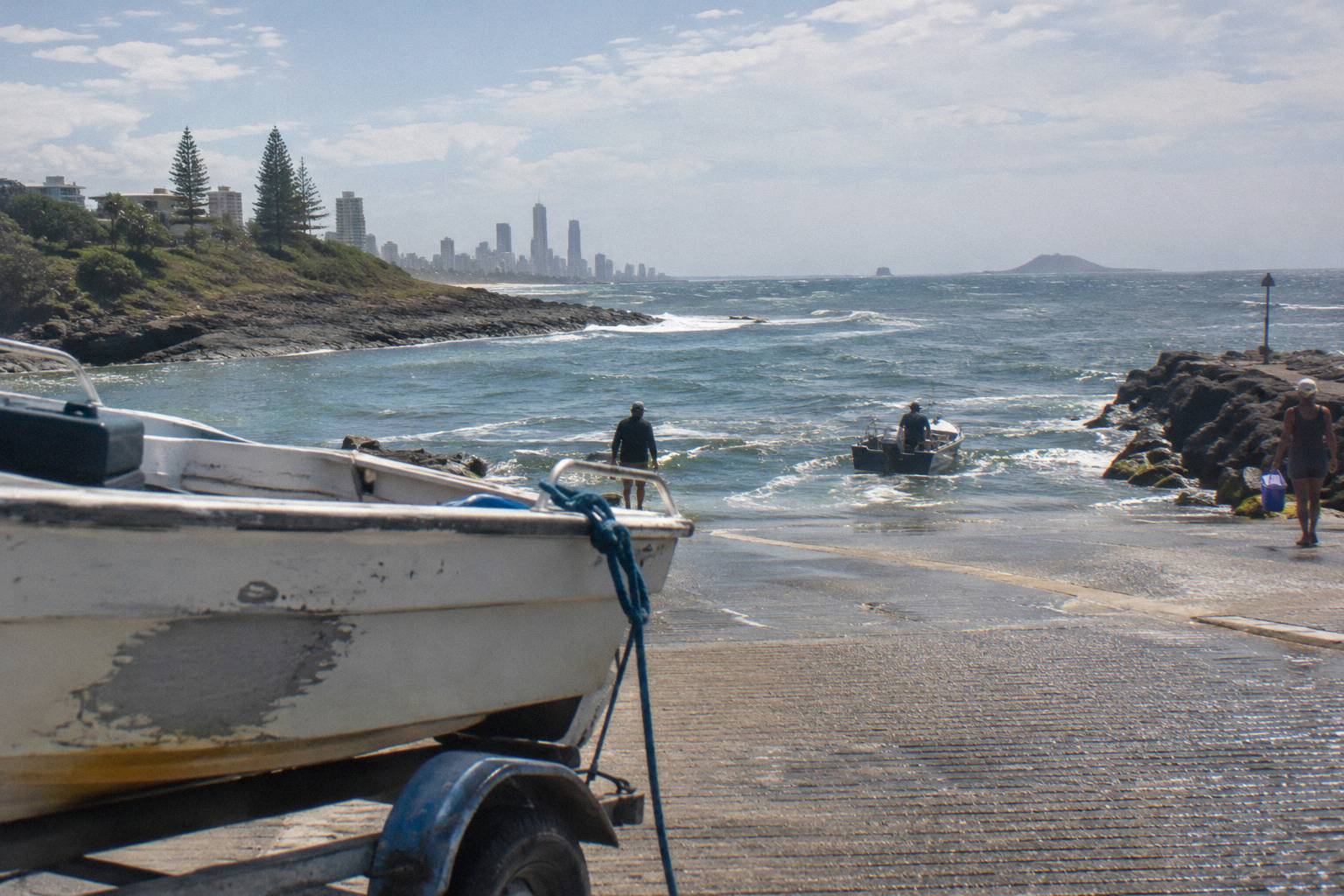
The boat-based alternative on the Broadwater side handles the conditions question for you. The Wave Break Island boat snorkel with hotel transfers collects from selected Surfers Paradise hotels and runs about 4 hours door to door, with no experience necessary and instruction provided.
Its rating is 4.1 across 168 reviews, and its price on the booking page starts from US$53.22 per person. The boat format means the operator is reading the conditions on your behalf, which is worth something on a short trip where you would rather not become an amateur meteorologist.
Rips And Currents For Snorkellers On The Gold Coast
No rip or current strength figure for any covered site exists in the verified sources. What is stated: the Tangalooma wrecks sit in a strong current when the tide runs, with an unpatrolled beach, and Wave Break Island is accessed over sheltered water behind the Seaway walls. Neither site has a published current rating.
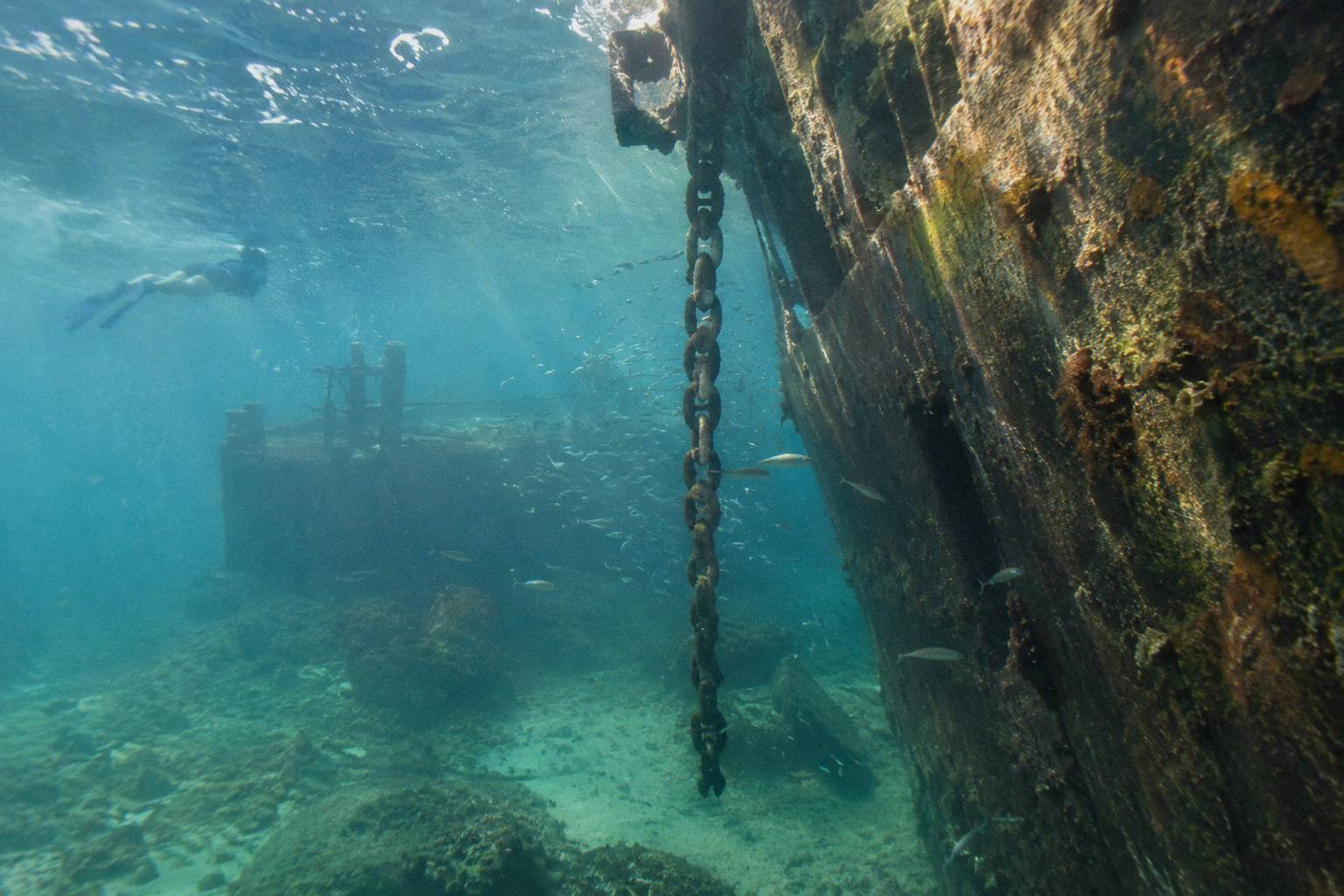
Rips are the question where vague answers are genuinely dangerous, so this section stays narrow. A rip is a channel of water moving away from shore, and on Gold Coast beaches it is a real and managed hazard, which is why swimming happens between the flags. But none of the covered snorkel sites is a patrolled beach, and none has a published current measurement.
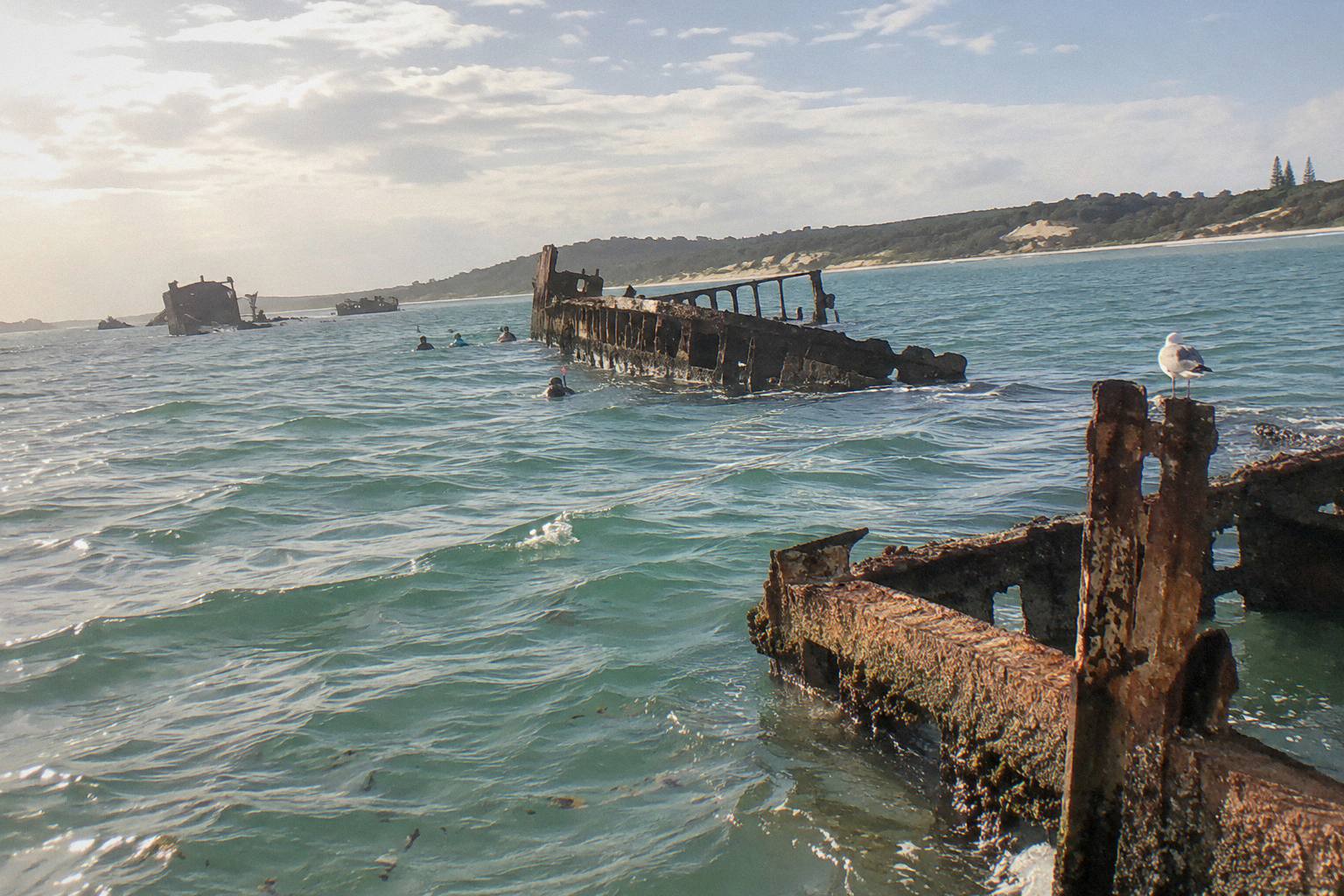
The strongest specific statement in the sources concerns Tangalooma. The resort's own page says a strong current runs between the wrecks and the beach when the tide runs, that the beach is unpatrolled with no lifesavers, that boat and jet-ski traffic passes through, and that it recommends the guided tour rather than swimming out independently. That is as clear a steer as an operator gives anywhere in the region: the wrecks are for guided snorkelling, not a do-it-yourself swim.
The Cook Island side is managed by rules rather than by lifeguards. NSW's aquatic reserve rules require vessels to keep under 4 knots and use moorings rather than anchoring on reef, and the snorkel operators there signed a Code of Conduct that includes a pre-dive briefing. The reserve rules also prohibit touching, chasing or feeding marine life, and landing on the island is not permitted because it is a protected seabird nesting site.
On the Broadwater side, the Seaway itself is a high-flow entrance by design: it exists to move water between the ocean and the Broadwater on every tide. The covered snorkel site is not in the entrance channel but along the sheltered wall at Wave Break Island, reached after the paddle and bushwalk. The safety mechanism is the operator and the group, not signage or patrols, which is a good general argument for choosing guided trips in this region rather than freelancing. The is snorkelling on the Gold Coast safe post works through the broader safety picture, including stingers.
What To Ask An Operator Before You Book
Ask four questions: which departure usually gets the calmer water, what the operator's own cancellation window is, who makes the weather call and when, and what the in-water supervision looks like. Every one of these has a factual answer the operator knows, and none of them appears reliably on a booking page.
The table below turns the research into a question kit. Each row pairs a question with the fact pattern in the sources that makes it worth asking, so you can hear an evasive answer for what it is.
| Question to ask | Why it matters, per the verified sources |
|---|---|
| Which departure time usually has the calmest water? | Operators run several departures a day and choose times around tide and conditions; no public tide table exists for the site |
| What are your own cancellation terms, not just the booking page's? | Blue Seafaris requires 48 hours by email while its booking page says 24; other operators publish none |
| Who decides the trip is unsafe, and when? | Operators typically cancel the morning of the trip when wind, swell or bar conditions are unsafe, offering a new date or refund |
| What is the swim requirement, honestly? | Requirements range from none and non-swimmers welcome to 200 metres unassisted, by operator |
| Is a wetsuit included? | Blue Seafaris and Watersports Guru include wetsuits; the booking page states no inclusion for the Wave Break Island operators |
| Which time zone do your listed times use? | NSW is one hour ahead of Queensland in daylight saving, and operators list times in different clocks |
The swim requirement row deserves emphasis because it is the one that catches families out. Across the covered operators the spread runs from Seaway Kayaking Tours, which takes non-swimmers from age 4 with life jackets, to Blue Seafaris, which asks for 200 metres unassisted and calls itself unsuitable for non-swimmers. Watersports Guru asks for the length of a 100 metre pool. There is no single Gold Coast standard, and booking the wrong one turns a holiday highlight into a shore-side wait. The can non-swimmers snorkel on the Gold Coast post maps this fully.
The last row, the clock question, is worth repeating because it fails silently. Turning up an hour late for a boat that cannot wait, as Blue Seafaris warns its own boat cannot, is a self-inflicted wound no refund covers.
What Each Operator States About Conditions, Side By Side
The three Broadwater products run behind the Seaway walls and welcome lower-confidence swimmers; the Cook Island products sit in open ocean with real swim requirements; the Moreton cruise is a full day governed by bay conditions. Every one of them is scheduled subject to conditions the operator, not the calendar, controls.
The final comparison pulls the condition-relevant facts into one view: where each product runs, what the water is like per the sources, and who it suits. This is the table to screenshot before a family debate.
| Product | Water and site | Swim requirement | Conditions wording |
|---|---|---|---|
| Seaway Kayak And Snorkel With Marine Life | Broadwater, sheltered wall at Wave Break Island, about 30 minute paddle then bushwalk | None; life jackets worn, non-swimmers welcome, from age 4 | Several departures a day, times on the listing |
| AKA Adventures Kayak And Snorkel | Broadwater, Wave Break Island, 7:30am start, about 3 hours | Non-swimmers welcome, life jackets worn on the water | Light continental breakfast only per the booking page |
| Wave Break Island Boat Snorkel With Hotel Transfers | Boat from Marina Mirage, about 10 minute cruise per the booking page | No experience necessary, instruction provided | About 4 hours pickup to drop-off |
| Snorkel With Turtles Gold Coast | Cook Island, open ocean, group up to 12 | Must swim 50 metres unassisted, no life jackets in the water | Times on the listing, listed in Queensland time |
| Snorkel With Turtles At Cook Island | Cook Island, 120 minutes per the operator | 200 metres unassisted, confident in open water, age 7 plus | Daily subject to weather, tides and sea conditions; NSW time |
| Tweed Heads Snorkel With The Turtles | Cook Island, 15 minute boat ride, 60 to 90 minutes in water | Length of a 100 m pool, not for non-swimmers, age 6 plus | Two tours daily weather permitting, 8am and 10:30am |
| Moreton Island And Tangalooma Wrecks Snorkel Cruise | Moreton Bay, about 4 hours at the wrecks, about 11 hours total | Not stated | 7:30am start, transfers from selected Gold Coast hotels |
The pattern to read out of the table is that shelter and swim requirement travel together. The Broadwater side is engineered calm, and its operators accordingly take the least confident swimmers. The Cook Island side is open ocean over a real reef system, and its operators accordingly ask for proof you can handle yourself. Neither is softer or harder as a product; they are different water, honestly labelled.
The Moreton day is the outlier on every axis, and it rewards a different kind of planning. The See Moreton cruise runs about 11 hours from a 7:30am start, with about 4 hours at the wrecks and about 1 hour on Moreton Island, a tropical buffet lunch included, and transfers from selected Gold Coast hotels. Bay conditions over a day that long are far more variable than on a 2.5-hour trip, which is exactly why the booking-page 24-hour cancellation matters more here than anywhere.
Its booking-page price starts from US$206.16 per person, and no rating is printed because the booking page carries none. For the full wreck-and-bay background, the Tangalooma wrecks snorkelling guide covers the site's history and the current warning in detail.
Planning Around Tides Without A Tide Table
You do not need a tide table to plan a Gold Coast snorkel trip, because every covered product puts the conditions call in the operator's hands, and every covered booking page carries free cancellation up to 24 hours ahead. Book early in your stay, ask the operator about conditions, and keep a spare day.
The single best piece of logistics advice for this coast costs nothing: do not book your one and only snorkel day for your last full day. Conditions decide, and an operator cancelling on the morning of a trip, as the regional pattern runs, leaves you choosing between a new date you do not have or a refund you spend on nothing. A trip booked on day two of a week can be rebooked on day four.
The second piece is to use the 24-hour window actively. Weather patterns on the coast announce themselves a day or more out in wind and swell, and operators will tell you honestly whether tomorrow looks like their kind of day. A short message the day before, within the free window, either confirms the trip or frees your money with no argument. This is also the moment to raise the kayak-versus-boat question: if the paddle out looks less appealing in the forecast, the boat format from Marina Mirage covers the same site without it.
The third is to book through a page whose terms you have actually read. This site, Gold Coast Snorkelling Tours, links every product to the operator's the booking page, and the listing is where the cancellation basis and the pickup details live. Where an operator's own terms differ, as Blue Seafaris's 48-hour email rule does, the listing's terms govern a listing booking, but the operator's terms govern anything you change directly with them.
And the kayak format remains the one most first-timers choose, for good reason: it is the shortest commitment, the lowest swim bar, and the most forgiving of a family range of ages and confidence. The AKA Adventures trip, at 7:30am sharp and about 3 hours, bundles breakfast per the booking page and rates 4.6 across 161 reviews.
Its booking-page price starts from US$82.05 per person. Between the two kayak operators and the boat, the sheltered side of the Seaway gives you three honest ways onto the same water, all of them scheduled around the tides by people who read them daily. If none of this settles the choice, the how to choose a Gold Coast snorkel tour guide works through the decision in full.
These are the three Broadwater options at a glance:
- Kayak To Wave Break Island, Snacks
- Marine Biologist Guide, Cook Island
- Cook Island Turtles From Chinderah
- Boat Snorkel, Hotel Transfers
- Breakfast Kayak, Fish Feeding
- Small Boat, Fingal Head Turtles
- Full Day Tangalooma Wrecks, Lunch
Common Questions About Gold Coast Seaway Tide Times
Are There Published Tide Times For The Gold Coast Seaway?
No tide table, tide height or tide-effect figure for the Seaway or Wave Break Island appears in any source this site verified. Operators set departure times around conditions themselves, so ask the operator which departure usually gets the calmer water.
Do Snorkel Tours Get Cancelled For Tides And Weather?
Yes. Blue Seafaris schedules daily subject to weather, tides and sea conditions, Watersports Guru runs weather permitting, and the regional pattern is for the operator to cancel on the morning of the trip when conditions are unsafe, offering a new date or a refund.
What Is The Visibility For Gold Coast Snorkelling?
No visibility figure in metres exists in the verified sources for any covered site. The waterways authority describes Wave Break Island's water as clear, clean and mostly shallow, and Watersports Guru gives a 3 to 6 metre depth for its Cook Island site, but neither is a visibility measurement.
Can I Cancel My Snorkel Tour If The Weather Looks Bad?
Every covered booking page lists free cancellation up to 24 hours in advance for a full refund. Blue Seafaris' own page separately requires 48 hours' notice by email for guest changes, so read the terms on your booking page before changing anything.
Are There Rips And Currents Where Gold Coast Snorkel Tours Go?
No current or rip strength figure is published for any covered site. The strongest stated warning concerns the Tangalooma wrecks, where the resort says a strong current runs between the wrecks and the beach when the tide runs, and recommends the guided tour rather than swimming out.
Why Do Cook Island Tour Times Look An Hour Wrong?
Cook Island operators depart from New South Wales, which is one hour ahead of Queensland during daylight saving. Blue Seafaris lists times in NSW time while Cooly Eco Adventures lists them in Queensland time, so check which clock your booking page uses.